
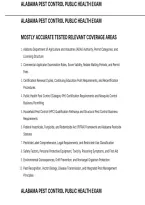
ALABAMA PEST CONTROL PUBLIC HEALTH EXAM
ALABAMA PEST CONTROL PUBLIC HEALTH EXAM
MOSTLY ACCURATE TESTED RELEVANT COVERAGE AREAS
1. Alabama Department of Agriculture and Industries (ADAI) Authority, Permit Categories, and
Licensing Structure
2. Commercial Applicator Examination Rules, Score Validity, Retake Waiting Periods, and Permit
Fees
3. Certification Renewal Cycles, Continuing Education Point Requirements, and Recertification
Procedures
4. Public Health Pest Control (Category PH) Certification Requirements and Mosquito Control
Business Permitting
5. Household Pest Control (HPC) Qualification Pathways and Structural Pest Control Business
Requirements
6. Federal Insecticide, Fungicide, and Rodenticide Act (FIFRA) Framework and Alabama Pesticide
Statutes
7. Pesticide Label Comprehension, Legal Requirements, and Restricted-Use Classification
8. Safety Factors, Personal Protective Equipment, Toxicity, Poisoning Symptoms, and First Aid
9. Environmental Consequences, Drift Prevention, and Nontarget Organism Protection
10. Pest Recognition, Vector Biology, Disease Transmission, and Integrated Pest Management
Principles
ALABAMA PEST CONTROL PUBLIC HEALTH EXAM
,1. Which Alabama state agency holds the statutory responsibility for certifying commercial
pesticide applicators, issuing permits, and maintaining the official records for every permit
applicant within the state?
A. Alabama Department of Public Health
B. Alabama Department of Environmental Management
C. Alabama Department of Agriculture and Industries
D. Alabama Cooperative Extension System
Correct Answer: C
A: The Alabama Department of Public Health focuses on human health surveillance and disease
prevention, not pesticide applicator certification.
B: The Alabama Department of Environmental Management handles environmental permits and
water/air quality, not structural pest control licensing.
C: The Alabama Department of Agriculture and Industries (ADAI) is explicitly identified as the
agency responsible for certifying pesticide applicators, issuing permits, and maintaining records
of each permit applicant in Alabama . 1
D: The Alabama Cooperative Extension System provides educational programming and study
materials, but does not hold regulatory licensing authority.
2. According to the Alabama Administrative Code, what is the exact length of time that an
examination score remains valid after the date the commercial applicator examination was
successfully completed?
A. Six months from the examination date
B. Twelve months from the examination date
C. Twenty-four months from the examination date
D. Thirty-six months from the examination date
Correct Answer: B
, A: Six months is insufficient and not supported by Alabama administrative rule.
B: Rule 80-1-13-.08 explicitly states that examination scores shall be valid for twelve (12) months
after the date of examination . 5 12
C: Twenty-four months exceeds the validity period established by Alabama regulation.
D: Thirty-six months is the renewal cycle length, not the examination score validity period.
3. What is the required permit fee amount per category that an applicant must pay to the
Department of Agriculture and Industries for a Commercial Applicator Permit in Alabama?
A. Twenty-five dollars per category
B. Forty-five dollars per category
C. Seventy-five dollars per category
D. One hundred twenty-five dollars per category
Correct Answer: B
A: Twenty-five dollars is below the statutory fee amount established in the administrative code.
B: The applicant must pay a permit fee of $45 per category for which certification or
recertification is sought to the Department of Agriculture & Industries . 1 5
C: Seventy-five dollars is the examination fee for certain computer-based tests, not the permit
fee per category.
D: One hundred twenty-five dollars is the cost for online computer-based testing, not the per-
category permit fee.
4. If an applicant fails the Alabama commercial applicator examination, what is the minimum
mandatory waiting period before that individual may be reexamined unless the Commissioner
waives this restriction?
A. Three calendar days from the previous examination date
B. Seven calendar days from the previous examination date
, C. Ten calendar days from the previous examination date
D. Thirty calendar days from the previous examination date
Correct Answer: C
A: Three days is far shorter than the regulatory minimum and would not allow adequate
preparation time.
B: Seven days does not match the explicit waiting period stated in Alabama rule.
C: An applicant who fails the examination will not be permitted to be reexamined for a minimum
of 10 days from the date of the previous examination, unless the Commissioner waives this
period . 1 5
D: Thirty days exceeds the minimum requirement and is not the stated regulatory period.
5. How frequently must a commercial pesticide applicator in Alabama renew their certification by
the 28th day of the original issue month?
A. Every single year without exception
B. Every two years from initial certification
C. Every three years from initial certification
D. Every five years from initial certification
Correct Answer: C
A: Annual renewal applies to certain custom permits and business licenses, not the commercial
applicator certification itself.
B: Two-year renewal is not the cycle established for Alabama commercial applicators.
C: Alabama commercial pesticide applicators must renew their certification every 3 years by the
28th of the original issue month . 1
D: Five-year renewal would leave applicators without required continuing education updates for
too long a period.
ALABAMA PEST CONTROL PUBLIC HEALTH EXAM
MOSTLY ACCURATE TESTED RELEVANT COVERAGE AREAS
1. Alabama Department of Agriculture and Industries (ADAI) Authority, Permit Categories, and
Licensing Structure
2. Commercial Applicator Examination Rules, Score Validity, Retake Waiting Periods, and Permit
Fees
3. Certification Renewal Cycles, Continuing Education Point Requirements, and Recertification
Procedures
4. Public Health Pest Control (Category PH) Certification Requirements and Mosquito Control
Business Permitting
5. Household Pest Control (HPC) Qualification Pathways and Structural Pest Control Business
Requirements
6. Federal Insecticide, Fungicide, and Rodenticide Act (FIFRA) Framework and Alabama Pesticide
Statutes
7. Pesticide Label Comprehension, Legal Requirements, and Restricted-Use Classification
8. Safety Factors, Personal Protective Equipment, Toxicity, Poisoning Symptoms, and First Aid
9. Environmental Consequences, Drift Prevention, and Nontarget Organism Protection
10. Pest Recognition, Vector Biology, Disease Transmission, and Integrated Pest Management
Principles
ALABAMA PEST CONTROL PUBLIC HEALTH EXAM
,1. Which Alabama state agency holds the statutory responsibility for certifying commercial
pesticide applicators, issuing permits, and maintaining the official records for every permit
applicant within the state?
A. Alabama Department of Public Health
B. Alabama Department of Environmental Management
C. Alabama Department of Agriculture and Industries
D. Alabama Cooperative Extension System
Correct Answer: C
A: The Alabama Department of Public Health focuses on human health surveillance and disease
prevention, not pesticide applicator certification.
B: The Alabama Department of Environmental Management handles environmental permits and
water/air quality, not structural pest control licensing.
C: The Alabama Department of Agriculture and Industries (ADAI) is explicitly identified as the
agency responsible for certifying pesticide applicators, issuing permits, and maintaining records
of each permit applicant in Alabama . 1
D: The Alabama Cooperative Extension System provides educational programming and study
materials, but does not hold regulatory licensing authority.
2. According to the Alabama Administrative Code, what is the exact length of time that an
examination score remains valid after the date the commercial applicator examination was
successfully completed?
A. Six months from the examination date
B. Twelve months from the examination date
C. Twenty-four months from the examination date
D. Thirty-six months from the examination date
Correct Answer: B
, A: Six months is insufficient and not supported by Alabama administrative rule.
B: Rule 80-1-13-.08 explicitly states that examination scores shall be valid for twelve (12) months
after the date of examination . 5 12
C: Twenty-four months exceeds the validity period established by Alabama regulation.
D: Thirty-six months is the renewal cycle length, not the examination score validity period.
3. What is the required permit fee amount per category that an applicant must pay to the
Department of Agriculture and Industries for a Commercial Applicator Permit in Alabama?
A. Twenty-five dollars per category
B. Forty-five dollars per category
C. Seventy-five dollars per category
D. One hundred twenty-five dollars per category
Correct Answer: B
A: Twenty-five dollars is below the statutory fee amount established in the administrative code.
B: The applicant must pay a permit fee of $45 per category for which certification or
recertification is sought to the Department of Agriculture & Industries . 1 5
C: Seventy-five dollars is the examination fee for certain computer-based tests, not the permit
fee per category.
D: One hundred twenty-five dollars is the cost for online computer-based testing, not the per-
category permit fee.
4. If an applicant fails the Alabama commercial applicator examination, what is the minimum
mandatory waiting period before that individual may be reexamined unless the Commissioner
waives this restriction?
A. Three calendar days from the previous examination date
B. Seven calendar days from the previous examination date
, C. Ten calendar days from the previous examination date
D. Thirty calendar days from the previous examination date
Correct Answer: C
A: Three days is far shorter than the regulatory minimum and would not allow adequate
preparation time.
B: Seven days does not match the explicit waiting period stated in Alabama rule.
C: An applicant who fails the examination will not be permitted to be reexamined for a minimum
of 10 days from the date of the previous examination, unless the Commissioner waives this
period . 1 5
D: Thirty days exceeds the minimum requirement and is not the stated regulatory period.
5. How frequently must a commercial pesticide applicator in Alabama renew their certification by
the 28th day of the original issue month?
A. Every single year without exception
B. Every two years from initial certification
C. Every three years from initial certification
D. Every five years from initial certification
Correct Answer: C
A: Annual renewal applies to certain custom permits and business licenses, not the commercial
applicator certification itself.
B: Two-year renewal is not the cycle established for Alabama commercial applicators.
C: Alabama commercial pesticide applicators must renew their certification every 3 years by the
28th of the original issue month . 1
D: Five-year renewal would leave applicators without required continuing education updates for
too long a period.


