This 4-page NR 566 Week 1 Exam study guide contains 19 questions with answers covering advanced pharmacotherapeutics, antifungal medications, antiviral therapy, antiretroviral drugs, medication mechanisms of action, adverse effects, and clinical treatment decisions. Major topics include echinocandins such as caspofungin, amphotericin B nephrotoxicity, terbinafine, itraconazole hepatotoxicity and cardiac risks, fluconazole, nystatin, and griseofulvin. The document also examines acyclovir, intravenous antiviral administration, renal dosage adjustments, oseltamivir for influenza treatment during pregnancy, Paxlovid for COVID-19, and antiviral management of herpes simplex and varicella-zoster infections. Additional questions address HIV antiretroviral therapy, efavirenz, adverse drug reactions, mebendazole's mechanism of action, oral thrush, onychomycosis, tinea capitis, vulvovaginal candidiasis, and medication selection in immunocompromised patients. Clinical scenarios emphasize pharmacological safety, contraindications, drug toxicity, patient-specific treatment considerations, and prescribing decisions. Relevant supplementary academic references include Rosenthal and Burchum's Lehne's Pharmacotherapeutics for Advanced Practice Nurses and Physician Assistants and Katzung's Basic & Clinical Pharmacology. These textbooks support the subject matter but are not verified as sources cited in the uploaded document. This resource is suitable for Chamberlain University students, Family Nurse Practitioner (FNP) students, Master of Science in Nursing (MSN) students, Doctor of Nursing Practice (DNP) students, Advanced Practice Registered Nurse (APRN) students, and graduate nursing students preparing for advanced pharmacology examinations. The document is labeled graded A+, although this claim has not been independently verified. Some answers, including recommendations concerning pneumonia, antifungal treatment, and antiretroviral medication safety during pregnancy, may be inaccurate or outdated and should be checked against current clinical guidelines.
Keywords: NR 566 Week 1, NR 566 Week 1 Exam, NR 566 2026/2027, Chamberlain University, advanced pharmacotherapeutics, pharmacology questions and answers, FNP pharmacology, antifungal medications, echinocandins, caspofungin mechanism of action, amphotericin B nephrotoxicity, terbinafine, itraconazole adverse effects, fluconazole, nystatin oral thrush, griseofulvin, onychomycosis treatment, tinea capitis, vulvovaginal candidiasis, antiviral medications, acyclovir renal toxicity, acyclovir dosage adjustment, oseltamivir pregnancy, influenza treatment, Paxlovid COVID-19, herpes simplex treatment, varicella zoster treatment, HIV antiretroviral therapy, efavirenz, antiretroviral adverse effects, mebendazole mechanism of action, medication contraindications, drug safety, MSN pharmacology study guide, APRN exam preparation
Content preview
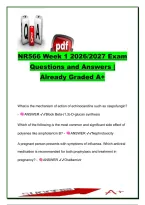
NR566 Week 1 2026/2027 Exam
Questions and Answers |
Already Graded A+
What is the mechanism of action of echinocandins such as caspofungin?
- ANSWER ✔✔Block Beta-(1,3)-D-glucan synthesis
Which of the following is the most common and significant side effect of
polyenes like amphotericin B? - ANSWER ✔✔Nephrotoxicity
A pregnant person presents with symptoms of influenza. Which antiviral
medication is recommended for both prophylaxis and treatment in
pregnancy? - ANSWER ✔✔Oseltamivir