
^&*#*((*!#&()#_)#!*&$!*#)(!*PHYS2426_Exp12_Manual.docx10/16/2026,
#%#&&!%%#^#^&^!#&*^&^*#!(FG*T!^&*#*((*!#&()#_)#!*&$!*#)(!*##(*0PHYS2426_Exp12_Manual.docx.pdf*&!#%#&&!%%#^#^&^!#&*^&^*#!(FG*T!^&*#*((*!#&()#_)#!
Page 1 of 1110/16/2026, 5:42:03 AM*&!#%#&&!%%#^#^&^!#&*^&^*#!(FG*T!^&*#*((*!#&()#_)#!*&$!*#)(!*PHYS2426_Exp12_Manual.docx10/16/2026,
5:42:03 AM*&!#%#&&!%%#^#^&^!#&*^&^*#!(FG*T!^&*#*((*!#&()#_)#!*&$!*#)(!*##(*0PHYS2426_Exp1
5:42:03 AM*&!
E X P E R I M E N T 12
Interference & Diffraction
This lab uses the Waves Interference simulation from PhET Interactive Simulations at the
University of Colorado Boulder:
https://phet.colorado.edu/sims/html/wave-interference/latest/wave-interference_en.html
Objectives
In this virtual experiment you will:
Create an interference pattern with two sources and determine the ways to change the
pattern.
Find points of constructive and destructive interference.
Explore how waves diffract through slits.
Procedure
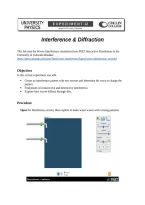
Open the Interference screen, then explore to make water waves with varying patterns.
^&*#*((*!#&()#_)#!*&$!*#)(!*PHYS2426_Exp12_Manual.docx10/16/2026,
#%#&&!%%#^#^&^!#&*^&^*#!(FG*T!^&*#*((*!#&()#_)#!*&$!*#)(!*##(*0PHYS2426_Exp12_Manual.docx.pdf*&!#%#&&!%%#^#^&^!#&*^&^*#!(FG*T!^&*#*((*!#&()#_)#!
Page 1 of 1110/16/2026, 5:42:03 AM*&!#%#&&!%%#^#^&^!#&*^&^*#!(FG*T!^&*#*((*!#&()#_)#!*&$!*#)(!*PHYS2426_Exp12_Manual.docx10/16/2026,
5:42:03 AM*&!#%#&&!%%#^#^&^!#&*^&^*#!(FG*T!^&*#*((*!#&()#_)#!*&$!*#)(!*##(*0PHYS2426_Exp1
5:42:03 AM*&!
,^&*#*((*!#&()#_)#!*&$!*#)(!*PHYS2426_Exp12_Manual.docx10/16/2026,
#%#&&!%%#^#^&^!#&*^&^*#!(FG*T!^&*#*((*!#&()#_)#!*&$!*#)(!*##(*0PHYS2426_Exp12_Manual.docx.pdf*&!#%#&&!%%#^#^&^!#&*^&^*#!(FG*T!^&*#*((*!#&()#_)#!
Page 2 of 1110/16/2026, 5:42:03 AM*&!#%#&&!%%#^#^&^!#&*^&^*#!(FG*T!^&*#*((*!#&()#_)#!*&$!*#)(!*PHYS2426_Exp12_Manual.docx10/16/2026,
5:42:03 AM*&!#%#&&!%%#^#^&^!#&*^&^*#!(FG*T!^&*#*((*!#&()#_)#!*&$!*#)(!*##(*0PHYS2426_Exp1
5:42:03 AM*&!
Part I - Interference
1. Consider these three patterns of water waves:
A B C
a. Describe the similarities and differences of the three patterns of water waves.
Similarities: all three of the water waves appear to be splitting away and then all
have what is called an interference pattern.
Differences: For A, there are two slits in the direction/way of water. For B, there
are three slits in the direction/way of water. For C, there is only one slit in the
direction/way of water.
b. Experiment to make similar patterns, then explain how you can use the simulation
to make each.
In order to make these patterns using the simulation, you can turn on the water
faucets and play by stopping and starting them or keeping them in continuum to
see how playing with those variants can create those different patterns in the
water waves.
2. Experiment to make waves of different interference patterns with water, sound, and light.
Explain how you created an interference pattern with two sources, and ways that you
^&*#*((*!#&()#_)#!*&$!*#)(!*PHYS2426_Exp12_Manual.docx10/16/2026,
#%#&&!%%#^#^&^!#&*^&^*#!(FG*T!^&*#*((*!#&()#_)#!*&$!*#)(!*##(*0PHYS2426_Exp12_Manual.docx.pdf*&!#%#&&!%%#^#^&^!#&*^&^*#!(FG*T!^&*#*((*!#&()#_)#!
Page 2 of 1110/16/2026, 5:42:03 AM*&!#%#&&!%%#^#^&^!#&*^&^*#!(FG*T!^&*#*((*!#&()#_)#!*&$!*#)(!*PHYS2426_Exp12_Manual.docx10/16/2026,
5:42:03 AM*&!#%#&&!%%#^#^&^!#&*^&^*#!(FG*T!^&*#*((*!#&()#_)#!*&$!*#)(!*##(*0PHYS2426_Exp1
5:42:03 AM*&!
#%#&&!%%#^#^&^!#&*^&^*#!(FG*T!^&*#*((*!#&()#_)#!*&$!*#)(!*##(*0PHYS2426_Exp12_Manual.docx.pdf*&!#%#&&!%%#^#^&^!#&*^&^*#!(FG*T!^&*#*((*!#&()#_)#!
Page 1 of 1110/16/2026, 5:42:03 AM*&!#%#&&!%%#^#^&^!#&*^&^*#!(FG*T!^&*#*((*!#&()#_)#!*&$!*#)(!*PHYS2426_Exp12_Manual.docx10/16/2026,
5:42:03 AM*&!#%#&&!%%#^#^&^!#&*^&^*#!(FG*T!^&*#*((*!#&()#_)#!*&$!*#)(!*##(*0PHYS2426_Exp1
5:42:03 AM*&!
E X P E R I M E N T 12
Interference & Diffraction
This lab uses the Waves Interference simulation from PhET Interactive Simulations at the
University of Colorado Boulder:
https://phet.colorado.edu/sims/html/wave-interference/latest/wave-interference_en.html
Objectives
In this virtual experiment you will:
Create an interference pattern with two sources and determine the ways to change the
pattern.
Find points of constructive and destructive interference.
Explore how waves diffract through slits.
Procedure
Open the Interference screen, then explore to make water waves with varying patterns.
^&*#*((*!#&()#_)#!*&$!*#)(!*PHYS2426_Exp12_Manual.docx10/16/2026,
#%#&&!%%#^#^&^!#&*^&^*#!(FG*T!^&*#*((*!#&()#_)#!*&$!*#)(!*##(*0PHYS2426_Exp12_Manual.docx.pdf*&!#%#&&!%%#^#^&^!#&*^&^*#!(FG*T!^&*#*((*!#&()#_)#!
Page 1 of 1110/16/2026, 5:42:03 AM*&!#%#&&!%%#^#^&^!#&*^&^*#!(FG*T!^&*#*((*!#&()#_)#!*&$!*#)(!*PHYS2426_Exp12_Manual.docx10/16/2026,
5:42:03 AM*&!#%#&&!%%#^#^&^!#&*^&^*#!(FG*T!^&*#*((*!#&()#_)#!*&$!*#)(!*##(*0PHYS2426_Exp1
5:42:03 AM*&!
,^&*#*((*!#&()#_)#!*&$!*#)(!*PHYS2426_Exp12_Manual.docx10/16/2026,
#%#&&!%%#^#^&^!#&*^&^*#!(FG*T!^&*#*((*!#&()#_)#!*&$!*#)(!*##(*0PHYS2426_Exp12_Manual.docx.pdf*&!#%#&&!%%#^#^&^!#&*^&^*#!(FG*T!^&*#*((*!#&()#_)#!
Page 2 of 1110/16/2026, 5:42:03 AM*&!#%#&&!%%#^#^&^!#&*^&^*#!(FG*T!^&*#*((*!#&()#_)#!*&$!*#)(!*PHYS2426_Exp12_Manual.docx10/16/2026,
5:42:03 AM*&!#%#&&!%%#^#^&^!#&*^&^*#!(FG*T!^&*#*((*!#&()#_)#!*&$!*#)(!*##(*0PHYS2426_Exp1
5:42:03 AM*&!
Part I - Interference
1. Consider these three patterns of water waves:
A B C
a. Describe the similarities and differences of the three patterns of water waves.
Similarities: all three of the water waves appear to be splitting away and then all
have what is called an interference pattern.
Differences: For A, there are two slits in the direction/way of water. For B, there
are three slits in the direction/way of water. For C, there is only one slit in the
direction/way of water.
b. Experiment to make similar patterns, then explain how you can use the simulation
to make each.
In order to make these patterns using the simulation, you can turn on the water
faucets and play by stopping and starting them or keeping them in continuum to
see how playing with those variants can create those different patterns in the
water waves.
2. Experiment to make waves of different interference patterns with water, sound, and light.
Explain how you created an interference pattern with two sources, and ways that you
^&*#*((*!#&()#_)#!*&$!*#)(!*PHYS2426_Exp12_Manual.docx10/16/2026,
#%#&&!%%#^#^&^!#&*^&^*#!(FG*T!^&*#*((*!#&()#_)#!*&$!*#)(!*##(*0PHYS2426_Exp12_Manual.docx.pdf*&!#%#&&!%%#^#^&^!#&*^&^*#!(FG*T!^&*#*((*!#&()#_)#!
Page 2 of 1110/16/2026, 5:42:03 AM*&!#%#&&!%%#^#^&^!#&*^&^*#!(FG*T!^&*#*((*!#&()#_)#!*&$!*#)(!*PHYS2426_Exp12_Manual.docx10/16/2026,
5:42:03 AM*&!#%#&&!%%#^#^&^!#&*^&^*#!(FG*T!^&*#*((*!#&()#_)#!*&$!*#)(!*##(*0PHYS2426_Exp1
5:42:03 AM*&!


