
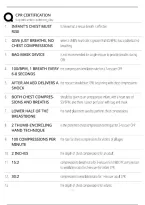
CPR Certification (Cardiopulmonary Resuscitation Certification)
CPR certification is a credential that verifies an individual has successfully completed training in cardiopulmonary resuscitation and demonstrated the required knowledge and hands-on skills. In the United States, the most widely recognized certifying bodies are the American Heart Association (AHA) and the American Red Cross. The AHA offers courses such as Heartsaver CPR AED (designed for anyone with little or no medical training who needs a course completion card for job or regulatory requirements) and BLS Provider (for healthcare professionals), both aligned with the latest 2025 AHA Guidelines . The American Red Cross offers comparable courses, including Adult CPR/AED and Basic Life Support (BLS), which also satisfy OSHA workplace safety certification requirements . Core skills covered typically include scene safety assessment, recognizing cardiac arrest, performing high-quality chest compressions on adults, children, and infants, delivering effective breaths, using an AED, and relieving choking . Upon successful completion, participants receive a certification card or digital certificate valid for two years, after which recertification through an abbreviated renewal course is required . Certification can be obtained through classroom instruction, blended learning (online coursework plus in-person skills session), or in some cases self-guided formats, depending on the provider and course level .
Document information
- Uploaded on
- October 21, 2026
- Number of pages
- 2
- Written in
- 2026/2027
- Type
- Exam (elaborations)
- Contains
- Questions & answers


