
MICRO II MIDTERM
FREQUENTLY TESTED ACTUAL EXAM QUESTIONS WITH
CORRECT ANSWERS
Question 1.
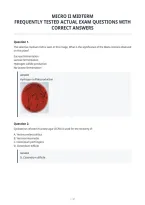
The selective medium XLD is seen in this image. What is the significance of the black colonies observed
on this plate?
Sucrose fermentation
Lactose fermentation
Hydrogen sulfide production
No lactose fermentation
ANSWER
Hydrogen sulfide production
Question 2.
Cycloserine-cefoxitin-fructose agar (CCFA) is used for the recovery of:
A. Yersinia enterocolitica
B. Yersinia intermedia
C. Clostridium perfringens
D. Clostridium difficile
ANSWER
D. Clostridium difficile
,Question 3.
What is the most common way for the renal parenchyma to become infected with gram-positive
bacteria?
Ascending route
Descending route
Hematogenous route
Poor personal hygiene
ANSWER
Hematogenous route
Question 4.
All of these patient history questions will help focus the search for the cause of diarrhea, except:
- Does the patient have a history of previous gastrointestinal symptoms?
- Did the patient eat any hot food?
- Does the patient have an underlying illness?
- Is the patient taking any medication?
ANSWER
Did the patient eat any hot food?
Question 5.
What causes erythema infectiosum?
- Parvovirus
- Herpesvirus
- Paramyxovirus
- Togaviridae
ANSWER
Parvovirus
,Question 6.
What causes rubeola?
- Calicivirus
- Herpesvirus
- Paramyxovirus
- Torovirus
ANSWER
Paramyxovirus
Question 7.
Which of the following is an example of a primary bacteremia source?
A wound abscess
A case of pneumonia
A patient with hepatitis
An infected heart valve
ANSWER
An infected heart valve
Question 8.
Why do most physicians treat otitis media empirically?
- Many agents of these infections are noncultivable.
- Cultures do not always correlate with the true pathogen.
- Pathogens causing otitis media never become resistant to antimicrobial agents.
- The predominant infection causing organisms are known.
ANSWER
The predominant infection causing organisms are known.
Question 9.
Elements of the respiratory tract that can help prevent infection include
- nasal hair.
- normal microbiota.
- coughing.
- All of the above
ANSWER
All of the above
, Question 10.
The salt tolerance test (6.5% salt broth) is used to presumptively identify:
A. Streptococcus pneumoniae
B. Streptococcus bovis
C. Viridans streptococci
D. Enterococcus faecalis
ANSWER
D. Enterococcus faecalis
Question 11.
Propionibacterium acnes is most often associated with:
- food poisoning
- post antibiotic diarrhea
- tooth decay
- blood culture contamination
ANSWER
blood culture contamination
Question 12.
What is the most significant predisposing factor to Clostridium difficile-associated disease?
- Antimicrobial therapy
- Young age
- Consumption of undercooked beef
- Travel to developing countries
ANSWER
Antimicrobial therapy


