Human Resource Management Exam 1 (Chapters 1-4) with Answers
Rated A
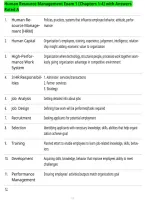
1. Human Re- Policies, practices, systems that influence employee behavior, attitude, perfor-
source Manage- mance
ment (HRM)
2. Human Capital Organization's employees, training, experience, judgement, intelligence, relation-
ship insight adding economic value to organization
3. High-Perfor- Organization where technology, structures people, processes work together seam-
mance Work lessly giving organization advantage in competitive environment
System
4. 3 HR Responsibil- 1. Administer services/transactions
ities 2. Partner services
3. Strategy
5. Job Analysis Getting detailed info about jobs
6. Job Design Defining how work will be performed/tasks required
7. Recruitment Seeking applicants for potential employment
8. Selection Identifying applicants with necessary knowledge, skills, abilities that help organi-
zation achieve goal
9. Training Planned ettort to enable employees to learn job-related knowledge, skills, behav-
iors
10. Development Acquiring skills, knowledge, behavior that improve employees ability to meet
challenges
11. Performance Ensuring employees' activities/outputs match organizations goal
Management
12.
1/9
, Human Resource Management Exam 1 (Chapters 1-4) with Answers
Rated A
Workforce Ana- Use quantitative tools/scientific methods to analyze data from HR databases t make
lytics evidence based decisions supporting goals
13. HR Planning Identifying number's/types of employees organization requires to meet objectives
14. Talent Manage- Systematic planned ettort to attract, retain, develop, motivate highly skilled em-
ment ployees/managers
15. Evidence-Based Collection/use of data to demonstrate human resource practices have positive
HR influence on company's profits/stakeholders
16. Sustainability Organizations ability to profit without depleting resources
17. Stakeholders Parties having interest in organization's success
18. Ethics Fundamental principles of right/wrong
19. 5 Employee 1. Free consent - treated only as willingly consented to be treated
Rights 2. Privacy - to do as one wishes in free time
3. Freedom of conscience - to refuse to do what violates moral belief
4. Speech - to criticize organization's ethics
5. Due process - fair / impartial trial
20. Internal Labor Organization's workers, employees /
Force
contractors
21. External Labor
Market
Individuals seeking employment
22. Knowledge Work- Employers whose main contribution to organization is specialized knowledge
ers
23. Employee Em- Giving employees responsibility/authority to make decisions regarding aspects of
powerment product development/customer service
2/9
Rated A
1. Human Re- Policies, practices, systems that influence employee behavior, attitude, perfor-
source Manage- mance
ment (HRM)
2. Human Capital Organization's employees, training, experience, judgement, intelligence, relation-
ship insight adding economic value to organization
3. High-Perfor- Organization where technology, structures people, processes work together seam-
mance Work lessly giving organization advantage in competitive environment
System
4. 3 HR Responsibil- 1. Administer services/transactions
ities 2. Partner services
3. Strategy
5. Job Analysis Getting detailed info about jobs
6. Job Design Defining how work will be performed/tasks required
7. Recruitment Seeking applicants for potential employment
8. Selection Identifying applicants with necessary knowledge, skills, abilities that help organi-
zation achieve goal
9. Training Planned ettort to enable employees to learn job-related knowledge, skills, behav-
iors
10. Development Acquiring skills, knowledge, behavior that improve employees ability to meet
challenges
11. Performance Ensuring employees' activities/outputs match organizations goal
Management
12.
1/9
, Human Resource Management Exam 1 (Chapters 1-4) with Answers
Rated A
Workforce Ana- Use quantitative tools/scientific methods to analyze data from HR databases t make
lytics evidence based decisions supporting goals
13. HR Planning Identifying number's/types of employees organization requires to meet objectives
14. Talent Manage- Systematic planned ettort to attract, retain, develop, motivate highly skilled em-
ment ployees/managers
15. Evidence-Based Collection/use of data to demonstrate human resource practices have positive
HR influence on company's profits/stakeholders
16. Sustainability Organizations ability to profit without depleting resources
17. Stakeholders Parties having interest in organization's success
18. Ethics Fundamental principles of right/wrong
19. 5 Employee 1. Free consent - treated only as willingly consented to be treated
Rights 2. Privacy - to do as one wishes in free time
3. Freedom of conscience - to refuse to do what violates moral belief
4. Speech - to criticize organization's ethics
5. Due process - fair / impartial trial
20. Internal Labor Organization's workers, employees /
Force
contractors
21. External Labor
Market
Individuals seeking employment
22. Knowledge Work- Employers whose main contribution to organization is specialized knowledge
ers
23. Employee Em- Giving employees responsibility/authority to make decisions regarding aspects of
powerment product development/customer service
2/9