
NSG 6998 – APEA PRE/POST PREDICTOR | FNP PRACTICE BANK
NSG 6998 – APEA Predictor Preparation
Pre-Predictor (Exam 1) & Post-Predictor (Exam 2)
1200 Original FNP-Style Questions with Rationales
Primary Care • Cardio • Endocrine • Resp • Women’s Health • Professional Practice
DISCLAIMER – This is an ORIGINAL educational practice resource aligned with common FNP primary-care themes seen on APEA-style predictor
exams. It is NOT an official APEA exam, NOT a South University exam, NOT a copy of proprietary predictor items, and NOT affiliated with APEA or
South University. Always use official APEA resources, current clinical guidelines, and your course faculty as primary sources.
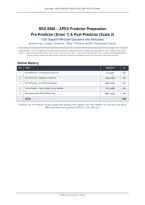
Section Mapping
Sec Topic Questions N
1 Pre/Post Predictor – Cardiovascular Primary Care Q1-Q240 240
2 Pre/Post Predictor – Respiratory & Endocrine Q241-Q480 240
3 Pre/Post Predictor – GI, GU & Musculoskeletal Q481-Q720 240
4 Pre/Post Predictor – Women’s Health, Peds & Geriatrics Q721-Q960 240
5 Professional Practice, EBP & Exam Strategy Q961-Q1200 240
TOTAL 1200
Study tip: Use Pre-Predictor results to target weak domains, then reassess with Post-Predictor. Pair this bank with official
APEA tools and current guidelines (USPSTF, AHA, ADA, etc.).
Original Study Resource | Page 1
, NSG 6998 – APEA PRE/POST PREDICTOR | FNP PRACTICE BANK
Section 1: Pre/Post Predictor – Cardiovascular Primary Care
Q1: First-line lifestyle therapy for many patients with hypertension includes:
A. High-sodium diet and inactivity
B. DASH-style diet, weight management, physical activity, and limited alcohol [CORRECT]
C. Only caffeine loading
D. Ignoring BMI
Correct Answer: B
Rationale: Lifestyle modification is foundational in HTN management.
Q2: Heart failure with preserved ejection fraction (HFpEF) is characterized by:
A. Severely reduced EF only
B. HF symptoms with EF typically ≥50% and often diastolic dysfunction [CORRECT]
C. Only acute STEMI
D. Normal filling pressures always
Correct Answer: B
Rationale: HFpEF presents with congestion despite preserved EF.
Q3: A patient with stable angina often has pain that is:
A. Random at rest only with no pattern
B. Exertional and relieved by rest or nitroglycerin [CORRECT]
C. Only pleuritic and positional
D. Never related to activity
Correct Answer: B
Rationale: Classic stable angina is demand-related.
Original Study Resource | Page 2
, NSG 6998 – APEA PRE/POST PREDICTOR | FNP PRACTICE BANK
Q4: ACE inhibitors are commonly used in HF and HTN because they:
A. Increase angiotensin II effects
B. Block conversion of AI to AII, reducing afterload and beneficial remodeling effects
[CORRECT]
C. Only raise heart rate
D. Have no RAAS effect
Correct Answer: B
Rationale: RAAS blockade is guideline-supported in many settings.
Q5: Statins are indicated for:
A. Only patients who refuse diet changes
B. ASCVD risk reduction based on guidelines (secondary and selected primary prevention)
[CORRECT]
C. Only children under 5
D. Never with diabetes
Correct Answer: B
Rationale: Lipid guidelines drive statin use by risk category.
Q6: A widened pulse pressure in older adults may reflect:
A. Only perfect arterial health
B. Increased arterial stiffness and isolated systolic hypertension patterns [CORRECT]
C. Only low systolic pressure
D. No clinical meaning
Correct Answer: B
Rationale: Aging arteries often raise systolic and widen pulse pressure.
Original Study Resource | Page 3
, NSG 6998 – APEA PRE/POST PREDICTOR | FNP PRACTICE BANK
Q7: Carotid bruits suggest:
A. Guaranteed imminent stroke in all cases
B. Possible atherosclerotic disease; symptomatic bruits need prompt evaluation [CORRECT]
C. Only anemia
D. Normal finding in all elders
Correct Answer: B
Rationale: Bruits warrant risk assessment; symptoms raise urgency.
Q8: SGLT2 inhibitors in selected patients with T2DM and ASCVD/HF may:
A. Only raise glucose
B. Provide cardiovascular and/or renal outcome benefits beyond glucose lowering [CORRECT]
C. Replace all lifestyle advice
D. Be contraindicated in all HF
Correct Answer: B
Rationale: Outcome trials support benefit in appropriate patients.
Q9: Acute chest pain concerning for ACS prioritizes:
A. Routine outpatient stress test first always
B. ECG and urgent evaluation for ischemia/infarction [CORRECT]
C. Only reassurance without assessment
D. Waiting 24 hours always
Correct Answer: B
Rationale: Time-sensitive ECG and triage are critical.
Q10: Isolated systolic hypertension in older adults is often treated with:
A. No therapy ever
B. Guideline-directed agents (e.g., thiazide-like diuretics or dihydropyridine CCBs among
options) tailored to the patient [CORRECT]
C. Only beta-blockers exclusively for everyone
D. High-dose NSAIDs
Correct Answer: B
Rationale: ISH is common; drug choice is individualized.
Original Study Resource | Page 4
NSG 6998 – APEA Predictor Preparation
Pre-Predictor (Exam 1) & Post-Predictor (Exam 2)
1200 Original FNP-Style Questions with Rationales
Primary Care • Cardio • Endocrine • Resp • Women’s Health • Professional Practice
DISCLAIMER – This is an ORIGINAL educational practice resource aligned with common FNP primary-care themes seen on APEA-style predictor
exams. It is NOT an official APEA exam, NOT a South University exam, NOT a copy of proprietary predictor items, and NOT affiliated with APEA or
South University. Always use official APEA resources, current clinical guidelines, and your course faculty as primary sources.
Section Mapping
Sec Topic Questions N
1 Pre/Post Predictor – Cardiovascular Primary Care Q1-Q240 240
2 Pre/Post Predictor – Respiratory & Endocrine Q241-Q480 240
3 Pre/Post Predictor – GI, GU & Musculoskeletal Q481-Q720 240
4 Pre/Post Predictor – Women’s Health, Peds & Geriatrics Q721-Q960 240
5 Professional Practice, EBP & Exam Strategy Q961-Q1200 240
TOTAL 1200
Study tip: Use Pre-Predictor results to target weak domains, then reassess with Post-Predictor. Pair this bank with official
APEA tools and current guidelines (USPSTF, AHA, ADA, etc.).
Original Study Resource | Page 1
, NSG 6998 – APEA PRE/POST PREDICTOR | FNP PRACTICE BANK
Section 1: Pre/Post Predictor – Cardiovascular Primary Care
Q1: First-line lifestyle therapy for many patients with hypertension includes:
A. High-sodium diet and inactivity
B. DASH-style diet, weight management, physical activity, and limited alcohol [CORRECT]
C. Only caffeine loading
D. Ignoring BMI
Correct Answer: B
Rationale: Lifestyle modification is foundational in HTN management.
Q2: Heart failure with preserved ejection fraction (HFpEF) is characterized by:
A. Severely reduced EF only
B. HF symptoms with EF typically ≥50% and often diastolic dysfunction [CORRECT]
C. Only acute STEMI
D. Normal filling pressures always
Correct Answer: B
Rationale: HFpEF presents with congestion despite preserved EF.
Q3: A patient with stable angina often has pain that is:
A. Random at rest only with no pattern
B. Exertional and relieved by rest or nitroglycerin [CORRECT]
C. Only pleuritic and positional
D. Never related to activity
Correct Answer: B
Rationale: Classic stable angina is demand-related.
Original Study Resource | Page 2
, NSG 6998 – APEA PRE/POST PREDICTOR | FNP PRACTICE BANK
Q4: ACE inhibitors are commonly used in HF and HTN because they:
A. Increase angiotensin II effects
B. Block conversion of AI to AII, reducing afterload and beneficial remodeling effects
[CORRECT]
C. Only raise heart rate
D. Have no RAAS effect
Correct Answer: B
Rationale: RAAS blockade is guideline-supported in many settings.
Q5: Statins are indicated for:
A. Only patients who refuse diet changes
B. ASCVD risk reduction based on guidelines (secondary and selected primary prevention)
[CORRECT]
C. Only children under 5
D. Never with diabetes
Correct Answer: B
Rationale: Lipid guidelines drive statin use by risk category.
Q6: A widened pulse pressure in older adults may reflect:
A. Only perfect arterial health
B. Increased arterial stiffness and isolated systolic hypertension patterns [CORRECT]
C. Only low systolic pressure
D. No clinical meaning
Correct Answer: B
Rationale: Aging arteries often raise systolic and widen pulse pressure.
Original Study Resource | Page 3
, NSG 6998 – APEA PRE/POST PREDICTOR | FNP PRACTICE BANK
Q7: Carotid bruits suggest:
A. Guaranteed imminent stroke in all cases
B. Possible atherosclerotic disease; symptomatic bruits need prompt evaluation [CORRECT]
C. Only anemia
D. Normal finding in all elders
Correct Answer: B
Rationale: Bruits warrant risk assessment; symptoms raise urgency.
Q8: SGLT2 inhibitors in selected patients with T2DM and ASCVD/HF may:
A. Only raise glucose
B. Provide cardiovascular and/or renal outcome benefits beyond glucose lowering [CORRECT]
C. Replace all lifestyle advice
D. Be contraindicated in all HF
Correct Answer: B
Rationale: Outcome trials support benefit in appropriate patients.
Q9: Acute chest pain concerning for ACS prioritizes:
A. Routine outpatient stress test first always
B. ECG and urgent evaluation for ischemia/infarction [CORRECT]
C. Only reassurance without assessment
D. Waiting 24 hours always
Correct Answer: B
Rationale: Time-sensitive ECG and triage are critical.
Q10: Isolated systolic hypertension in older adults is often treated with:
A. No therapy ever
B. Guideline-directed agents (e.g., thiazide-like diuretics or dihydropyridine CCBs among
options) tailored to the patient [CORRECT]
C. Only beta-blockers exclusively for everyone
D. High-dose NSAIDs
Correct Answer: B
Rationale: ISH is common; drug choice is individualized.
Original Study Resource | Page 4


