
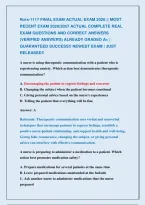
Nurs-1117 FINAL EXAM ACTUAL EXAM 2026 || MOST
RECENT EXAM 2026|2027 ACTUAL COMPLETE REAL
EXAM QUESTIONS AND CORRECT ANSWERS
(VERIFIED ANSWERS) ALREADY GRADED A+ |
GUARANTEED SUCCESS!! NEWEST EXAM | JUST
RELEASED!!
A nurse is using therapeutic communication with a patient who is
experiencing anxiety. Which action best demonstrates therapeutic
communication?
A. Encouraging the patient to express feelings and concerns
B. Changing the subject when the patient becomes emotional
C. Giving personal advice based on the nurse's experiences
D. Telling the patient that everything will be fine
Answer: A
Rationale: Therapeutic communication uses verbal and nonverbal
techniques that encourage patients to express feelings, establish a
positive nurse-patient relationship, and support health and well-being.
Giving false reassurance, changing the subject, or giving personal
advice can interfere with effective communication.
A nurse is preparing to administer a medication to a patient. Which
action best promotes medication safety?
A. Prepare medications for several patients at the same time
B. Leave prepared medications unattended at the bedside
C. Ask another nurse to administer medications that the nurse
prepared
,D. Prepare medications carefully and administer them without leaving
them unattended
Answer: D
Rationale: Safe medication administration requires careful
preparation, appropriate verification, and ensuring that prepared
medications are not left unattended. The person who prepares a
medication should administer it whenever possible.
A patient asks why the nurse checks the medication three times before
administration. What is the best response?
A. "The checks help verify the medication, patient, dose, route, and
other administration requirements."
B. "The checks are required only for controlled substances."
C. "The checks are performed because medications are usually
inaccurate."
D. "The checks are necessary only when a patient questions the
medication."
Answer: A
Rationale: Repeated medication checks are an important safety
strategy. They help the nurse verify the medication against the order
and confirm essential medication-administration information before
administration.
Which action represents the right route of medication administration?
A. Confirming that the medication is prescribed for the correct patient
B. Confirming that the medication is administered at the prescribed
,time
C. Confirming that the medication is given by the prescribed method
D. Confirming that the medication is documented after administration
Answer: C
Rationale: The right route means administering the medication by the
prescribed route, such as oral, intravenous, intramuscular,
subcutaneous, or another appropriate route.
A nurse gives a medication and then documents the administration in
the patient's record. Which medication right is being addressed?
A. Right dose
B. Right documentation
C. Right reason
D. Right route
Answer: B
Rationale: The right documentation requires accurate recording of
medication administration, including appropriate information about
the medication and its administration.
Which situation represents a medication error?
A. The nurse verifies the patient's identity before administration.
B. The nurse compares the medication with the prescription.
C. The nurse administers a medication to the wrong patient.
D. The nurse documents the medication immediately after
administration.
Answer: C
, Rationale: Administering medication to the wrong patient is a
medication error and can result in serious harm. Proper patient
identification is essential to prevent this type of error.
Which action is part of the nurse's ethical responsibility when
administering medication?
A. Failing to assess the patient's response
B. Ignoring adverse effects
C. Ensuring patient safety and evaluating the medication response
D. Administering medications without checking the order
Answer: C
Rationale: Nurses have an ethical and professional responsibility to
promote patient safety, administer medications correctly, assess
responses, and identify and respond to adverse effects or errors.
Which statement correctly compares pharmacokinetics and
pharmacodynamics?
A. Pharmacokinetics describes what the drug does to the body, while
pharmacodynamics describes what the body does to the drug.
B. Pharmacokinetics describes what the body does to the drug, while
pharmacodynamics describes what the drug does to the body.
C. Both terms describe only medication documentation.
D. Both terms describe only medication storage.
Answer: B
Rationale: Pharmacokinetics concerns absorption, distribution,
metabolism, and excretion—what the body does to a drug.
RECENT EXAM 2026|2027 ACTUAL COMPLETE REAL
EXAM QUESTIONS AND CORRECT ANSWERS
(VERIFIED ANSWERS) ALREADY GRADED A+ |
GUARANTEED SUCCESS!! NEWEST EXAM | JUST
RELEASED!!
A nurse is using therapeutic communication with a patient who is
experiencing anxiety. Which action best demonstrates therapeutic
communication?
A. Encouraging the patient to express feelings and concerns
B. Changing the subject when the patient becomes emotional
C. Giving personal advice based on the nurse's experiences
D. Telling the patient that everything will be fine
Answer: A
Rationale: Therapeutic communication uses verbal and nonverbal
techniques that encourage patients to express feelings, establish a
positive nurse-patient relationship, and support health and well-being.
Giving false reassurance, changing the subject, or giving personal
advice can interfere with effective communication.
A nurse is preparing to administer a medication to a patient. Which
action best promotes medication safety?
A. Prepare medications for several patients at the same time
B. Leave prepared medications unattended at the bedside
C. Ask another nurse to administer medications that the nurse
prepared
,D. Prepare medications carefully and administer them without leaving
them unattended
Answer: D
Rationale: Safe medication administration requires careful
preparation, appropriate verification, and ensuring that prepared
medications are not left unattended. The person who prepares a
medication should administer it whenever possible.
A patient asks why the nurse checks the medication three times before
administration. What is the best response?
A. "The checks help verify the medication, patient, dose, route, and
other administration requirements."
B. "The checks are required only for controlled substances."
C. "The checks are performed because medications are usually
inaccurate."
D. "The checks are necessary only when a patient questions the
medication."
Answer: A
Rationale: Repeated medication checks are an important safety
strategy. They help the nurse verify the medication against the order
and confirm essential medication-administration information before
administration.
Which action represents the right route of medication administration?
A. Confirming that the medication is prescribed for the correct patient
B. Confirming that the medication is administered at the prescribed
,time
C. Confirming that the medication is given by the prescribed method
D. Confirming that the medication is documented after administration
Answer: C
Rationale: The right route means administering the medication by the
prescribed route, such as oral, intravenous, intramuscular,
subcutaneous, or another appropriate route.
A nurse gives a medication and then documents the administration in
the patient's record. Which medication right is being addressed?
A. Right dose
B. Right documentation
C. Right reason
D. Right route
Answer: B
Rationale: The right documentation requires accurate recording of
medication administration, including appropriate information about
the medication and its administration.
Which situation represents a medication error?
A. The nurse verifies the patient's identity before administration.
B. The nurse compares the medication with the prescription.
C. The nurse administers a medication to the wrong patient.
D. The nurse documents the medication immediately after
administration.
Answer: C
, Rationale: Administering medication to the wrong patient is a
medication error and can result in serious harm. Proper patient
identification is essential to prevent this type of error.
Which action is part of the nurse's ethical responsibility when
administering medication?
A. Failing to assess the patient's response
B. Ignoring adverse effects
C. Ensuring patient safety and evaluating the medication response
D. Administering medications without checking the order
Answer: C
Rationale: Nurses have an ethical and professional responsibility to
promote patient safety, administer medications correctly, assess
responses, and identify and respond to adverse effects or errors.
Which statement correctly compares pharmacokinetics and
pharmacodynamics?
A. Pharmacokinetics describes what the drug does to the body, while
pharmacodynamics describes what the body does to the drug.
B. Pharmacokinetics describes what the body does to the drug, while
pharmacodynamics describes what the drug does to the body.
C. Both terms describe only medication documentation.
D. Both terms describe only medication storage.
Answer: B
Rationale: Pharmacokinetics concerns absorption, distribution,
metabolism, and excretion—what the body does to a drug.


