
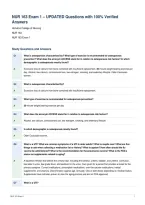
NUR 163 Exam 1 – UPDATED Questions with 100% Verified
Answers
Hondros College of Nursing
NUR 163
NUR 163 Exam 1
Study Questions and Answers
Q1 What is osteoporosis characterized by? What type of exercise is recommended for osteoporosis
prevention? What does the acronym ACCESS stand for in relation to osteoporosis risk factors? In which
demographic is osteoporosis mostly found?
A Excessive loss of calcium from bone combined with insufficient replacement. 30-minute weight bearing exercise per
day. Alcohol, low calcium, corticosteroid use, low estrogen, smoking, and sedentary lifestyle. Older Caucasian
women.
Q2 What is osteoporosis characterized by?
A Excessive loss of calcium from bone combined with insufficient replacement.
Q3 What type of exercise is recommended for osteoporosis prevention?
A 30-minute weight bearing exercise per day.
Q4 What does the acronym ACCESS stand for in relation to osteoporosis risk factors?
A Alcohol, low calcium, corticosteroid use, low estrogen, smoking, and sedentary lifestyle.
Q5 In which demographic is osteoporosis mostly found?
A Older Caucasian women.
Q6 What is a UTI? What are common symptoms of a UTI in older adults? What is respite care? What are five
things to ask when collecting a medication list or history? What is ageism? How often should the flu
vaccine be administered? What is the recommendation for the pneumonia vaccine? What is the FDA's
stance on supplements related to aging?
A A bacterial infection that affects the urinary tract, including the kidneys, ureters, bladder, and urethra. Confusion,
bad odor in urine, low-grade fever, and sediment in the urine. Care given for a period that provides a break for the
primary caregiver. Current medications, prescription medications, over-the-counter medications, herbal
supplements, and vitamins. Discrimination against age. Annually. One or both doses depending on medical history.
Supplements have not been proven to slow the aging process and are not FDA approved.
Q7 What is a UTI?
NUR 163 Exam 1 1
, A A bacterial infection that affects the urinary tract, including the kidneys, ureters, bladder, and urethra.
Q8 What are common symptoms of a UTI in older adults?
A Confusion, bad odor in urine, low-grade fever, and sediment in the urine.
Q9 What is respite care?
A Care given for a period that provides a break for the primary caregiver.
Q10 What are five things to ask when collecting a medication list or history?
A Current medications, prescription medications, over-the-counter medications, herbal supplements, and vitamins.
Q11 What is ageism?
A Discrimination against age.
Q12 How often should the flu vaccine be administered?
A Annually.
Q13 What is the recommendation for the pneumonia vaccine?
A One or both doses depending on medical history.
Q14 What is the FDA's stance on supplements related to aging?
A Supplements have not been proven to slow the aging process and are not FDA approved.
Q15 What risks can supplements pose? What cognitive changes can increase the risk for medication errors in
older adults? What sensory changes may affect older adults' ability to manage medications? What is
presbycusis? What risks are associated with inadequate knowledge of medications in older adults? How
can older adults reduce risks related to medication management? How are drugs absorbed in the body?
A They can cause interactions with some prescription medications. Lack of literacy skills, inability to understand
directions, and poor judgment about medications. Changes in touch, taste, smell, hearing, and vision. Loss of
hearing. Sharing medications, misunderstanding OTC medications, and misuse of alcohol. Assessing ability to read
labels, patient education, and using special labels or magnifying devices. Drugs are absorbed through the GI tract.
Q16 What risks can supplements pose?
A They can cause interactions with some prescription medications.
Q17 What cognitive changes can increase the risk for medication errors in older adults?
NUR 163 Exam 1 2
, A Lack of literacy skills, inability to understand directions, and poor judgment about medications.
Q18 What sensory changes may affect older adults' ability to manage medications?
A Changes in touch, taste, smell, hearing, and vision.
Q19 What is presbycusis?
A Loss of hearing.
Q20 What risks are associated with inadequate knowledge of medications in older adults?
A Sharing medications, misunderstanding OTC medications, and misuse of alcohol.
Q21 How can older adults reduce risks related to medication management?
A Assessing ability to read labels, patient education, and using special labels or magnifying devices.
Q22 How are drugs absorbed in the body?
A Drugs are absorbed through the GI tract.
Q23 How does body weight affect drug absorption? What are the routes of drug administration that are
decreased for oral and rectal use? How does aging affect the distribution of water-soluble drugs? What
happens to fat-soluble drugs as a person ages? What nursing interventions should be taken when
administering medications to older adults? What changes occur in drug metabolism with aging?
A Increased weight decreases absorption, while IV, epidural, and sublingual routes increase absorption. Moderate
through IM (intramuscular) and subQ (subcutaneous) routes. Water-soluble drugs tend to remain in high
concentration in the bloodstream due to less total body water. Fat-soluble drugs become trapped in fatty tissue
because of decreased muscle mass and increased adipose tissue. Administer drugs as ordered, give slower and
lower amounts, and assess physical and numeric age along with past drug issues. Aging results in decreased liver
cell activity, reducing the liver's effectiveness in metabolizing drugs and increasing the risk for toxicity.
Q24 How does body weight affect drug absorption?
A Increased weight decreases absorption, while IV, epidural, and sublingual routes increase absorption.
Q25 What are the routes of drug administration that are decreased for oral and rectal use?
A Moderate through IM (intramuscular) and subQ (subcutaneous) routes.
Q26 How does aging affect the distribution of water-soluble drugs?
A Water-soluble drugs tend to remain in high concentration in the bloodstream due to less total body water.
NUR 163 Exam 1 3


