
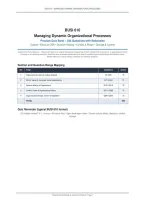
BUSI 610 – MANAGING DYNAMIC ORGANIZATIONAL PROCESSES
BUSI 610
Managing Dynamic Organizational Processes
Practice Quiz Bank – 350 Questions with Rationales
Culture • Ethics & CSR • Decision Making • Conflict & Power • Change & Control
Independent Study Resource – This practice bank is an original educational resource and is NOT affiliated with, endorsed by, or sponsored by Liberty
University or any textbook publisher. Questions were developed independently for study of standard organizational design and behavior topics.
Always follow your course syllabus, textbook, and instructor guidance.
Section and Question Range Mapping
Sec Topic Questions Count
1 Organizational Culture & Cultural Analysis Q1-Q70 70
2 Ethics, Values & Corporate Social Responsibility Q71-Q140 70
3 Decision Making in Organizations Q141-Q210 70
4 Conflict, Power & Organizational Politics Q211-Q280 70
5 Organizational Change, Control & Adaptation Q281-Q350 70
TOTAL 350
Quiz Reminder (typical BUSI 610 format)
~25 multiple-choice/T-F + 1 essay • 45-minute limit • Open-book/open-notes • Covers culture, ethics, decisions, conflict,
change
Organizational Design & Structure Practice | Page 1
, BUSI 610 – MANAGING DYNAMIC ORGANIZATIONAL PROCESSES
Section 1: Organizational Culture & Cultural Analysis
Q1: Organizational culture is best described as:
A. Only the formal organization chart
B. The shared values, beliefs, assumptions, and norms that guide behavior in an organization
[CORRECT]
C. Only written policies
D. Only the physical layout of offices
Correct Answer: B
Rationale: Culture consists of the deeper, often taken-for-granted patterns that shape how members interpret
and act.
Q2: Observable symbols, ceremonies, and dress are examples of:
A. Underlying assumptions only
B. Artifacts / surface manifestations of culture [CORRECT]
C. The entire culture
D. Irrelevant decoration
Correct Answer: B
Rationale: Artifacts are the visible layer; deeper values and assumptions are harder for outsiders to discern
accurately.
Q3: A strong culture is characterized by:
A. Wide disagreement on core values
B. High agreement on and intense commitment to core values [CORRECT]
C. No shared norms
D. Constant change of values every week
Correct Answer: B
Rationale: Strength refers to both consensus and intensity of shared values.
Organizational Design & Structure Practice | Page 2
, BUSI 610 – MANAGING DYNAMIC ORGANIZATIONAL PROCESSES
Q4: In a mission culture, managers primarily shape behavior by:
A. Strict rules only
B. Envisioning and communicating a desired future state for the organization [CORRECT]
C. Ignoring strategy
D. Eliminating all goals
Correct Answer: B
Rationale: Mission cultures emphasize a clear purpose and future vision.
Q5: An outsider analyzing only symbols and ceremonies can typically discern underlying
cultural values:
A. With 100% accuracy equal to a long-term insider
B. Only partially; surface artifacts are imperfect indicators of deeper assumptions [CORRECT]
C. Never at all
D. Better than any insider
Correct Answer: B
Rationale: Artifacts give clues but can be misinterpreted; lived experience reveals assumptions more reliably.
Q6: Clan culture emphasizes:
A. Rigid hierarchy and formal rules only
B. Collaboration, mentoring, and a family-like atmosphere [CORRECT]
C. Only external competition
D. Purely transactional contracts
Correct Answer: B
Rationale: Clan cultures value internal cohesion and people development.
Q7: Bureaucratic (hierarchy) culture stresses:
A. Flexibility and risk-taking above all
B. Formal rules, efficiency, and stability [CORRECT]
C. Only creativity
D. No structure
Correct Answer: B
Rationale: Hierarchy cultures prioritize control, consistency, and formal procedures.
Organizational Design & Structure Practice | Page 3
, BUSI 610 – MANAGING DYNAMIC ORGANIZATIONAL PROCESSES
Q8: Entrepreneurial (adhocracy) culture values:
A. Strict adherence to past practices only
B. Innovation, risk-taking, and adaptability [CORRECT]
C. Only cost cutting
D. Zero experimentation
Correct Answer: B
Rationale: Adhocracy cultures thrive on creativity and external opportunity.
Q9: Culture strength can be a liability when:
A. It always improves performance
B. It creates resistance to necessary change or suppresses dissent [CORRECT]
C. It never affects strategy
D. It is weak
Correct Answer: B
Rationale: Strong cultures can impede adaptation if they lock in outdated assumptions.
Q10: Socialization is the process by which:
A. Only formal training manuals are distributed
B. New members learn and internalize the organization’s values and norms [CORRECT]
C. Culture is eliminated
D. Only pay is discussed
Correct Answer: B
Rationale: Socialization transmits culture across generations of employees.
Q11: (Review item 11) Organizational culture is best described as:
A. Only the formal organization chart
B. The shared values, beliefs, assumptions, and norms that guide behavior in an organization
[CORRECT]
C. Only written policies
D. Only the physical layout of offices
Correct Answer: B
Rationale: Culture consists of the deeper, often taken-for-granted patterns that shape how members interpret
and act.
Organizational Design & Structure Practice | Page 4
BUSI 610
Managing Dynamic Organizational Processes
Practice Quiz Bank – 350 Questions with Rationales
Culture • Ethics & CSR • Decision Making • Conflict & Power • Change & Control
Independent Study Resource – This practice bank is an original educational resource and is NOT affiliated with, endorsed by, or sponsored by Liberty
University or any textbook publisher. Questions were developed independently for study of standard organizational design and behavior topics.
Always follow your course syllabus, textbook, and instructor guidance.
Section and Question Range Mapping
Sec Topic Questions Count
1 Organizational Culture & Cultural Analysis Q1-Q70 70
2 Ethics, Values & Corporate Social Responsibility Q71-Q140 70
3 Decision Making in Organizations Q141-Q210 70
4 Conflict, Power & Organizational Politics Q211-Q280 70
5 Organizational Change, Control & Adaptation Q281-Q350 70
TOTAL 350
Quiz Reminder (typical BUSI 610 format)
~25 multiple-choice/T-F + 1 essay • 45-minute limit • Open-book/open-notes • Covers culture, ethics, decisions, conflict,
change
Organizational Design & Structure Practice | Page 1
, BUSI 610 – MANAGING DYNAMIC ORGANIZATIONAL PROCESSES
Section 1: Organizational Culture & Cultural Analysis
Q1: Organizational culture is best described as:
A. Only the formal organization chart
B. The shared values, beliefs, assumptions, and norms that guide behavior in an organization
[CORRECT]
C. Only written policies
D. Only the physical layout of offices
Correct Answer: B
Rationale: Culture consists of the deeper, often taken-for-granted patterns that shape how members interpret
and act.
Q2: Observable symbols, ceremonies, and dress are examples of:
A. Underlying assumptions only
B. Artifacts / surface manifestations of culture [CORRECT]
C. The entire culture
D. Irrelevant decoration
Correct Answer: B
Rationale: Artifacts are the visible layer; deeper values and assumptions are harder for outsiders to discern
accurately.
Q3: A strong culture is characterized by:
A. Wide disagreement on core values
B. High agreement on and intense commitment to core values [CORRECT]
C. No shared norms
D. Constant change of values every week
Correct Answer: B
Rationale: Strength refers to both consensus and intensity of shared values.
Organizational Design & Structure Practice | Page 2
, BUSI 610 – MANAGING DYNAMIC ORGANIZATIONAL PROCESSES
Q4: In a mission culture, managers primarily shape behavior by:
A. Strict rules only
B. Envisioning and communicating a desired future state for the organization [CORRECT]
C. Ignoring strategy
D. Eliminating all goals
Correct Answer: B
Rationale: Mission cultures emphasize a clear purpose and future vision.
Q5: An outsider analyzing only symbols and ceremonies can typically discern underlying
cultural values:
A. With 100% accuracy equal to a long-term insider
B. Only partially; surface artifacts are imperfect indicators of deeper assumptions [CORRECT]
C. Never at all
D. Better than any insider
Correct Answer: B
Rationale: Artifacts give clues but can be misinterpreted; lived experience reveals assumptions more reliably.
Q6: Clan culture emphasizes:
A. Rigid hierarchy and formal rules only
B. Collaboration, mentoring, and a family-like atmosphere [CORRECT]
C. Only external competition
D. Purely transactional contracts
Correct Answer: B
Rationale: Clan cultures value internal cohesion and people development.
Q7: Bureaucratic (hierarchy) culture stresses:
A. Flexibility and risk-taking above all
B. Formal rules, efficiency, and stability [CORRECT]
C. Only creativity
D. No structure
Correct Answer: B
Rationale: Hierarchy cultures prioritize control, consistency, and formal procedures.
Organizational Design & Structure Practice | Page 3
, BUSI 610 – MANAGING DYNAMIC ORGANIZATIONAL PROCESSES
Q8: Entrepreneurial (adhocracy) culture values:
A. Strict adherence to past practices only
B. Innovation, risk-taking, and adaptability [CORRECT]
C. Only cost cutting
D. Zero experimentation
Correct Answer: B
Rationale: Adhocracy cultures thrive on creativity and external opportunity.
Q9: Culture strength can be a liability when:
A. It always improves performance
B. It creates resistance to necessary change or suppresses dissent [CORRECT]
C. It never affects strategy
D. It is weak
Correct Answer: B
Rationale: Strong cultures can impede adaptation if they lock in outdated assumptions.
Q10: Socialization is the process by which:
A. Only formal training manuals are distributed
B. New members learn and internalize the organization’s values and norms [CORRECT]
C. Culture is eliminated
D. Only pay is discussed
Correct Answer: B
Rationale: Socialization transmits culture across generations of employees.
Q11: (Review item 11) Organizational culture is best described as:
A. Only the formal organization chart
B. The shared values, beliefs, assumptions, and norms that guide behavior in an organization
[CORRECT]
C. Only written policies
D. Only the physical layout of offices
Correct Answer: B
Rationale: Culture consists of the deeper, often taken-for-granted patterns that shape how members interpret
and act.
Organizational Design & Structure Practice | Page 4


