
OPOTA / OPOTC PEACE OFFICER BASIC – PRACTICE EXAM
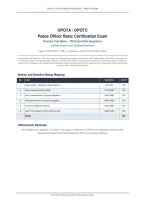
OPOTA / OPOTC
Peace Officer Basic Certification Exam
Practice Test Bank – 720 Exam-Style Questions
Verified Answers with Detailed Rationales
Legal • Patrol • Ethics • Traffic • Investigation • Use of Force & Officer Safety
Independent Study Resource – This practice bank is an independent educational resource and is NOT affiliated with, endorsed by, or sponsored by
the Ohio Peace Officer Training Commission (OPOTC), the Ohio Peace Officer Training Academy (OPOTA), the Ohio Attorney General’s Office, or
Pearson VUE. All questions were independently developed for study purposes based on publicly described basic training topics. Always follow official
curriculum, SPOs, and academy instruction.
Section and Question Range Mapping
Sec Topic Questions Count
1 Legal Authority – Constitution, Arrest, Search &... Q1-Q120 120
2 Patrol Procedures & Officer Safety Q121-Q240 120
3 Ethics, Professionalism & Community Relations Q241-Q360 120
4 Traffic Enforcement, OVI & Crash Investigation Q361-Q480 120
5 Criminal Investigation & Evidence Q481-Q600 120
6 Use of Force, Subject Control & Officer Survival Q601-Q720 120
TOTAL 720
Official Exam Reminder
200 multiple-choice questions • 2½ hours • 70% to pass • Authorized via OPOTC then scheduled at Pearson VUE
Study official Student Performance Objectives (SPOs) and academy materials
Ohio Peace Officer Certification Practice Bank | Page 1
, OPOTA / OPOTC PEACE OFFICER BASIC – PRACTICE EXAM
Section 1: Legal Authority – Constitution, Arrest, Search & Seizure
Q1: The Fourth Amendment primarily protects against:
A. Self-incrimination
B. Unreasonable searches and seizures [CORRECT]
C. Cruel and unusual punishment
D. Quartering of soldiers only
Correct Answer: B
Rationale: The Fourth Amendment guards against unreasonable searches and seizures and requires
warrants based on probable cause.
Q2: Probable cause is best described as:
A. A mere hunch
B. Facts and circumstances that would lead a reasonable person to believe a crime has
been, is being, or is about to be committed [CORRECT]
C. Absolute certainty
D. Only an anonymous tip with no corroboration
Correct Answer: B
Rationale: Probable cause is a practical, non-technical standard based on the totality of circumstances.
Q3: A Terry stop (stop and frisk) requires:
A. Probable cause for arrest
B. Reasonable suspicion that criminal activity is afoot; a frisk requires reasonable
suspicion the person is armed and dangerous [CORRECT]
C. A warrant in all cases
D. No justification at all
Correct Answer: B
Rationale: Terry v. Ohio allows brief stops on reasonable suspicion and limited frisks for weapons under
specific conditions.
Ohio Peace Officer Certification Practice Bank | Page 2
, OPOTA / OPOTC PEACE OFFICER BASIC – PRACTICE EXAM
Q4: Miranda warnings are generally required when:
A. Any casual conversation occurs
B. A person is in custody and subject to interrogation [CORRECT]
C. Only during traffic stops for speeding
D. Only after formal charging
Correct Answer: B
Rationale: Miranda applies to custodial interrogation.
Q5: The exclusionary rule generally means:
A. All evidence is always admissible
B. Evidence obtained in violation of constitutional rights may be suppressed [CORRECT]
C. Only civil evidence is affected
D. Officers may ignore warrants
Correct Answer: B
Rationale: Illegally obtained evidence can be excluded from criminal trials.
Q6: An arrest warrant is typically issued by:
A. Any civilian
B. A neutral magistrate upon a showing of probable cause [CORRECT]
C. The arresting officer alone without review
D. A media outlet
Correct Answer: B
Rationale: Warrants require judicial determination of probable cause.
Ohio Peace Officer Certification Practice Bank | Page 3
, OPOTA / OPOTC PEACE OFFICER BASIC – PRACTICE EXAM
Q7: Search incident to a lawful arrest may include:
A. The entire neighborhood
B. The arrestee’s person and the area within immediate control, subject to current
case-law limits [CORRECT]
C. Any house the person has ever visited
D. Unlimited digital device searches without further authority
Correct Answer: B
Rationale: Search incident to arrest is limited in scope by case law.
Q8: Consent to search must be:
A. Forced
B. Voluntary and given by someone with authority over the place or item [CORRECT]
C. Obtained only by written form in every situation
D. Irrelevant to the Fourth Amendment
Correct Answer: B
Rationale: Valid consent is voluntary and from a person with actual or apparent authority.
Q9: Exigent circumstances may allow a warrantless entry when:
A. It is merely convenient
B. There is an urgent need such as imminent destruction of evidence, emergency aid, or
hot pursuit, under applicable standards [CORRECT]
C. The officer simply prefers not to get a warrant
D. The property is unlocked
Correct Answer: B
Rationale: Exigency is a recognized exception when delay would endanger life, evidence, or the
investigation under legal standards.
Ohio Peace Officer Certification Practice Bank | Page 4
OPOTA / OPOTC
Peace Officer Basic Certification Exam
Practice Test Bank – 720 Exam-Style Questions
Verified Answers with Detailed Rationales
Legal • Patrol • Ethics • Traffic • Investigation • Use of Force & Officer Safety
Independent Study Resource – This practice bank is an independent educational resource and is NOT affiliated with, endorsed by, or sponsored by
the Ohio Peace Officer Training Commission (OPOTC), the Ohio Peace Officer Training Academy (OPOTA), the Ohio Attorney General’s Office, or
Pearson VUE. All questions were independently developed for study purposes based on publicly described basic training topics. Always follow official
curriculum, SPOs, and academy instruction.
Section and Question Range Mapping
Sec Topic Questions Count
1 Legal Authority – Constitution, Arrest, Search &... Q1-Q120 120
2 Patrol Procedures & Officer Safety Q121-Q240 120
3 Ethics, Professionalism & Community Relations Q241-Q360 120
4 Traffic Enforcement, OVI & Crash Investigation Q361-Q480 120
5 Criminal Investigation & Evidence Q481-Q600 120
6 Use of Force, Subject Control & Officer Survival Q601-Q720 120
TOTAL 720
Official Exam Reminder
200 multiple-choice questions • 2½ hours • 70% to pass • Authorized via OPOTC then scheduled at Pearson VUE
Study official Student Performance Objectives (SPOs) and academy materials
Ohio Peace Officer Certification Practice Bank | Page 1
, OPOTA / OPOTC PEACE OFFICER BASIC – PRACTICE EXAM
Section 1: Legal Authority – Constitution, Arrest, Search & Seizure
Q1: The Fourth Amendment primarily protects against:
A. Self-incrimination
B. Unreasonable searches and seizures [CORRECT]
C. Cruel and unusual punishment
D. Quartering of soldiers only
Correct Answer: B
Rationale: The Fourth Amendment guards against unreasonable searches and seizures and requires
warrants based on probable cause.
Q2: Probable cause is best described as:
A. A mere hunch
B. Facts and circumstances that would lead a reasonable person to believe a crime has
been, is being, or is about to be committed [CORRECT]
C. Absolute certainty
D. Only an anonymous tip with no corroboration
Correct Answer: B
Rationale: Probable cause is a practical, non-technical standard based on the totality of circumstances.
Q3: A Terry stop (stop and frisk) requires:
A. Probable cause for arrest
B. Reasonable suspicion that criminal activity is afoot; a frisk requires reasonable
suspicion the person is armed and dangerous [CORRECT]
C. A warrant in all cases
D. No justification at all
Correct Answer: B
Rationale: Terry v. Ohio allows brief stops on reasonable suspicion and limited frisks for weapons under
specific conditions.
Ohio Peace Officer Certification Practice Bank | Page 2
, OPOTA / OPOTC PEACE OFFICER BASIC – PRACTICE EXAM
Q4: Miranda warnings are generally required when:
A. Any casual conversation occurs
B. A person is in custody and subject to interrogation [CORRECT]
C. Only during traffic stops for speeding
D. Only after formal charging
Correct Answer: B
Rationale: Miranda applies to custodial interrogation.
Q5: The exclusionary rule generally means:
A. All evidence is always admissible
B. Evidence obtained in violation of constitutional rights may be suppressed [CORRECT]
C. Only civil evidence is affected
D. Officers may ignore warrants
Correct Answer: B
Rationale: Illegally obtained evidence can be excluded from criminal trials.
Q6: An arrest warrant is typically issued by:
A. Any civilian
B. A neutral magistrate upon a showing of probable cause [CORRECT]
C. The arresting officer alone without review
D. A media outlet
Correct Answer: B
Rationale: Warrants require judicial determination of probable cause.
Ohio Peace Officer Certification Practice Bank | Page 3
, OPOTA / OPOTC PEACE OFFICER BASIC – PRACTICE EXAM
Q7: Search incident to a lawful arrest may include:
A. The entire neighborhood
B. The arrestee’s person and the area within immediate control, subject to current
case-law limits [CORRECT]
C. Any house the person has ever visited
D. Unlimited digital device searches without further authority
Correct Answer: B
Rationale: Search incident to arrest is limited in scope by case law.
Q8: Consent to search must be:
A. Forced
B. Voluntary and given by someone with authority over the place or item [CORRECT]
C. Obtained only by written form in every situation
D. Irrelevant to the Fourth Amendment
Correct Answer: B
Rationale: Valid consent is voluntary and from a person with actual or apparent authority.
Q9: Exigent circumstances may allow a warrantless entry when:
A. It is merely convenient
B. There is an urgent need such as imminent destruction of evidence, emergency aid, or
hot pursuit, under applicable standards [CORRECT]
C. The officer simply prefers not to get a warrant
D. The property is unlocked
Correct Answer: B
Rationale: Exigency is a recognized exception when delay would endanger life, evidence, or the
investigation under legal standards.
Ohio Peace Officer Certification Practice Bank | Page 4


