
Trauma Nursing Process - TNP - TNCC 9th Ed.pdfhttps://online2pdf.com/remove-pdf-header-footer
Trauma Nursing Process - TNP - TNCC 9th Ed.pdfhttps://online2pdf.com/remove-pdf-header-footer
1 of 21https://online2pdf.com/remove-pdf-header-footer
Trauma Nursing Process - TNP -
TNCC 9th Ed
Save
Terms in this set (82)
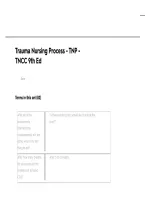
After all of the "Is there anything you would like to add at this
assessments, time?"
interventions,
reassessments, etc. are
done, what is the last
thing to ask?
After how many breaths After 5 to 6 breaths.
do you assess for the
evidence of exhaled
CO2?
Page 1 of 21https://online2pdf.com/remove-pdf-header-footer Page 1https://online2pdf.com/remove-pdf-header-footer
Trauma Nursing Process - TNP - TNCC 9th Edhttps://online2pdf.com/remove-pdf-header-footer
,Trauma Nursing Process - TNP - TNCC 9th Ed.pdfhttps://online2pdf.com/remove-pdf-header-footer
Trauma Nursing Process - TNP - TNCC 9th Ed.pdfhttps://online2pdf.com/remove-pdf-header-footer
2 of 21https://online2pdf.com/remove-pdf-header-footer
After identifying "What findings will you continue to reevaluate while
potential the patient is in your care?"
interventions/diagnostics
and completing your "Just keep re-evaluating"
assessments and
interventions, you should
ask yourself what?
After the head-to-toe, "What interventions or diagnostics can you
the learner should anticipate for this patient?"
summarize injuries
identified throughout the
scenario and ask
themselves:
**A stands for ___ and ___. alertness, airway
**B stands for ___ and ___. breathing, ventilation
9**. If intubated, assess endotracheal tube
Continue the TNP placement
assuming the patient was 10. If intubated, assess ETT position and securement
intubated. 9-11 11. If intubated, state the need to begin mechanical
ventilation or continue assisted ventilation
Page 2 of 21https://online2pdf.com/remove-pdf-header-footer Page 2https://online2pdf.com/remove-pdf-header-footer
Trauma Nursing Process - TNP - TNCC 9th Edhttps://online2pdf.com/remove-pdf-header-footer
, Trauma Nursing Process - TNP - TNCC 9th Ed.pdfhttps://online2pdf.com/remove-pdf-header-footer
Trauma Nursing Process - TNP - TNCC 9th Ed.pdfhttps://online2pdf.com/remove-pdf-header-footer
3 of 21https://online2pdf.com/remove-pdf-header-footer
Continue the TNP 16. Provide warmth
following assessments of 17. Obtain a full set of vital signs and weight in
circulation, neuro status, kilograms (if not determined earlier)
and removal of clothing 18. Facilitate family presence
to inspect for injury. 16-18
Continue the TNP 12**. Assess circulation
following assessments of 13**. Assess neurologic status using GCS
ETT. 12-15 14. Assess pupils
**12, 13, and 15 are 15**. Remove all clothing AND inspect for obvious
double-starred abnormalities or injuries
19. L - trauma panel labs
Continue the TNP using 20. M - monitor (Cardiac, consider EKG)
the LMNOP mnemonic. 21. N - consider need for NG/OG
19-23 22. O - assess O2 and end-tidal capnography
23**. P - assess pain using appropriate pain scale
Continue TNP after 24. Non-pharmacological comfort measures
LMNOP (so after pain 25. Consider analgesic med order
has been assessed). 24- 26. Obtain pertinent history
26
**C stands for ___. circulation
Page 3 of 21https://online2pdf.com/remove-pdf-header-footer Page 3https://online2pdf.com/remove-pdf-header-footer
Trauma Nursing Process - TNP - TNCC 9th Edhttps://online2pdf.com/remove-pdf-header-footer
Trauma Nursing Process - TNP - TNCC 9th Ed.pdfhttps://online2pdf.com/remove-pdf-header-footer
1 of 21https://online2pdf.com/remove-pdf-header-footer
Trauma Nursing Process - TNP -
TNCC 9th Ed
Save
Terms in this set (82)
After all of the "Is there anything you would like to add at this
assessments, time?"
interventions,
reassessments, etc. are
done, what is the last
thing to ask?
After how many breaths After 5 to 6 breaths.
do you assess for the
evidence of exhaled
CO2?
Page 1 of 21https://online2pdf.com/remove-pdf-header-footer Page 1https://online2pdf.com/remove-pdf-header-footer
Trauma Nursing Process - TNP - TNCC 9th Edhttps://online2pdf.com/remove-pdf-header-footer
,Trauma Nursing Process - TNP - TNCC 9th Ed.pdfhttps://online2pdf.com/remove-pdf-header-footer
Trauma Nursing Process - TNP - TNCC 9th Ed.pdfhttps://online2pdf.com/remove-pdf-header-footer
2 of 21https://online2pdf.com/remove-pdf-header-footer
After identifying "What findings will you continue to reevaluate while
potential the patient is in your care?"
interventions/diagnostics
and completing your "Just keep re-evaluating"
assessments and
interventions, you should
ask yourself what?
After the head-to-toe, "What interventions or diagnostics can you
the learner should anticipate for this patient?"
summarize injuries
identified throughout the
scenario and ask
themselves:
**A stands for ___ and ___. alertness, airway
**B stands for ___ and ___. breathing, ventilation
9**. If intubated, assess endotracheal tube
Continue the TNP placement
assuming the patient was 10. If intubated, assess ETT position and securement
intubated. 9-11 11. If intubated, state the need to begin mechanical
ventilation or continue assisted ventilation
Page 2 of 21https://online2pdf.com/remove-pdf-header-footer Page 2https://online2pdf.com/remove-pdf-header-footer
Trauma Nursing Process - TNP - TNCC 9th Edhttps://online2pdf.com/remove-pdf-header-footer
, Trauma Nursing Process - TNP - TNCC 9th Ed.pdfhttps://online2pdf.com/remove-pdf-header-footer
Trauma Nursing Process - TNP - TNCC 9th Ed.pdfhttps://online2pdf.com/remove-pdf-header-footer
3 of 21https://online2pdf.com/remove-pdf-header-footer
Continue the TNP 16. Provide warmth
following assessments of 17. Obtain a full set of vital signs and weight in
circulation, neuro status, kilograms (if not determined earlier)
and removal of clothing 18. Facilitate family presence
to inspect for injury. 16-18
Continue the TNP 12**. Assess circulation
following assessments of 13**. Assess neurologic status using GCS
ETT. 12-15 14. Assess pupils
**12, 13, and 15 are 15**. Remove all clothing AND inspect for obvious
double-starred abnormalities or injuries
19. L - trauma panel labs
Continue the TNP using 20. M - monitor (Cardiac, consider EKG)
the LMNOP mnemonic. 21. N - consider need for NG/OG
19-23 22. O - assess O2 and end-tidal capnography
23**. P - assess pain using appropriate pain scale
Continue TNP after 24. Non-pharmacological comfort measures
LMNOP (so after pain 25. Consider analgesic med order
has been assessed). 24- 26. Obtain pertinent history
26
**C stands for ___. circulation
Page 3 of 21https://online2pdf.com/remove-pdf-header-footer Page 3https://online2pdf.com/remove-pdf-header-footer
Trauma Nursing Process - TNP - TNCC 9th Edhttps://online2pdf.com/remove-pdf-header-footer


