
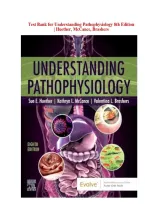
Test Bank for Understanding Pathophysiology, 8th Edition by Huether, McCance, and Brashers
Prepare for pathophysiology coursework with a structured study resource designed to complement Understanding Pathophysiology, 8th Edition by Sue E. Huether, Kathryn L. McCance, and related contributing authors, including Brashers. This educational study companion is intended to help nursing students and other healthcare learners strengthen their understanding of disease processes, physiological changes, clinical manifestations, and the scientific principles underlying patient care. Pathophysiology is a fundamental subject in nursing and healthcare education because it explains how normal body functions change when disease or injury occurs. Students must understand the relationship between cellular changes, organ dysfunction, clinical symptoms, diagnostic findings, and treatment approaches. Developing this knowledge helps learners interpret clinical information and build a stronger foundation for future coursework and clinical practice. This study resource can support independent revision, classroom learning, and knowledge assessment. By combining textbook reading with practice activities and self-assessment, students can identify challenging topics, reinforce important concepts, and develop the analytical skills needed to understand complex disease mechanisms. Key Learning Areas 1. Foundations of Pathophysiology Develop a solid understanding of the fundamental principles that explain how diseases develop and affect the human body. Review concepts involving normal physiological function, cellular adaptation, homeostasis, and the body's responses to injury and stress. Understanding these foundations helps students recognize how changes at the cellular level can influence tissues, organs, and entire body systems. These principles also provide a basis for interpreting disease progression and understanding why different conditions produce particular clinical manifestations. 2. Cellular Injury and Adaptive Responses Cellular injury is an important component of pathophysiology. Students benefit from reviewing the mechanisms through which cells respond to environmental stress, inadequate oxygen supply, harmful substances, and other damaging influences. Relevant topics include cellular adaptation, inflammation, tissue injury, cell death, and repair processes. Studying these mechanisms helps learners connect microscopic changes with the symptoms and complications that may occur in patients. Practice questions and concept-review activities can help students distinguish between normal adaptive responses and pathological changes that interfere with healthy function. 3. Inflammation and the Immune Response Inflammation and immunity play essential roles in protecting the body against injury and infection. However, abnormal or excessive immune responses can contribute to tissue damage and disease. Review topics may include acute and chronic inflammation, immune system function, hypersensitivity reactions, autoimmune disorders, and immunodeficiency conditions. Understanding these concepts helps students explain how the immune system responds to harmful stimuli and how disruptions in immune regulation may affect health. This knowledge is particularly useful when studying infectious diseases, inflammatory conditions, and disorders involving abnormal immune activity. 4. Genetic and Developmental Disorders Genetic information influences normal growth, development, and physiological function. Changes in genes or chromosomes can contribute to inherited conditions, developmental abnormalities, and differences in disease susceptibility. Study activities can reinforce the basic principles of genetic inheritance, mutations, chromosomal abnormalities, and the relationship between genetic factors and disease development. Students can use these concepts to better understand how inherited characteristics and environmental influences may interact to affect health outcomes throughout life. 5. Fluid, Electrolyte, and Acid-Base Imbalances Maintaining fluid balance, electrolyte concentrations, and acid-base regulation is essential for normal cellular activity. Disruptions in these processes can affect the nervous system, cardiovascular function, muscular activity, and other vital physiological processes. Important review areas include fluid volume disturbances, sodium and potassium imbalances, calcium abnormalities, and metabolic or respiratory acid-base disorders. Students should practice connecting laboratory findings with physiological mechanisms and potential clinical manifestations. These concepts are especially relevant to nursing assessments, patient monitoring, and understanding the rationale behind clinical interventions. 6. Cardiovascular System Disorders Cardiovascular pathophysiology examines conditions affecting the heart and blood vessels. Students can review mechanisms associated with hypertension, atherosclerosis, coronary artery disease, heart failure, and circulatory disturbances. Understanding these conditions requires connecting changes in blood flow, vascular resistance, cardiac function, and oxygen delivery with the signs and symptoms observed in patients. Structured learning activities can help students explain how cardiovascular disorders develop, recognize common complications, and understand the physiological basis of diagnostic findings. 7. Respiratory System Disorders The respiratory system supplies oxygen to the body and removes carbon dioxide. Diseases affecting ventilation, gas exchange, and pulmonary circulation can interfere with these essential functions. Review topics may include obstructive and restrictive pulmonary disorders, respiratory infections, impaired gas exchange, and mechanisms contributing to respiratory failure. Students should focus on how changes in airway function, lung tissue, and pulmonary circulation influence oxygenation and carbon dioxide removal. These principles support a clearer understanding of respiratory symptoms and clinical assessment findings. 8. Renal and Urinary System Disorders The kidneys regulate fluid and electrolyte balance, contribute to acid-base regulation, remove waste products, and perform important endocrine functions. Study activities may address acute and chronic kidney dysfunction, glomerular disorders, urinary tract conditions, and the physiological consequences of impaired renal function. Understanding renal pathophysiology helps students connect kidney dysfunction with changes in laboratory results, fluid balance, blood pressure, and the accumulation of metabolic waste products. 9. Endocrine and Metabolic Disorders The endocrine system regulates metabolism, growth, reproduction, stress responses, and numerous other physiological processes. Hormonal imbalances can therefore affect multiple body systems. Relevant topics may include diabetes mellitus, thyroid disorders, adrenal dysfunction, and other conditions associated with abnormal hormone production or regulation. Students can strengthen their understanding by examining normal hormone functions, mechanisms of endocrine dysfunction, characteristic clinical manifestations, and potential complications. 10. Neurological Disorders The nervous system coordinates sensation, movement, cognition, and many automatic body functions. Pathological changes affecting the brain, spinal cord, or peripheral nerves may result in significant changes in neurological function. Review areas can include cerebrovascular disorders, seizures, neurodegenerative conditions, traumatic neurological injury, and disturbances in nerve signaling. Learning the mechanisms behind these disorders helps students connect neurological findings with the underlying physiological changes. 11. Gastrointestinal and Hepatic Disorders The gastrointestinal system supports digestion, nutrient absorption, and waste elimination, while the liver performs important metabolic, synthetic, and detoxification functions. Students can review conditions affecting the esophagus, stomach, intestines, pancreas, gallbladder, and liver. Relevant concepts may include gastrointestinal inflammation, malabsorption, hepatic dysfunction, and disorders of digestion. Understanding these mechanisms helps learners interpret symptoms such as abdominal pain, altered bowel patterns, jaundice, and nutritional deficiencies in the context of disease processes. 12. Hematological and Musculoskeletal Disorders Blood and musculoskeletal tissues contribute to oxygen transport, immune defense, movement, structural support, and mineral storage. Study topics may include anemia, clotting abnormalities, selected blood disorders, osteoporosis, arthritis, and conditions affecting bone or muscle function. Reviewing these concepts can help students understand how abnormalities in blood composition, coagulation, bone structure, or muscle physiology affect overall health. Benefits for Students A structured pathophysiology study companion can provide several learning benefits: Organized revision: Review major concepts in manageable sections. Active recall: Test your knowledge and identify areas requiring additional study. Concept reinforcement: Revisit difficult disease mechanisms and physiological processes. Critical thinking: Practice connecting physiological changes with clinical manifestations. Scientific understanding: Strengthen the relationship between normal physiology and disease. Assessment preparation: Use practice activities to reinforce concepts covered in coursework. Independent learning: Develop a more consistent and focused study routine. Who Can Benefit From This Resource? This educational resource is intended for nursing students, allied health students, and other learners studying pathophysiology or related biomedical subjects. It may also support students reviewing disease mechanisms before advanced courses in medical-surgical nursing, pharmacology, clinical assessment, and related healthcare disciplines. Tutors and educators may find structured review activities useful when planning revision sessions or identifying concepts that require further explanation. How to Use This Study Resource For effective revision, begin by reading the relevant textbook chapter and identifying its major learning objectives. Complete available practice activities without referring to your notes, then review your responses to identify misunderstandings. Create a study schedule that divides complex subjects into smaller topics. For example, review cellular injury and inflammation before progressing to individual organ-system disorders. This sequence helps build a foundation for understanding more complicated disease processes. When studying a condition, ask yourself four questions: What physiological process is normally responsible for this function? What changes when the disease develops? How do these changes produce the patient's clinical manifestations? What laboratory findings or assessment results might be associated with the underlying mechanism? These questions encourage deeper understanding instead of memorizing isolated facts. Always compare study materials with the assigned textbook, course objectives, and current clinical references. Important Product Information This listing describes a supplementary educational study resource associated with Understanding Pathophysiology, 8th Edition. The exact contents, number of questions, answer explanations, delivery format, and chapter coverage should be verified with the seller before purchase. Unless independently confirmed, this resource should not be advertised as an official publisher product, an authorized examination, or a collection of actual examination questions. Students should use supplementary materials alongside their assigned textbook and course resources. Conclusion Build a stronger foundation in pathophysiology by reviewing the mechanisms that explain disease development, cellular injury, inflammation, immune responses, and dysfunction across major body systems. Consistent practice and focused textbook review can help students connect scientific principles with clinical manifestations and improve their understanding of complex healthcare concepts. Whether you are reviewing foundational mechanisms or studying individual organ-system disorders, a structured study approach can make pathophysiology more manageable and support your long-term academic development.
Document information
- Uploaded on
- October 12, 2026
- Number of pages
- 368
- Written in
- 2026/2027
- Type
- Exam (elaborations)
- Contains
- Questions & answers


