
[STUDY GUIDE] • HIGH-YIELD PRACTICE & REVIEW EDITION
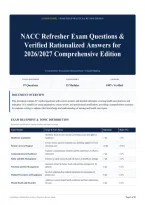
NACC Refresher Exam Questions &
Verified Rationalized Answers for
2026/2027 Comprehensive Edition
Comprehensive Examination Question Bank • Concept Mapping
TOTAL QUESTIONS EXAM TOPICS ANSWERS
97 Questions 15 Modules 100% Verified
DOCUMENT OVERVIEW
This document contains 97 verified questions with correct answers and detailed rationales covering health care practices and
principles. It is suitable for exam preparation, course review, and professional certification, providing a comprehensive resource
for students seeking to enhance their knowledge and understanding of nursing and health care topics.
EXAM BLUEPRINT & TOPIC DISTRIBUTION
Systematic breakdown of subject domains and exam coverage.
Topic Module Scope & Core Focus Questions Share (%)
Questions focus on laws and acts governing access and rights in
Healthcare Legislation healthcare. 7 Qs 7.2%
Covers various aspects of patient care, including support services
Patient Care and Support and home care. 10 Qs 10.3%
Explores communication methods and the importance of effective
Communication in Healthcare interaction. 7 Qs 7.2%
Safety and Risk Management Focuses on safety protocols and risk factors in healthcare settings. 7 Qs 7.2%
Questions related to dietary needs and nutrition management for
Nutrition and Diet Management patients. 6 Qs 6.2%
Involves understanding medical equipment and procedures in
Medical Procedures and Equipment patient care. 6 Qs 6.2%
Addresses various mental health conditions and their implications
Mental Health and Disorders for care. 6 Qs 6.2%
Confidential • Student Study Edition • Practice & Review Guide Page 1 of 50
,STUDENT STUDY & MASTERY EDITION PRACTICE & REVIEW GUIDE
Aging and Developmental
Considerations Covers issues related to aging and developmental disabilities. 6 Qs 6.2%
Legal and Ethical Aspects of Care Discusses ethical principles and legal considerations in healthcare. 6 Qs 6.2%
Focuses on emergency care situations and immediate responses
Emergency Response and First Aid required. 6 Qs 6.2%
Addresses concepts related to rehabilitation and support during
Rehabilitation and Recovery recovery. 6 Qs 6.2%
Hygiene and Infection Control Covers practices related to hygiene and the prevention of infections. 6 Qs 6.2%
Examines the physical aspects of patient care, including mobility
Physical Care and Mobility assistance. 6 Qs 6.2%
Focuses on patient rights, advocacy, and ethical considerations in
Patient Rights and Advocacy care. 6 Qs 6.2%
Vital Signs and Measurements Questions related to measuring and understanding vital signs. 6 Qs 6.2%
Total Exam Coverage 15 Integrated Topic Modules 97 Qs 100.0%
TOPIC 1: HEALTHCARE LEGISLATION
7 Questions • 7.2% of Exam • Questions focus on laws and acts governing access and rights in healthcare.
QUESTION 1
Which law ensures that every citizen has access to health care?
The UHC Act
Canadian Medical Care Act 1966
Canada Medical Act 1912
The Canada Health Act
Answer: The Canada Health Act.
Rationale: The Canada Health Act is the correct answer because it specifically ensures that every citizen of Canada has access to health
care by mandating that provinces and territories provide universal coverage and prohibiting extra-billing and user fees, thereby
guaranteeing access to essential health services. The Act also provides for a national framework of principles, including comprehensive
coverage, portability, and accessibility, which ensures that all Canadians can access the health care they need.
Confidential • Student Study Edition • Practice & Review Guide Page 2 of 50
,STUDENT STUDY & MASTERY EDITION PRACTICE & REVIEW GUIDE
QUESTION 2
The most pressing cause of health care reform has been:
Rising costs of providing technology, drugs and services Public health, hospital reform, health
financing, health regulation and local health system Shortage of hospitals and surgical equipment
Access, cost, quality, and the economic burden placed on patients, employers, and payers
Answer: Rising costs of providing technology, drugs and services.
Rationale: The rising costs of providing technology, drugs, and services is the most pressing cause of health care reform because it has
led to a significant increase in healthcare expenses, making it difficult for individuals and organizations to afford necessary care, and
has forced policymakers to re-examine the healthcare system to find ways to reduce costs and improve efficiency.
QUESTION 3
The nurse gives Mr. Smith medication for pain. A procedure is schedule for this time. You should
a. Omit the procedure for the day
b. Perform the procedure before the medication is given
c. Wait half an hour to let medication take effect
d. Perform the procedure after the medication is given
Answer: Wait half an hour to let medication take effect.
Rationale: The correct answer is to wait half an hour to let the medication take effect, as this allows the medication to start working and
reach its peak level in the blood, ensuring optimal pain relief during the procedure. By waiting, the nurse can minimize potential
discomfort or pain during the procedure, making it a safer and more effective option for Mr. Smith.
QUESTION 4
A symptom of mastitis is
a. Postpartum blues
b. Thirst while breastfeeding
c. Engorgement
d. Pain in a breast
Answer: Pain in a breast.
Rationale: Mastitis is a condition characterized by inflammation of the breast tissue, typically occurring in breastfeeding women. The
correct answer, "Pain in a breast", is a key symptom of mastitis, as it is a common manifestation of the inflammation and infection that
occurs in the breast tissue.
Confidential • Student Study Edition • Practice & Review Guide Page 3 of 50
, STUDENT STUDY & MASTERY EDITION PRACTICE & REVIEW GUIDE
QUESTION 5
Which member of the rehabilitation team evaluates a client's strength and balance
a. The occupational therapist
b. The physiotherapist
c. The primary care giver
d. The nurse
Answer: The physiotherapist.
Rationale: The physiotherapist evaluates a client's strength and balance because physiotherapy is a specialized healthcare profession
that focuses on the evaluation and treatment of physical impairments, disabilities, and disorders, including those related to strength,
balance, and mobility. As part of their assessment, physiotherapists use various techniques and tools to assess a client's strength and
balance, which informs the development of a personalized treatment plan to promote optimal physical function and recovery.
QUESTION 6
A person has an indwelling catheter. which is incorrect
a. Report complaints of pain,burning, the need to void, or irritation immediately
b. Make sure the tubing is free of kinks
c. Keep the drainage bag below the level of the bladder
d. Tape any leaks at the connection site
Answer: Tape any leaks at the connection site.
Rationale: Taping any leaks at the connection site is the correct answer because an indwelling catheter is prone to leaking at the
connection point, and securing the leak with tape ensures a secure seal and prevents urine from escaping and causing skin irritation or
infection. This step is crucial in preventing complications related to the catheter and ensuring the patient's comfort and safety.
Confidential • Student Study Edition • Practice & Review Guide Page 4 of 50
NACC Refresher Exam Questions &
Verified Rationalized Answers for
2026/2027 Comprehensive Edition
Comprehensive Examination Question Bank • Concept Mapping
TOTAL QUESTIONS EXAM TOPICS ANSWERS
97 Questions 15 Modules 100% Verified
DOCUMENT OVERVIEW
This document contains 97 verified questions with correct answers and detailed rationales covering health care practices and
principles. It is suitable for exam preparation, course review, and professional certification, providing a comprehensive resource
for students seeking to enhance their knowledge and understanding of nursing and health care topics.
EXAM BLUEPRINT & TOPIC DISTRIBUTION
Systematic breakdown of subject domains and exam coverage.
Topic Module Scope & Core Focus Questions Share (%)
Questions focus on laws and acts governing access and rights in
Healthcare Legislation healthcare. 7 Qs 7.2%
Covers various aspects of patient care, including support services
Patient Care and Support and home care. 10 Qs 10.3%
Explores communication methods and the importance of effective
Communication in Healthcare interaction. 7 Qs 7.2%
Safety and Risk Management Focuses on safety protocols and risk factors in healthcare settings. 7 Qs 7.2%
Questions related to dietary needs and nutrition management for
Nutrition and Diet Management patients. 6 Qs 6.2%
Involves understanding medical equipment and procedures in
Medical Procedures and Equipment patient care. 6 Qs 6.2%
Addresses various mental health conditions and their implications
Mental Health and Disorders for care. 6 Qs 6.2%
Confidential • Student Study Edition • Practice & Review Guide Page 1 of 50
,STUDENT STUDY & MASTERY EDITION PRACTICE & REVIEW GUIDE
Aging and Developmental
Considerations Covers issues related to aging and developmental disabilities. 6 Qs 6.2%
Legal and Ethical Aspects of Care Discusses ethical principles and legal considerations in healthcare. 6 Qs 6.2%
Focuses on emergency care situations and immediate responses
Emergency Response and First Aid required. 6 Qs 6.2%
Addresses concepts related to rehabilitation and support during
Rehabilitation and Recovery recovery. 6 Qs 6.2%
Hygiene and Infection Control Covers practices related to hygiene and the prevention of infections. 6 Qs 6.2%
Examines the physical aspects of patient care, including mobility
Physical Care and Mobility assistance. 6 Qs 6.2%
Focuses on patient rights, advocacy, and ethical considerations in
Patient Rights and Advocacy care. 6 Qs 6.2%
Vital Signs and Measurements Questions related to measuring and understanding vital signs. 6 Qs 6.2%
Total Exam Coverage 15 Integrated Topic Modules 97 Qs 100.0%
TOPIC 1: HEALTHCARE LEGISLATION
7 Questions • 7.2% of Exam • Questions focus on laws and acts governing access and rights in healthcare.
QUESTION 1
Which law ensures that every citizen has access to health care?
The UHC Act
Canadian Medical Care Act 1966
Canada Medical Act 1912
The Canada Health Act
Answer: The Canada Health Act.
Rationale: The Canada Health Act is the correct answer because it specifically ensures that every citizen of Canada has access to health
care by mandating that provinces and territories provide universal coverage and prohibiting extra-billing and user fees, thereby
guaranteeing access to essential health services. The Act also provides for a national framework of principles, including comprehensive
coverage, portability, and accessibility, which ensures that all Canadians can access the health care they need.
Confidential • Student Study Edition • Practice & Review Guide Page 2 of 50
,STUDENT STUDY & MASTERY EDITION PRACTICE & REVIEW GUIDE
QUESTION 2
The most pressing cause of health care reform has been:
Rising costs of providing technology, drugs and services Public health, hospital reform, health
financing, health regulation and local health system Shortage of hospitals and surgical equipment
Access, cost, quality, and the economic burden placed on patients, employers, and payers
Answer: Rising costs of providing technology, drugs and services.
Rationale: The rising costs of providing technology, drugs, and services is the most pressing cause of health care reform because it has
led to a significant increase in healthcare expenses, making it difficult for individuals and organizations to afford necessary care, and
has forced policymakers to re-examine the healthcare system to find ways to reduce costs and improve efficiency.
QUESTION 3
The nurse gives Mr. Smith medication for pain. A procedure is schedule for this time. You should
a. Omit the procedure for the day
b. Perform the procedure before the medication is given
c. Wait half an hour to let medication take effect
d. Perform the procedure after the medication is given
Answer: Wait half an hour to let medication take effect.
Rationale: The correct answer is to wait half an hour to let the medication take effect, as this allows the medication to start working and
reach its peak level in the blood, ensuring optimal pain relief during the procedure. By waiting, the nurse can minimize potential
discomfort or pain during the procedure, making it a safer and more effective option for Mr. Smith.
QUESTION 4
A symptom of mastitis is
a. Postpartum blues
b. Thirst while breastfeeding
c. Engorgement
d. Pain in a breast
Answer: Pain in a breast.
Rationale: Mastitis is a condition characterized by inflammation of the breast tissue, typically occurring in breastfeeding women. The
correct answer, "Pain in a breast", is a key symptom of mastitis, as it is a common manifestation of the inflammation and infection that
occurs in the breast tissue.
Confidential • Student Study Edition • Practice & Review Guide Page 3 of 50
, STUDENT STUDY & MASTERY EDITION PRACTICE & REVIEW GUIDE
QUESTION 5
Which member of the rehabilitation team evaluates a client's strength and balance
a. The occupational therapist
b. The physiotherapist
c. The primary care giver
d. The nurse
Answer: The physiotherapist.
Rationale: The physiotherapist evaluates a client's strength and balance because physiotherapy is a specialized healthcare profession
that focuses on the evaluation and treatment of physical impairments, disabilities, and disorders, including those related to strength,
balance, and mobility. As part of their assessment, physiotherapists use various techniques and tools to assess a client's strength and
balance, which informs the development of a personalized treatment plan to promote optimal physical function and recovery.
QUESTION 6
A person has an indwelling catheter. which is incorrect
a. Report complaints of pain,burning, the need to void, or irritation immediately
b. Make sure the tubing is free of kinks
c. Keep the drainage bag below the level of the bladder
d. Tape any leaks at the connection site
Answer: Tape any leaks at the connection site.
Rationale: Taping any leaks at the connection site is the correct answer because an indwelling catheter is prone to leaking at the
connection point, and securing the leak with tape ensures a secure seal and prevents urine from escaping and causing skin irritation or
infection. This step is crucial in preventing complications related to the catheter and ensuring the patient's comfort and safety.
Confidential • Student Study Edition • Practice & Review Guide Page 4 of 50


