
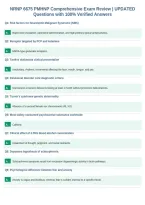
NRNP 6675 PMHNP Comprehensive Exam Review | UPDATED
Questions with 100% Verified Answers
Q1: Risk factors for Neuroleptic Malignant Syndrome (NMS)
A: Rapid dose escalation, parenteral administration, and high-potency typical antipsychotics.
Q2: Receptor targeted by PCP and ketamine
A: NMDA-type glutamate receptors.
Q3: Tardive dyskinesia clinical presentation
A: Involuntary, rhythmic movements affecting the face, mouth, tongue, and jaw.
Q4: Delusional disorder core diagnostic criteria
A: Non-bizarre or bizarre delusions lasting at least 1 month without prominent hallucinations.
Q5: Turner's syndrome genetic abnormality
A: Absence of a second female sex chromosome (45, XO).
Q6: Most widely consumed psychoactive substance worldwide
A: Caffeine.
Q7: Clinical effect of 0.05% blood alcohol concentration
A: Impairment of thought, judgment, and social restraints.
Q8: Dopamine hypothesis of schizophrenia
A: Schizophrenia symptoms result from excessive dopaminergic activity in brain pathways.
Q9: Psychological difference between fear and anxiety
A: Anxiety is vague and insidious, whereas fear is sudden and tied to a specific threat.
, Q10: Neuroadaptation definition
A: Neurochemical or neurophysiological changes resulting from repeated drug administration.
Q11: Bleuler's 4 A's of Schizophrenia
A: Associations, Affect, Autism, and Ambivalence.
Q12: Agoraphobia definition
A: Fear or anxiety regarding situations where escape or obtaining help might be difficult.
Q13: Acamprosate clinical indication
A: Maintenance of alcohol abstinence in alcohol-dependent individuals following detoxification.
Q14: Beneficence definition in healthcare ethics
A: Action done to benefit others and promote patient welfare.
Q15: Non-maleficence definition in healthcare ethics
A: The ethical obligation to avoid causing harm to patients.
Q16: Justice definition in bioethics
A: Equitable and fair distribution of healthcare benefits and burdens.
Q17: Respect for autonomy definition
A: Honoring a patient's moral right to make independent decisions regarding personal care.
Q18: Wernicke's encephalopathy clinical triad
A: Ophthalmoplegia (nystagmus), ataxia, and acute mental status confusion.
Q19: Pathophysiology of Wernicke's encephalopathy
A: Acute brain tissue depletion of thiamine (vitamin B1).
Questions with 100% Verified Answers
Q1: Risk factors for Neuroleptic Malignant Syndrome (NMS)
A: Rapid dose escalation, parenteral administration, and high-potency typical antipsychotics.
Q2: Receptor targeted by PCP and ketamine
A: NMDA-type glutamate receptors.
Q3: Tardive dyskinesia clinical presentation
A: Involuntary, rhythmic movements affecting the face, mouth, tongue, and jaw.
Q4: Delusional disorder core diagnostic criteria
A: Non-bizarre or bizarre delusions lasting at least 1 month without prominent hallucinations.
Q5: Turner's syndrome genetic abnormality
A: Absence of a second female sex chromosome (45, XO).
Q6: Most widely consumed psychoactive substance worldwide
A: Caffeine.
Q7: Clinical effect of 0.05% blood alcohol concentration
A: Impairment of thought, judgment, and social restraints.
Q8: Dopamine hypothesis of schizophrenia
A: Schizophrenia symptoms result from excessive dopaminergic activity in brain pathways.
Q9: Psychological difference between fear and anxiety
A: Anxiety is vague and insidious, whereas fear is sudden and tied to a specific threat.
, Q10: Neuroadaptation definition
A: Neurochemical or neurophysiological changes resulting from repeated drug administration.
Q11: Bleuler's 4 A's of Schizophrenia
A: Associations, Affect, Autism, and Ambivalence.
Q12: Agoraphobia definition
A: Fear or anxiety regarding situations where escape or obtaining help might be difficult.
Q13: Acamprosate clinical indication
A: Maintenance of alcohol abstinence in alcohol-dependent individuals following detoxification.
Q14: Beneficence definition in healthcare ethics
A: Action done to benefit others and promote patient welfare.
Q15: Non-maleficence definition in healthcare ethics
A: The ethical obligation to avoid causing harm to patients.
Q16: Justice definition in bioethics
A: Equitable and fair distribution of healthcare benefits and burdens.
Q17: Respect for autonomy definition
A: Honoring a patient's moral right to make independent decisions regarding personal care.
Q18: Wernicke's encephalopathy clinical triad
A: Ophthalmoplegia (nystagmus), ataxia, and acute mental status confusion.
Q19: Pathophysiology of Wernicke's encephalopathy
A: Acute brain tissue depletion of thiamine (vitamin B1).


