
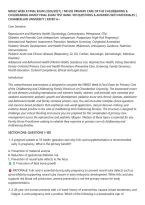
NR602 WEEK 8 FINAL EXAM (2026/2027) / NR 602 PRIMARY CARE OF THE CHILDBEARING &
CHILDREARING FAMILY FINAL EXAM TEST BANK: 100 QUESTIONS & ANSWERS WITH RATIONALES |
CHAMBERLAIN UNIVERSITY | RATED A+
Core Domains
Reproductive and Women's Health (Gynecology, Contraception, Menopause, STIs)
Obstetric and Prenatal Care (Antepartum, Intrapartum, Postpartum, High-Risk Pregnancy)
Neonatal and Newborn Assessment (Transition, Newborn Screening, Congenital Anomalies)
Pediatric Growth, Development, and Health Promotion (Milestones, Anticipatory Guidance, Nutrition,
Immunizations)
Pediatric Acute and Chronic Illnesses (Respiratory, GI, GU, Cardiac, Neurologic, Dermatologic, Infectious
Diseases)
Adolescent and Behavioral Health (Mental Health, Substance Use, Reproductive Health, Eating Disorders)
Family-Centered Primary Care and Health Promotion (Preventive Care, Screening, Family Dynamics,
Health Education, Cultural Competence, Ethical and Legal Issues)
Introduction
This comprehensive examination is designed to simulate the NR602 Week 8 Final Exam for Primary Care
of the Childbearing and Childrearing Family Practicum at Chamberlain University. The assessment covers
all core domains including reproductive and women's health, obstetric and prenatal care, neonatal and
newborn assessment, pediatric growth and development, pediatric acute and chronic illnesses, adolescent
and behavioral health, and family-centered primary care. You will encounter multiple-choice questions
and scenario-based problems that emphasize real-world application, clinical decision-making, and
evidence-based practice in the care of childbearing and childrearing families. The structure is designed to
challenge your critical thinking and ensure you are prepared for the complexities of primary care
management across the reproductive and pediatric lifespan. Mastery of these topics is essential for any
Family Nurse Practitioner seeking to validate their expertise in primary care of childbearing and
childrearing families.
SECTION ONE: QUESTIONS 1–100
1. A pregnant patient at 10 weeks' gestation asks why folic acid supplementation is recommended
early in pregnancy. What is the primary benefit?
A. Prevention of maternal anemia
B. Reduction of gestational diabetes risk
C. Prevention of neural tube defects in the fetus
🟢 D. Promotion of fetal bone growth
🔴 RATIONALE: Folic acid is essential during early pregnancy to prevent neural tube defects such as
spina bifida by supporting neural tube closure in early embryonic development. While folic acid also
supports red blood cell production, anemia prevention is not the primary reason for early
supplementation.
2. A 28-year-old woman presents with a 6-week history of amenorrhea, nausea, breast tenderness, and
fatigue. A urine pregnancy test is positive. Which of the following is a presumptive sign of
, pregnancy?
A. Fetal heart tones on Doppler
🟢 B. Nausea and breast tenderness
C. Positive urine pregnancy test
D. Uterine enlargement on bimanual exam
🔴 RATIONALE: Presumptive signs of pregnancy are subjective symptoms reported by the patient,
including amenorrhea, nausea, breast tenderness, and fatigue. Probable signs include positive
pregnancy test and uterine enlargement; positive signs include fetal heart tones and fetal movement.
3. A patient at 36 weeks' gestation presents with vaginal bleeding, abdominal pain, and a rigid, board-
like abdomen. What is the most likely diagnosis?
A. Placenta previa
🟢 B. Placental abruption
C. Preterm labor
D. Rupture of membranes
🔴 RATIONALE: Placental abruption presents with vaginal bleeding, abdominal pain, and a rigid
abdomen due to concealed hemorrhage. Placenta previa typically presents with painless bleeding;
preterm labor presents with contractions without bleeding.
4. A pregnant patient reports clear fluid leaking from her vagina. Nitrazine paper testing turns blue.
What does this indicate?
A. Normal vaginal discharge
🟢 B. Rupture of amniotic membranes
C. Urinary incontinence
D. Bacterial vaginosis
🔴 RATIONALE: Amniotic fluid is alkaline and turns Nitrazine paper blue (pH > 6.5). Normal vaginal
discharge and urine are acidic and do not turn Nitrazine paper blue.
5. A patient at 28 weeks' gestation with a history of gestational diabetes is being monitored. Which of
the following is the most appropriate screening test for gestational diabetes?
A. Fasting blood glucose
🟢 B. Oral glucose tolerance test (OGTT)
C. Hemoglobin A1c
D. Random blood glucose
🔴 RATIONALE: The oral glucose tolerance test (OGTT) is the standard screening and diagnostic test
for gestational diabetes, typically performed between 24 and 28 weeks' gestation.
6. A 16-year-old female presents with a 3-month history of irregular menstrual cycles, acne, and
hirsutism. Her BMI is 32 kg/m². Which of the following is the MOST likely diagnosis?
, 🟢 A. Polycystic ovary syndrome (PCOS)
B. Cushing's syndrome
C. Congenital adrenal hyperplasia
D. Hyperprolactinemia
🔴 RATIONALE: PCOS is characterized by irregular menstrual cycles, hyperandrogenism (acne,
hirsutism), and metabolic dysfunction (elevated BMI). Cushing's syndrome and congenital adrenal
hyperplasia are less common and present with additional stigmata.
7. A 2-month-old infant is brought to the clinic for a well-child visit. The mother reports the infant has
been feeding well but seems to have a cold. The infant's temperature is 100.4°F (38°C) rectally. The
nurse practitioner should:
A. Reassure the mother that this is normal for a 2-month-old
B. Recommend acetaminophen and follow up in 24 hours
🟢 C. Refer the infant to the emergency department for further evaluation
D. Prescribe an antibiotic for suspected bacterial infection
🔴 RATIONALE: A rectal temperature of 100.4°F (38°C) or higher in an infant younger than 3 months is
considered a fever of unknown origin and requires immediate evaluation. Infants this age have
immature immune systems and may not show localized signs of serious bacterial infections.
8. A 4-year-old child is brought to the clinic with a complaint of ear pain. The nurse practitioner
observes a bulging, red tympanic membrane on otoscopic examination. The child has a history of
recurrent otitis media. The most appropriate initial management is:
A. Watchful waiting for 48 hours
🟢 B. Prescribe amoxicillin 80-90 mg/kg/day divided twice daily
C. Prescribe amoxicillin 40 mg/kg/day divided three times daily
D. Refer for tympanostomy tube placement
🔴 RATIONALE: For a child with acute otitis media (AOM) who has a history of recurrent infections and
presents with a bulging, red tympanic membrane, antibiotic therapy is indicated. High-dose amoxicillin
is the first-line treatment.
9. A 6-year-old child presents with a "barking" cough, hoarseness, and inspiratory stridor. The
symptoms worsen at night. The most likely diagnosis is:
A. Epiglottitis
🟢 B. Croup (laryngotracheobronchitis)
C. Bronchiolitis
D. Asthma
🔴 RATIONALE: Croup, or laryngotracheobronchitis, is characterized by a barking cough, hoarseness,
and inspiratory stridor. It is most commonly caused by parainfluenza virus and typically affects children
between 6 months and 6 years of age.
10. A 15-year-old adolescent is brought to the clinic by her mother for a sports physical. The adolescent
reports regular menstrual cycles but complains of severe cramping during her period that interferes
CHILDREARING FAMILY FINAL EXAM TEST BANK: 100 QUESTIONS & ANSWERS WITH RATIONALES |
CHAMBERLAIN UNIVERSITY | RATED A+
Core Domains
Reproductive and Women's Health (Gynecology, Contraception, Menopause, STIs)
Obstetric and Prenatal Care (Antepartum, Intrapartum, Postpartum, High-Risk Pregnancy)
Neonatal and Newborn Assessment (Transition, Newborn Screening, Congenital Anomalies)
Pediatric Growth, Development, and Health Promotion (Milestones, Anticipatory Guidance, Nutrition,
Immunizations)
Pediatric Acute and Chronic Illnesses (Respiratory, GI, GU, Cardiac, Neurologic, Dermatologic, Infectious
Diseases)
Adolescent and Behavioral Health (Mental Health, Substance Use, Reproductive Health, Eating Disorders)
Family-Centered Primary Care and Health Promotion (Preventive Care, Screening, Family Dynamics,
Health Education, Cultural Competence, Ethical and Legal Issues)
Introduction
This comprehensive examination is designed to simulate the NR602 Week 8 Final Exam for Primary Care
of the Childbearing and Childrearing Family Practicum at Chamberlain University. The assessment covers
all core domains including reproductive and women's health, obstetric and prenatal care, neonatal and
newborn assessment, pediatric growth and development, pediatric acute and chronic illnesses, adolescent
and behavioral health, and family-centered primary care. You will encounter multiple-choice questions
and scenario-based problems that emphasize real-world application, clinical decision-making, and
evidence-based practice in the care of childbearing and childrearing families. The structure is designed to
challenge your critical thinking and ensure you are prepared for the complexities of primary care
management across the reproductive and pediatric lifespan. Mastery of these topics is essential for any
Family Nurse Practitioner seeking to validate their expertise in primary care of childbearing and
childrearing families.
SECTION ONE: QUESTIONS 1–100
1. A pregnant patient at 10 weeks' gestation asks why folic acid supplementation is recommended
early in pregnancy. What is the primary benefit?
A. Prevention of maternal anemia
B. Reduction of gestational diabetes risk
C. Prevention of neural tube defects in the fetus
🟢 D. Promotion of fetal bone growth
🔴 RATIONALE: Folic acid is essential during early pregnancy to prevent neural tube defects such as
spina bifida by supporting neural tube closure in early embryonic development. While folic acid also
supports red blood cell production, anemia prevention is not the primary reason for early
supplementation.
2. A 28-year-old woman presents with a 6-week history of amenorrhea, nausea, breast tenderness, and
fatigue. A urine pregnancy test is positive. Which of the following is a presumptive sign of
, pregnancy?
A. Fetal heart tones on Doppler
🟢 B. Nausea and breast tenderness
C. Positive urine pregnancy test
D. Uterine enlargement on bimanual exam
🔴 RATIONALE: Presumptive signs of pregnancy are subjective symptoms reported by the patient,
including amenorrhea, nausea, breast tenderness, and fatigue. Probable signs include positive
pregnancy test and uterine enlargement; positive signs include fetal heart tones and fetal movement.
3. A patient at 36 weeks' gestation presents with vaginal bleeding, abdominal pain, and a rigid, board-
like abdomen. What is the most likely diagnosis?
A. Placenta previa
🟢 B. Placental abruption
C. Preterm labor
D. Rupture of membranes
🔴 RATIONALE: Placental abruption presents with vaginal bleeding, abdominal pain, and a rigid
abdomen due to concealed hemorrhage. Placenta previa typically presents with painless bleeding;
preterm labor presents with contractions without bleeding.
4. A pregnant patient reports clear fluid leaking from her vagina. Nitrazine paper testing turns blue.
What does this indicate?
A. Normal vaginal discharge
🟢 B. Rupture of amniotic membranes
C. Urinary incontinence
D. Bacterial vaginosis
🔴 RATIONALE: Amniotic fluid is alkaline and turns Nitrazine paper blue (pH > 6.5). Normal vaginal
discharge and urine are acidic and do not turn Nitrazine paper blue.
5. A patient at 28 weeks' gestation with a history of gestational diabetes is being monitored. Which of
the following is the most appropriate screening test for gestational diabetes?
A. Fasting blood glucose
🟢 B. Oral glucose tolerance test (OGTT)
C. Hemoglobin A1c
D. Random blood glucose
🔴 RATIONALE: The oral glucose tolerance test (OGTT) is the standard screening and diagnostic test
for gestational diabetes, typically performed between 24 and 28 weeks' gestation.
6. A 16-year-old female presents with a 3-month history of irregular menstrual cycles, acne, and
hirsutism. Her BMI is 32 kg/m². Which of the following is the MOST likely diagnosis?
, 🟢 A. Polycystic ovary syndrome (PCOS)
B. Cushing's syndrome
C. Congenital adrenal hyperplasia
D. Hyperprolactinemia
🔴 RATIONALE: PCOS is characterized by irregular menstrual cycles, hyperandrogenism (acne,
hirsutism), and metabolic dysfunction (elevated BMI). Cushing's syndrome and congenital adrenal
hyperplasia are less common and present with additional stigmata.
7. A 2-month-old infant is brought to the clinic for a well-child visit. The mother reports the infant has
been feeding well but seems to have a cold. The infant's temperature is 100.4°F (38°C) rectally. The
nurse practitioner should:
A. Reassure the mother that this is normal for a 2-month-old
B. Recommend acetaminophen and follow up in 24 hours
🟢 C. Refer the infant to the emergency department for further evaluation
D. Prescribe an antibiotic for suspected bacterial infection
🔴 RATIONALE: A rectal temperature of 100.4°F (38°C) or higher in an infant younger than 3 months is
considered a fever of unknown origin and requires immediate evaluation. Infants this age have
immature immune systems and may not show localized signs of serious bacterial infections.
8. A 4-year-old child is brought to the clinic with a complaint of ear pain. The nurse practitioner
observes a bulging, red tympanic membrane on otoscopic examination. The child has a history of
recurrent otitis media. The most appropriate initial management is:
A. Watchful waiting for 48 hours
🟢 B. Prescribe amoxicillin 80-90 mg/kg/day divided twice daily
C. Prescribe amoxicillin 40 mg/kg/day divided three times daily
D. Refer for tympanostomy tube placement
🔴 RATIONALE: For a child with acute otitis media (AOM) who has a history of recurrent infections and
presents with a bulging, red tympanic membrane, antibiotic therapy is indicated. High-dose amoxicillin
is the first-line treatment.
9. A 6-year-old child presents with a "barking" cough, hoarseness, and inspiratory stridor. The
symptoms worsen at night. The most likely diagnosis is:
A. Epiglottitis
🟢 B. Croup (laryngotracheobronchitis)
C. Bronchiolitis
D. Asthma
🔴 RATIONALE: Croup, or laryngotracheobronchitis, is characterized by a barking cough, hoarseness,
and inspiratory stridor. It is most commonly caused by parainfluenza virus and typically affects children
between 6 months and 6 years of age.
10. A 15-year-old adolescent is brought to the clinic by her mother for a sports physical. The adolescent
reports regular menstrual cycles but complains of severe cramping during her period that interferes


