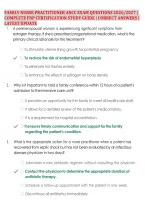
FAMILY NURSE PRACTITIONER ANCC EXAM QUESTIONS 2026/2027 |
COMPLETE FNP CERTIFICATION STUDY GUIDE | CORRECT ANSWERS |
LATEST UPDATE
1. A perimenopausal woman is experiencing significant symptoms from
estrogen therapy. If she is prescribed progestational medication, what is the
primary clinical rationale for this treatment?
To stimulate uterine lining growth for potential pregnancy
To reduce the risk of endometrial hyperplasia
To eliminate hot flashes entirely
To enhance the effects of estrogen on bone density
2. Why is it important to hold a family conference within 12 hours of a patient's
admission to the intensive care unit?
It provides an opportunity for the family to meet all healthcare staff.
It allows for a detailed review of the patient's medical history.
It is a requirement for hospital accreditation.
It ensures timely communication and support for the family
regarding the patient's condition.
3. What is the appropriate action for a nurse practitioner when a patient has
recovered from septic shock but has not been evaluated by an infectious
disease physician in two days?
Administer a new antibiotic regimen without consulting the physician.
Contact the physician to determine the appropriate duration of
antibiotic therapy.
Schedule a follow-up appointment with the patient in one week.
Discontinue all antibiotics immediately.
,4. What is the primary follow-up action recommended for a patient discharged
after treatment for bilateral pulmonary emboli?
Refer the patient to a specialist for further evaluation.
Provide the patient with educational materials about anticoagulant
therapy.
Schedule a follow-up visit within one week.
Arrange follow-up appointments for the patient at the warfarin
sodium (Coumadin) clinic and with the primary care provider.
5. What clinical scenario indicates a need for quality improvement evaluation in
nursing practice?
An expected rate of ventilator-associated pneumonia in pulmonary
disease patients.
An increased incidence of postoperative sternal wound infections.
A new case of necrotizing fasciitis in an immunocompromised patient.
A projected increase in the number of influenza cases requiring
hospitalization.
6. What is one way a family nurse practitioner can demonstrate professional
leadership?
Creating a task force to address scope-of-practice concerns.
Adding clinical protocols to the nurse practitioner's scope of practice.
Comparing the workplace roles of the registered nurse and the nurse
practitioner.
Lobbying to eliminate continuing education requirements.
,7. If a patient with bilateral pulmonary emboli misses their follow-up
appointment at the Coumadin clinic, what should the nurse practitioner do
next?
Refer the patient to a different clinic without follow-up.
Contact the patient to reschedule the appointment and assess their
current health status.
Assume the patient is managing well and take no action.
Schedule an emergency visit without contacting the patient.
8. If a five-year-old child has not received their DTaP booster before starting
school, what potential risks might the family nurse practitioner discuss with
the parents?
Increased risk of developing allergies to vaccines.
No risks, as the child is already immune.
Increased risk of contracting diphtheria, tetanus, or pertussis.
No impact on school attendance or health.
9. A 55-year-old male patient who is Chinese has a follow-up appointment after
cardiac bypass surgery. The patient brings his father with him into the
examination room. The family nurse practitioner provides culturally sensitive
care by:
asking the patient's father if he has any questions regarding his son's
care.
performing the examination, then telling the patient's father the
examination findings.
asking the patient's father to leave the room due to confidentiality
issues.
, performing the examination without commenting to the patient's
father.
10. What is the key strategy for optimizing the therapeutic partnership with
patients according to the adult-gerontology acute care nurse practitioner?
Tailoring their communication style to the patient's preference.
Using complex medical terminology.
Relying solely on family members for decisions.
Standardizing communication for all patients.
11. In a case where a worker develops a disease years after exposure, what
steps should a nurse take to assess the potential occupational link?
Conduct a thorough patient history and review occupational
records.
Immediately report the case to the health department without further
investigation.
Focus solely on the patient's current symptoms without considering
past exposures.
Assume the disease is unrelated to occupational exposure unless
proven otherwise.
12. Why is it important for a family nurse practitioner to engage with a patient's
family member during a consultation?
Engaging with the family member helps ensure that all concerns
are addressed and promotes culturally sensitive care.
Engaging with family members can lead to confidentiality breaches.
Family members should only be involved if the patient requests it.
COMPLETE FNP CERTIFICATION STUDY GUIDE | CORRECT ANSWERS |
LATEST UPDATE
1. A perimenopausal woman is experiencing significant symptoms from
estrogen therapy. If she is prescribed progestational medication, what is the
primary clinical rationale for this treatment?
To stimulate uterine lining growth for potential pregnancy
To reduce the risk of endometrial hyperplasia
To eliminate hot flashes entirely
To enhance the effects of estrogen on bone density
2. Why is it important to hold a family conference within 12 hours of a patient's
admission to the intensive care unit?
It provides an opportunity for the family to meet all healthcare staff.
It allows for a detailed review of the patient's medical history.
It is a requirement for hospital accreditation.
It ensures timely communication and support for the family
regarding the patient's condition.
3. What is the appropriate action for a nurse practitioner when a patient has
recovered from septic shock but has not been evaluated by an infectious
disease physician in two days?
Administer a new antibiotic regimen without consulting the physician.
Contact the physician to determine the appropriate duration of
antibiotic therapy.
Schedule a follow-up appointment with the patient in one week.
Discontinue all antibiotics immediately.
,4. What is the primary follow-up action recommended for a patient discharged
after treatment for bilateral pulmonary emboli?
Refer the patient to a specialist for further evaluation.
Provide the patient with educational materials about anticoagulant
therapy.
Schedule a follow-up visit within one week.
Arrange follow-up appointments for the patient at the warfarin
sodium (Coumadin) clinic and with the primary care provider.
5. What clinical scenario indicates a need for quality improvement evaluation in
nursing practice?
An expected rate of ventilator-associated pneumonia in pulmonary
disease patients.
An increased incidence of postoperative sternal wound infections.
A new case of necrotizing fasciitis in an immunocompromised patient.
A projected increase in the number of influenza cases requiring
hospitalization.
6. What is one way a family nurse practitioner can demonstrate professional
leadership?
Creating a task force to address scope-of-practice concerns.
Adding clinical protocols to the nurse practitioner's scope of practice.
Comparing the workplace roles of the registered nurse and the nurse
practitioner.
Lobbying to eliminate continuing education requirements.
,7. If a patient with bilateral pulmonary emboli misses their follow-up
appointment at the Coumadin clinic, what should the nurse practitioner do
next?
Refer the patient to a different clinic without follow-up.
Contact the patient to reschedule the appointment and assess their
current health status.
Assume the patient is managing well and take no action.
Schedule an emergency visit without contacting the patient.
8. If a five-year-old child has not received their DTaP booster before starting
school, what potential risks might the family nurse practitioner discuss with
the parents?
Increased risk of developing allergies to vaccines.
No risks, as the child is already immune.
Increased risk of contracting diphtheria, tetanus, or pertussis.
No impact on school attendance or health.
9. A 55-year-old male patient who is Chinese has a follow-up appointment after
cardiac bypass surgery. The patient brings his father with him into the
examination room. The family nurse practitioner provides culturally sensitive
care by:
asking the patient's father if he has any questions regarding his son's
care.
performing the examination, then telling the patient's father the
examination findings.
asking the patient's father to leave the room due to confidentiality
issues.
, performing the examination without commenting to the patient's
father.
10. What is the key strategy for optimizing the therapeutic partnership with
patients according to the adult-gerontology acute care nurse practitioner?
Tailoring their communication style to the patient's preference.
Using complex medical terminology.
Relying solely on family members for decisions.
Standardizing communication for all patients.
11. In a case where a worker develops a disease years after exposure, what
steps should a nurse take to assess the potential occupational link?
Conduct a thorough patient history and review occupational
records.
Immediately report the case to the health department without further
investigation.
Focus solely on the patient's current symptoms without considering
past exposures.
Assume the disease is unrelated to occupational exposure unless
proven otherwise.
12. Why is it important for a family nurse practitioner to engage with a patient's
family member during a consultation?
Engaging with the family member helps ensure that all concerns
are addressed and promotes culturally sensitive care.
Engaging with family members can lead to confidentiality breaches.
Family members should only be involved if the patient requests it.