DYSRHYTHMIA INTERPRETATION / NURSING MANAGEMENT - High Acuity - Final Exam
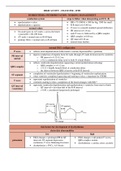
HIGH ACUITY – FINAL EXAM – HTD DYSRHYTHMIA INTERPRETATION / NURSING MANAGEMENT conduction system steps to follow when interpreting an ECG (8) • repolarization = relax • depolarization = squeeze • HR = 75 (300/4) = 300 for big, 1500 for small • R-R interval is 0.80 sec • P wave is a smooth rounded upward deflection • PR interval is 0.16 sec • each P wave is followed by a QRS complex • QRS complex is 0.06 sec • QT interval 0.36 sec • normal sinus rhythm normal values • SA node (goes to AV nodes + across the heart) = pacesetter = 60-100 beats • AV node = normal rates at 40-60 bpm • purkinje fibers = normal rates at 20-40 bpm normal EKG configuration P wave • reflects atrial depolarization (little/round = normal, depressed/flat = problem) PR interval (atrial) • depicts conduction of impulse from SA node through AV node & downward to ventricles o PR interval = 0.12-0.2 sec o 0.2 = conduction delay (you’re look @ a heart block) QRS complex • reflects ventricular depolarization (squeezing); atrial repolarization (relaxing) o QRS complex = 0.12 sec o 0.12 = bundle branch block or conduction delay o the interval between QRS is known at the R-R interval ST segment • completion of ventricular depolarization + beginning of ventricular repolarization • when ventricles completed squeezing and starting to relax = important for STEMI T wave • represents repolarization of ventricles • ventricles starting to relax, completion of the heart QT interval (ventricles) • represents ventricular depolarization and repolarization = ventricles from start to finish o QT interval = less than half of the R-R interval o 0.50 = considered dangerously prolonged risk factors for development of dysrhythmias electrolyte abnormalities potassium low high • EKG changes = prolonged PR & QT intervals, ST segment depression (ischemia), T wave flattening/inversion • dysrhythmias = PVCs, AV blocks • EKG changes = tall peaked T waves, QRS complex widens • dysrhythmias = cardiac arrest, asystole magnesium low high • EKG changes = prominent U waves * and flattening of T wave, prolonged PR and QT intervals and widening of QRS complex • dysrhythmias = torsade des pointes * • EKG changes = bradycardia, prolonged PR, QRS and QT intervals, widened QRS complexes • dysrhythmias = complete heart blocks, cardiac arrest calcium low high • EKG changes = prolonged ST segment • dysrhythmias = PVCs • EKG changes = shortened ventricular repolarization and QT interval • dysrhythmias = first degree AV block hypoxemia • no oxygen to heart in form of ischemia or infarction = due to CAD, MI fluid abnormalities fluid volume excess fluid volume deficit • ventricular enlargement, decreased contractility, premature beats; AV blocks • tachycardias altered body temperature hyperthermia hypothermia • increases body’s oxygen demand • HR increases by 10 bpm for every 1o F • may increase myocardial excitability • decreases body’s oxygen demand • EKG changes = bradycardia 60 bpm, prolonged PR and QT intervals and wide QRS complexes cardiac dysrhythmias: sinus dysrhythmias types of rhythms • normal sinus • sinus bradycardia = rate 60 • sinus tachycardia = rate 100-150 common features • normal P waves, P wave for every QRS • normal PR interval + QRS complex • heart rate will just be off cardiac dysrhythmias: atrial dysrhythmias atrial fibrillation characteristics major characteristics (3) • multiple foci firing = firing from everywhere • decreased stroke volume = not enough fill • prone to forming clots increasing risk of PE or thrombotic stroke; “atrial kick” = one good squeeze that sends clot into circulation • atrial rate 350 bpm = irregular regular rhythm • anti-coagulation medications for chronic A-fib = on warfarin = (cardioversion, do TEE first) • absence of P waves = fibrillatory wave • a normal QRS with highly irregular QRS intervals = inconsistent • fibrillatory waves (waves are dissimilar, some pointy, inverted, biphasic, etc.) • ~have to listen to heart for full minutes~ atrial flutter characteristics treatment • atrial rate = 250-350 bpm • no P waves present = atrial oscillations • sawtooth waves or flutter waves = consistent • AV node unable to respond to every impulse • ventricular rhythm = regular or irregular • synchronized cardioversion preferred • ABCD drugs = adenosine, betablockers, calcium channel blockers, digitalis = all decrease HR
Document information
- Uploaded on
- August 26, 2021
- Number of pages
- 39
- Written in
- 2021/2022
- Type
- Exam (elaborations)
- Contains
- Questions & answers