
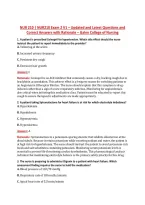
NUR 210 | NUR210 Exam 2 V1 – Updated and Latest Questions and
Correct Answers with Rationale – Galen College of Nursing
1. A patient is prescribed Lisinopril for hypertension. Which side effect should the nurse
instruct the patient to report immediately to the provider?
A. Yellowing of the sclera
B. Increased urinary frequency
C. Persistent dry cough
D. Excessive hair growth
Answer: C
Rationale: Lisinopril is an ACE inhibitor that commonly causes a dry, hacking cough due to
bradykinin accumulation. This adverse effect is a frequent reason for switching patients to
an Angiotensin II Receptor Blocker. The nurse should explain that this symptom is drug-
induced rather than a sign of a new respiratory infection. Monitoring for angioedema is
also critical when initiating this medication class. Patients must be educated to report this
cough to ensure therapeutic adjustments are made appropriately.
2. A patient taking Spironolactone for heart failure is at risk for which electrolyte imbalance?
A. Hyperkalemia
B. Hypokalemia
C. Hyponatremia
D. Hypocalcemia
Answer: A
Rationale: Spironolactone is a potassium-sparing diuretic that inhibits aldosterone at the
distal tubule. Because it retains potassium while excreting sodium and water, the patient is
at high risk for hyperkalemia. The nurse should instruct the patient to avoid potassium-rich
foods and salt substitutes containing potassium. Monitoring serum potassium levels is
essential to prevent life-threatening cardiac dysrhythmias. This pharmacological analysis
indicates that maintaining electrolyte balance is the primary safety priority for this drug.
3. The nurse is preparing to administer Digoxin to a patient with heart failure. Which
assessment finding requires the nurse to hold the medication?
A. Blood pressure of 110/70 mmHg
B. Respiratory rate of 18 breaths/minute
C. Apical heart rate of 52 beats/minute
,D. Potassium level of 4.5 mEq/L
Answer: C
Rationale: Digoxin is a cardiac glycoside that increases contractility but slows the heart
rate via the vagus nerve. The nurse must assess the apical pulse for one full minute prior to
administration. If the heart rate is below 60 beats per minute in an adult, the medication
should be withheld and the provider notified. Signs of toxicity such as visual halos or
nausea should also be assessed. This practice ensures patient safety by preventing further
bradycardia and potential cardiac arrest.
4. A patient is receiving a Heparin infusion for a deep vein thrombosis. Which laboratory
value should the nurse monitor to adjust the dosage?
A. Activated partial thromboplastin time (aPTT)
B. International Normalized Ratio (INR)
C. Prothrombin time (PT)
D. Platelet count
Answer: A
Rationale: Heparin is an anticoagulant that works by accelerating the activity of
antithrombin III. The therapeutic effectiveness of unfractionated heparin is monitored
using the activated partial thromboplastin time (aPTT). A typical therapeutic range is 1.5 to
2.5 times the control value. While platelet counts are monitored for Heparin-Induced
Thrombocytopenia, the aPTT guides the titration of the infusion. The nurse must recognize
that accurate lab monitoring is vital to prevent both clotting and hemorrhage.
5. Which medication is the antidote for a patient experiencing a Warfarin overdose with
active bleeding?
A. Protamine sulfate
B. Flumazenil
C. Vitamin K
D. Acetylcysteine
Answer: C
Rationale: Warfarin acts by inhibiting the synthesis of Vitamin K-dependent clotting
factors in the liver. Vitamin K serves as the specific antagonist to reverse the effects of
warfarin in cases of toxicity or excessive bleeding. Protamine sulfate is used for heparin
reversal, while Flumazenil is for benzodiazepines. The nurse should educate the patient on
maintaining consistent Vitamin K intake in their diet. Rapid reversal in emergency
situations may also require fresh frozen plasma to restore clotting factors immediately.
, 6. A patient is prescribed Albuterol for acute exercise-induced bronchospasm. What is the
mechanism of action for this medication?
A. Stimulation of beta-2 adrenergic receptors
B. Blockade of cholinergic receptors
C. Inhibition of leukotriene production
D. Suppression of the inflammatory response
Answer: A
Rationale: Albuterol is a short-acting beta-2 agonist (SABA) that triggers bronchodilation
by relaxing smooth muscle in the airway. It is considered a rescue medication and is the
first-line treatment for acute asthma attacks. Common side effects include tachycardia,
tremors, and palpitations due to some beta-1 crossover stimulation. The nurse should
instruct the patient to carry this inhaler at all times for emergency use. Analysis shows that
beta-2 stimulation is the most effective way to provide rapid relief of bronchoconstriction.
7. A nurse is teaching a patient about Furosemide. Which instruction should be included to
manage a common side effect?
A. Change positions slowly to prevent dizziness
B. Restrict fluid intake to 500 mL per day
C. Take the medication right before bedtime
D. Avoid foods high in potassium
Answer: A
Rationale: Furosemide is a loop diuretic that can cause significant fluid loss and
orthostatic hypotension. Changing positions slowly helps prevent falls related to sudden
drops in blood pressure. Taking the medication in the morning is preferred to prevent
nocturia and sleep disruption. Unlike potassium-sparing diuretics, loop diuretics often
require increased potassium intake to prevent hypokalemia. Patient safety is enhanced by
educating them on these compensatory behaviors during diuretic therapy.
8. Which medication is contraindicated for a patient with a history of severe asthma and new-
onset hypertension?
A. Amlodipine
B. Losartan
C. Hydrochlorothiazide
D. Propranolol
Answer: D
Correct Answers with Rationale – Galen College of Nursing
1. A patient is prescribed Lisinopril for hypertension. Which side effect should the nurse
instruct the patient to report immediately to the provider?
A. Yellowing of the sclera
B. Increased urinary frequency
C. Persistent dry cough
D. Excessive hair growth
Answer: C
Rationale: Lisinopril is an ACE inhibitor that commonly causes a dry, hacking cough due to
bradykinin accumulation. This adverse effect is a frequent reason for switching patients to
an Angiotensin II Receptor Blocker. The nurse should explain that this symptom is drug-
induced rather than a sign of a new respiratory infection. Monitoring for angioedema is
also critical when initiating this medication class. Patients must be educated to report this
cough to ensure therapeutic adjustments are made appropriately.
2. A patient taking Spironolactone for heart failure is at risk for which electrolyte imbalance?
A. Hyperkalemia
B. Hypokalemia
C. Hyponatremia
D. Hypocalcemia
Answer: A
Rationale: Spironolactone is a potassium-sparing diuretic that inhibits aldosterone at the
distal tubule. Because it retains potassium while excreting sodium and water, the patient is
at high risk for hyperkalemia. The nurse should instruct the patient to avoid potassium-rich
foods and salt substitutes containing potassium. Monitoring serum potassium levels is
essential to prevent life-threatening cardiac dysrhythmias. This pharmacological analysis
indicates that maintaining electrolyte balance is the primary safety priority for this drug.
3. The nurse is preparing to administer Digoxin to a patient with heart failure. Which
assessment finding requires the nurse to hold the medication?
A. Blood pressure of 110/70 mmHg
B. Respiratory rate of 18 breaths/minute
C. Apical heart rate of 52 beats/minute
,D. Potassium level of 4.5 mEq/L
Answer: C
Rationale: Digoxin is a cardiac glycoside that increases contractility but slows the heart
rate via the vagus nerve. The nurse must assess the apical pulse for one full minute prior to
administration. If the heart rate is below 60 beats per minute in an adult, the medication
should be withheld and the provider notified. Signs of toxicity such as visual halos or
nausea should also be assessed. This practice ensures patient safety by preventing further
bradycardia and potential cardiac arrest.
4. A patient is receiving a Heparin infusion for a deep vein thrombosis. Which laboratory
value should the nurse monitor to adjust the dosage?
A. Activated partial thromboplastin time (aPTT)
B. International Normalized Ratio (INR)
C. Prothrombin time (PT)
D. Platelet count
Answer: A
Rationale: Heparin is an anticoagulant that works by accelerating the activity of
antithrombin III. The therapeutic effectiveness of unfractionated heparin is monitored
using the activated partial thromboplastin time (aPTT). A typical therapeutic range is 1.5 to
2.5 times the control value. While platelet counts are monitored for Heparin-Induced
Thrombocytopenia, the aPTT guides the titration of the infusion. The nurse must recognize
that accurate lab monitoring is vital to prevent both clotting and hemorrhage.
5. Which medication is the antidote for a patient experiencing a Warfarin overdose with
active bleeding?
A. Protamine sulfate
B. Flumazenil
C. Vitamin K
D. Acetylcysteine
Answer: C
Rationale: Warfarin acts by inhibiting the synthesis of Vitamin K-dependent clotting
factors in the liver. Vitamin K serves as the specific antagonist to reverse the effects of
warfarin in cases of toxicity or excessive bleeding. Protamine sulfate is used for heparin
reversal, while Flumazenil is for benzodiazepines. The nurse should educate the patient on
maintaining consistent Vitamin K intake in their diet. Rapid reversal in emergency
situations may also require fresh frozen plasma to restore clotting factors immediately.
, 6. A patient is prescribed Albuterol for acute exercise-induced bronchospasm. What is the
mechanism of action for this medication?
A. Stimulation of beta-2 adrenergic receptors
B. Blockade of cholinergic receptors
C. Inhibition of leukotriene production
D. Suppression of the inflammatory response
Answer: A
Rationale: Albuterol is a short-acting beta-2 agonist (SABA) that triggers bronchodilation
by relaxing smooth muscle in the airway. It is considered a rescue medication and is the
first-line treatment for acute asthma attacks. Common side effects include tachycardia,
tremors, and palpitations due to some beta-1 crossover stimulation. The nurse should
instruct the patient to carry this inhaler at all times for emergency use. Analysis shows that
beta-2 stimulation is the most effective way to provide rapid relief of bronchoconstriction.
7. A nurse is teaching a patient about Furosemide. Which instruction should be included to
manage a common side effect?
A. Change positions slowly to prevent dizziness
B. Restrict fluid intake to 500 mL per day
C. Take the medication right before bedtime
D. Avoid foods high in potassium
Answer: A
Rationale: Furosemide is a loop diuretic that can cause significant fluid loss and
orthostatic hypotension. Changing positions slowly helps prevent falls related to sudden
drops in blood pressure. Taking the medication in the morning is preferred to prevent
nocturia and sleep disruption. Unlike potassium-sparing diuretics, loop diuretics often
require increased potassium intake to prevent hypokalemia. Patient safety is enhanced by
educating them on these compensatory behaviors during diuretic therapy.
8. Which medication is contraindicated for a patient with a history of severe asthma and new-
onset hypertension?
A. Amlodipine
B. Losartan
C. Hydrochlorothiazide
D. Propranolol
Answer: D


