
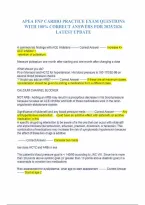
APEA FNP Cardio Practice Exam Questions 2025/2026 – Product Description and SEO Tags
Prepare for Family Nurse Practitioner Cardiovascular Exams The APEA FNP Cardio Practice Exam Questions 2025/2026 study resource is designed to support Family Nurse Practitioner (FNP) students and advanced practice nursing candidates who want to strengthen their cardiovascular knowledge and improve their clinical reasoning skills. Cardiovascular health is an important part of primary care, making it essential for future nurse practitioners to understand heart and vascular disorders, patient assessment, diagnostic interpretation, treatment principles, and long-term disease management. This study resource focuses on cardiovascular concepts that are relevant to family nurse practitioner education and certification preparation. It can be used alongside nursing textbooks, clinical guidelines, classroom notes, and other exam-preparation materials to help learners organize their studies and identify areas that require additional review. Comprehensive Cardiovascular Study Topics Cardiovascular assessment requires a strong understanding of anatomy, physiology, common diseases, risk factors, diagnostic testing, and patient management. Focused practice can help students connect these concepts with clinical situations encountered in primary care. Potential study areas include: Cardiovascular anatomy and physiology Hypertension assessment and management principles Coronary artery disease and ischemic heart disease Heart failure signs, symptoms, and treatment concepts Cardiac arrhythmias and rhythm interpretation fundamentals Peripheral vascular disease Dyslipidemia and cardiovascular risk reduction Valvular heart disease Common cardiovascular symptoms, including chest pain, palpitations, and shortness of breath Cardiovascular physical examination techniques Electrocardiogram interpretation fundamentals Diagnostic laboratory testing and cardiac biomarkers Medication classes used in cardiovascular care Patient education and preventive health counseling Follow-up care and monitoring of chronic cardiovascular conditions These topics provide a framework for reviewing cardiovascular concepts and practicing the application of knowledge to patient scenarios. The precise coverage depends on the contents of the study materials supplied. Strengthen Clinical Reasoning and Decision-Making Successful FNP preparation involves more than memorizing definitions. Students must learn to evaluate symptoms, recognize relevant risk factors, distinguish between possible diagnoses, interpret clinical findings, and understand appropriate next steps in patient care. Practice questions can help learners develop a structured approach to clinical reasoning. When reviewing a question, students should consider the patient's presenting complaint, medical history, physical examination findings, relevant test results, and possible complications. For example, a cardiovascular case may require the learner to distinguish between stable symptoms and findings that suggest an urgent medical condition. Other cases may emphasize hypertension follow-up, cardiovascular prevention, medication monitoring, or the interpretation of common diagnostic findings. Working through these scenarios can encourage analytical thinking and help students become more comfortable applying cardiovascular knowledge in an educational setting. Useful for FNP Certification Preparation Family Nurse Practitioner students often study several clinical domains while preparing for certification examinations. Cardiovascular review can form an important part of a broader study schedule covering assessment, diagnosis, pharmacology, and management of common primary care conditions. This resource may be useful for: FNP students reviewing cardiovascular content Nurse practitioner candidates preparing for certification Graduate nursing students reinforcing advanced assessment concepts Learners preparing for cardiovascular-focused practice quizzes Students reviewing common cardiovascular disorders before clinical evaluations Practitioners refreshing foundational cardiovascular knowledge For the best results, combine focused cardiovascular practice with a comprehensive review of the applicable certification examination blueprint. Cardiovascular preparation should complement, rather than replace, review of other required clinical topics. Improve Study Organization and Retention A consistent study plan can make a large amount of clinical information easier to manage. Students can divide cardiovascular review into smaller sessions focused on specific conditions, diagnostic methods, pharmacology, and patient management. After completing a practice session, review each incorrect or uncertain response. Identify the concept involved, consult a trusted clinical reference, and record the key learning point. Revisit difficult topics later to determine whether understanding has improved. Useful study strategies include: Review the underlying cardiovascular concept before attempting practice questions. Answer questions independently before consulting study notes. Explain the reasoning behind each selected answer. Review why alternative answers may be less appropriate. Create a list of recurring knowledge gaps. Repeat practice sessions on challenging topics. Use current clinical guidelines and authoritative references to verify clinical information. This method encourages active learning instead of relying exclusively on memorization. Cardiovascular Pharmacology and Patient Education Medication knowledge is an important component of cardiovascular care. FNP students should understand the general indications, precautions, monitoring requirements, and patient education considerations associated with commonly prescribed cardiovascular medications. Relevant study areas may include antihypertensive medications, lipid-lowering therapies, diuretics, selected antianginal medications, and other drug classes used in cardiovascular management. Learners should also review medication safety, contraindications, potential adverse effects, interactions, adherence challenges, and appropriate follow-up. Actual treatment decisions must be based on current evidence, individual patient circumstances, and applicable professional guidance. Patient education is equally important. Preventive counseling may address nutrition, physical activity, smoking cessation, medication adherence, home blood pressure monitoring, and recognition of symptoms requiring urgent evaluation. Flexible Learning for Busy Nursing Students Graduate nursing programs often involve demanding coursework, clinical placements, employment, and personal responsibilities. A focused cardiovascular practice resource can help students structure short, productive study sessions around their schedules. Learners may choose to study one topic each day, complete a longer review session on weekends, or use practice questions to assess understanding after reading a chapter. Maintaining a record of progress can make it easier to allocate additional time to difficult subjects. Digital or printable study materials, depending on the format provided, may also support individual review and group study discussions. Product Features and Learning Benefits This listing is intended to help learners find a cardiovascular-focused FNP exam-preparation resource for the 2025/2026 study period. Potential benefits include: Focused cardiovascular content review Practice with clinical reasoning concepts Reinforcement of assessment and diagnostic principles Review of common cardiovascular disorders Support for pharmacology and patient-management study Identification of topics requiring further revision Flexible integration into an existing study schedule Supplementary preparation alongside textbooks and clinical references Please verify the actual file format, question count, included explanations, and content coverage before purchasing. The title alone does not establish that every answer has been independently verified or that the material represents official APEA examination content. Important Educational Disclaimer This is an independent educational study-resource description. Unless expressly authorized and documented, the material should not be represented as an official APEA product, an official certification examination, or a collection of leaked or actual examination questions. APEA provides its own nurse practitioner review courses, question banks, and predictor examinations through its official website. No practice resource can guarantee a particular examination score or certification outcome. Students should use current clinical references, official certification guidance, and appropriate educational resources when preparing for examinations and developing clinical knowledge. Conclusion The APEA FNP Cardio Practice Exam Questions 2025/2026 listing is intended for learners seeking focused cardiovascular review as part of their Family Nurse Practitioner examination-preparation journey. By combining structured practice, active recall, clinical reasoning, and consistent revision, students can build a stronger understanding of cardiovascular assessment and primary care management. Use this resource as a supplement to comprehensive FNP preparation, verify its contents before purchase, and approach each study session as an opportunity to strengthen the knowledge and decision-making skills needed for safe, evidence-based patient care.
Document information
- Uploaded on
- October 9, 2026
- Number of pages
- 25
- Written in
- 2026/2027
- Type
- Exam (elaborations)
- Contains
- Questions & answers


