
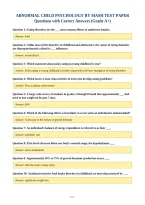
ABNORMAL CHILD PSYCHOLOGY BY MASH TEST PAPER
Questions with Correct Answers (Grade A+)
Question 1: Eating disorders are the ___ most common illness in adolescent females.
Answer: third
Question 2: Unlike most of the disorders of childhood and adolescence, the causes of eating disorders
are disproportionately related to ___ influences.
Answer: sociocultural
Question 3: Which statement about picky eating in young childhood is true?
Answer: Picky eating in young childhood is clearly connected to the later emergence of eating disorders
Question 4: Which factor is least characteristic of teens who develop eating problems?
Answer: Poor academic achievement
Question 5: A large scale survey of students in grades 5 through 8 found that approximately ___ had
tried to lose weight int he past 7 days.
Answer: 60%
Question 6: Which of the following effects is least likely to occur when an individual is malnourished?
Answer: A decrease in the release of growth hormone
Question 7: An individual's balance of energy expenditure is referred to as their ___.
Answer: metabolic rate
Question 8: If fat levels decrease below our body's normal range, the hypothalamus ___.
Answer: slows metabolism
Question 9: Approximately 50% to 75% of growth hormone production occurs ___.
Answer: after the onset of deep sleep
Question 10: Avoidant/restrictive food intake disorders in childhood are most characterized by ___.
Answer: significant weight loss
Page 1
,Question 11: Failure to thrive is more common among ___.
Answer: children from disadvantaged environments
Question 12: Early onset of feeding disorders is often associated with ___.
Answer: inadequate caregiving
Question 13: ___ have been identified as a specific risk factor for an infant's eating or feeding disorder.
Answer: Maternal eating disorders
Question 14: A child who eats insects and wood chips is likely to be diagnosed with ___.
Answer: pica
Question 15: Pica is often seen in individuals with ___.
Answer: intellectual disability
Question 16: when the child experiences increased stimulation
Answer: Pica among young children (without intellectual disability) often remits ___.
Question 17: Pica in the first and second years of life among otherwise normally developing infants and
toddlers is likely due to ___.
Answer: exploration
Question 18: Failure to thrive is categorized by ___.
Answer: growth and eating problems
Question 19: Mothers of infants with failure to thrive have been found to be ___ than mothers of infants
without failure to thrive.
Answer: more insecurely attached
Question 20: Studies have found that failure to thrive may affect physical growth in childhood, but does
not affect future ___.
Answer: cognitive functioning
Question 21: Obesity is a ___.
Answer: chronic medical condition
Page 2
,Question 22: Obesity is usually defined in terms of a body mass index above the ___ percentile.
Answer: 95th
Question 23: Approximately ___ of American children are obese.
Answer: 1 in 6
Question 24: Obesity in ___ is strongly related to obesity in ___.
Answer: childhood; adulthood
Question 25: Obese children are a risk factor for later ___ disorders.
Answer: eating
Question 26: The relationship between preadolescent obesity and later emergence of eating disorders is
likely due to ___.
Answer: the teasing that obese children experience from their peers
Question 27: A protein that plays a major role in some genetic cases of obesity is called ___.
Answer: Leptin
Question 28: Treatment methods to help children who are obese to lose weight should emphasize ___.
Answer: active, less sedentary routines
Question 29: For some teens, particularly girls, excessive efforts to control eating may be a misguided
effort to ___.
Answer: manage the stress and physical changes
Question 30: In the early 1900s, treatment for anorexia was ___.
Answer: removal from home and forced feeding
Question 31: Which of the following is not a characteristic of anorexia?
Answer: Loss of appetite
Question 32: The DSM 5 specifies two subtypes of anorexia based on ___.
Answer: methods used to limit caloric intake
Page 3
, Question 33: In comparison to persons with bulimia, those with binge- eating/purging type of anorexia
___.
Answer: eat relatively small amounts of food and purge more consistently
Question 34: In comparison to binge-eating/purging type, individuals with restricting anorexia tend to
___.
Answer: lose weight through diet
Question 35: In comparison to restricting type, individuals with binge- eating/purging type of anorexia
end to ___.
Answer: eliminate the food quicker
Question 36: Which of the following statements regarding bulimia is true?
Answer: No specific quantity of food constitutes a binge
Question 37: Binge eating typically follows changes in ___.
Answer: interpersonal stress
Question 38: The most common compensatory technique after an episode of binge eating among
clinical samples is ___.
Answer: vomiting
Question 39: Vomiting is used by people with bulimia to ___.
Answer: prevent weight gain
Question 40: Young women who have dietary-depressive pattern of bulimia differ from women with
only the dietary pattern, as those with dietary-depressive subtype display ___.
Answer: more social impairment
Question 41: Body dissatisfaction and distortion in individuals with eating disorders are less likely to be
associated with ___.
Answer: problems in perceptual ability
Question 42: Which disorder has become increasingly widespread during this age of abundant fast food
and obesity?
Answer: Binge eating disorder
Page 4
Questions with Correct Answers (Grade A+)
Question 1: Eating disorders are the ___ most common illness in adolescent females.
Answer: third
Question 2: Unlike most of the disorders of childhood and adolescence, the causes of eating disorders
are disproportionately related to ___ influences.
Answer: sociocultural
Question 3: Which statement about picky eating in young childhood is true?
Answer: Picky eating in young childhood is clearly connected to the later emergence of eating disorders
Question 4: Which factor is least characteristic of teens who develop eating problems?
Answer: Poor academic achievement
Question 5: A large scale survey of students in grades 5 through 8 found that approximately ___ had
tried to lose weight int he past 7 days.
Answer: 60%
Question 6: Which of the following effects is least likely to occur when an individual is malnourished?
Answer: A decrease in the release of growth hormone
Question 7: An individual's balance of energy expenditure is referred to as their ___.
Answer: metabolic rate
Question 8: If fat levels decrease below our body's normal range, the hypothalamus ___.
Answer: slows metabolism
Question 9: Approximately 50% to 75% of growth hormone production occurs ___.
Answer: after the onset of deep sleep
Question 10: Avoidant/restrictive food intake disorders in childhood are most characterized by ___.
Answer: significant weight loss
Page 1
,Question 11: Failure to thrive is more common among ___.
Answer: children from disadvantaged environments
Question 12: Early onset of feeding disorders is often associated with ___.
Answer: inadequate caregiving
Question 13: ___ have been identified as a specific risk factor for an infant's eating or feeding disorder.
Answer: Maternal eating disorders
Question 14: A child who eats insects and wood chips is likely to be diagnosed with ___.
Answer: pica
Question 15: Pica is often seen in individuals with ___.
Answer: intellectual disability
Question 16: when the child experiences increased stimulation
Answer: Pica among young children (without intellectual disability) often remits ___.
Question 17: Pica in the first and second years of life among otherwise normally developing infants and
toddlers is likely due to ___.
Answer: exploration
Question 18: Failure to thrive is categorized by ___.
Answer: growth and eating problems
Question 19: Mothers of infants with failure to thrive have been found to be ___ than mothers of infants
without failure to thrive.
Answer: more insecurely attached
Question 20: Studies have found that failure to thrive may affect physical growth in childhood, but does
not affect future ___.
Answer: cognitive functioning
Question 21: Obesity is a ___.
Answer: chronic medical condition
Page 2
,Question 22: Obesity is usually defined in terms of a body mass index above the ___ percentile.
Answer: 95th
Question 23: Approximately ___ of American children are obese.
Answer: 1 in 6
Question 24: Obesity in ___ is strongly related to obesity in ___.
Answer: childhood; adulthood
Question 25: Obese children are a risk factor for later ___ disorders.
Answer: eating
Question 26: The relationship between preadolescent obesity and later emergence of eating disorders is
likely due to ___.
Answer: the teasing that obese children experience from their peers
Question 27: A protein that plays a major role in some genetic cases of obesity is called ___.
Answer: Leptin
Question 28: Treatment methods to help children who are obese to lose weight should emphasize ___.
Answer: active, less sedentary routines
Question 29: For some teens, particularly girls, excessive efforts to control eating may be a misguided
effort to ___.
Answer: manage the stress and physical changes
Question 30: In the early 1900s, treatment for anorexia was ___.
Answer: removal from home and forced feeding
Question 31: Which of the following is not a characteristic of anorexia?
Answer: Loss of appetite
Question 32: The DSM 5 specifies two subtypes of anorexia based on ___.
Answer: methods used to limit caloric intake
Page 3
, Question 33: In comparison to persons with bulimia, those with binge- eating/purging type of anorexia
___.
Answer: eat relatively small amounts of food and purge more consistently
Question 34: In comparison to binge-eating/purging type, individuals with restricting anorexia tend to
___.
Answer: lose weight through diet
Question 35: In comparison to restricting type, individuals with binge- eating/purging type of anorexia
end to ___.
Answer: eliminate the food quicker
Question 36: Which of the following statements regarding bulimia is true?
Answer: No specific quantity of food constitutes a binge
Question 37: Binge eating typically follows changes in ___.
Answer: interpersonal stress
Question 38: The most common compensatory technique after an episode of binge eating among
clinical samples is ___.
Answer: vomiting
Question 39: Vomiting is used by people with bulimia to ___.
Answer: prevent weight gain
Question 40: Young women who have dietary-depressive pattern of bulimia differ from women with
only the dietary pattern, as those with dietary-depressive subtype display ___.
Answer: more social impairment
Question 41: Body dissatisfaction and distortion in individuals with eating disorders are less likely to be
associated with ___.
Answer: problems in perceptual ability
Question 42: Which disorder has become increasingly widespread during this age of abundant fast food
and obesity?
Answer: Binge eating disorder
Page 4


