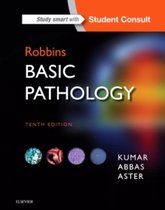
Robbins Basic Pathology
10th Edition
Author(s)Vinay Kumar; MBBS; MD;
FRCPath; Abul K. Abbas; MBBS and
Jon C. Aster; MD; PhD
Print ISBN: 9780323353175
,Question 1
A researcher examines a normal human cell and identifies a structure
that contains most of the cell's genetic material and regulates gene
expression through transcription. Which cellular component is primarily
responsible for this function?
A. Lysosome
B. Nucleus
C. Golgi apparatus
D. Peroxisome
,Correct Answer: B. Nucleus
Rationale: The nucleus contains the majority of the cell's genomic DNA
and serves as the principal site of DNA replication and transcription.
Lysosomes are responsible for intracellular digestion, the Golgi
apparatus modifies and sorts proteins, and peroxisomes carry out
oxidative reactions involving specific substrates.
Question 2
A mutation occurs in a gene that encodes a protein required for
accurate DNA replication. Which consequence is most directly expected
from loss of this protein's function?
A. Increased lysosomal degradation of extracellular proteins
B. Impaired transmission of genetic information during cell division
C. Increased secretion of structural proteins from the Golgi apparatus
D. Reduced synthesis of ATP by glycolysis alone
Correct Answer: B. Impaired transmission of genetic information during
cell division
Rationale: DNA replication is necessary to duplicate the genome before
cell division so that daughter cells receive accurate genetic information.
Lysosomal digestion, Golgi processing, and glycolytic ATP generation are
distinct cellular processes and are not the primary consequence of a
replication defect.
Question 3
A patient has a genetic defect that prevents lysosomal enzymes from
functioning normally. Which cellular process is most directly impaired?
, A. Degradation of damaged intracellular macromolecules
B. Replication of nuclear DNA
C. Oxidative phosphorylation
D. Synthesis of ribosomal RNA
Correct Answer: A. Degradation of damaged intracellular
macromolecules
Rationale: Lysosomes contain hydrolytic enzymes that degrade cellular
components delivered to them through pathways such as autophagy
and endocytosis. DNA replication occurs in the nucleus, oxidative
phosphorylation occurs primarily at the inner mitochondrial membrane,
and ribosomal RNA is synthesized predominantly in the nucleolus.
Question 4
A cell increases its production of proteins required for a newly activated
metabolic pathway. Which organelle is primarily responsible for
synthesizing proteins destined to function in the cytosol?
A. Free ribosomes
B. Lysosomes
C. Peroxisomes
D. Golgi cisternae
Correct Answer: A. Free ribosomes
Rationale: Free ribosomes synthesize proteins that generally remain in
the cytosol or are imported post-translationally into certain organelles.
Lysosomes and peroxisomes do not synthesize cytosolic proteins, and
the Golgi apparatus modifies and sorts proteins rather than translating
mRNA.