
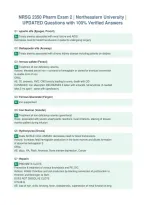
NRSG 2350 Pharm Exam 2 | Northeastern University |
UPDATED Questions with 100% Verified Answers
Q1: epoetin alfa (Epogen, Procrit)
A: Treats anemia associated with renal failure and AIDS
Decreases need for blood transfusions in patients undergoing surgery
Q2: Darbepoetin alfa (Aranesp)
A: Treats anemia associated with chronic kidney disease including patients on dialysis
Q3: ferrous sulfate (Feosol)
A: Treatment of iron deficiency anemia
Actions: elevated serum iron + converts to hemoglobin or stored for eventual conversion
to usable form of iron
ORAL
AE: GI, anorexia, NVD, CNS toxicity leading to coma, death with OD
CONSIDER: iron absorption DECREASES if taken with antacids, tetracyclines (if needed
take 2 hrs apart - same with ciprofloaxin)
Q4: Ferrous Gluconate (Fergon)
A: iron supplement
Q5: Iron Dextran (Venofer)
A: Treatment of iron deficiency anemia (parenteral)
Risks: associated with severe anaphylactic reactions, local irritations, staining of tissues
monitor patient during infusion
Q6: Hydroxyurea (Droxia)
A: treats SICKLE CELL ANEMIA: decreases need for blood transfusions
Actions: increases fetal hemoglobin production in the bone marrow and dilutes formation
of abnormal hemoglobin S
ORAL
AE: dizzy, HA, Rash, Anorexia, Bone marrow depression, Cancer
Q7: Heparin
A: PREVENTS CLOTS
Prevention & treatment of venous thrombosis and PE, DIC
Actions: inhibits thrombus and clot production by blocking conversion of prothrombin to
thrombin and fibrinogen to fibrin
DOES NOT DISSOLVE CLOTS
IV/SUB Q
AE: loss of hair, chills, bruising, fever, osteoporosis, suppression of renal function w long
, term use
Q8: Antiplatelet drugs
A: PROTOTYPE: ASPIRIN
Plavix, aspirin, anagrelide
FOR: CAD, maintenance of arterial/venous grafts, prevents cerebrovascular occlusion,
during/post MI for thrombolytic effect
Inhibit platelet aggregation and adhesion
ASPIRIN: inhibits synthesis of thromboxane A + decreases platelet aggregation
PLAVIX: inhibits binding of ATP (inhibits platelet aggregation)
ANAGRELIDE: blocks production of platelets in bone marrow (treats thrombocythemia)
CI: bleeding d/o, uncontrolled HTN, recent surgery
CAUTION: monitor bleeding, combo with other anticoag/antiplatelet drugs, monitor for
salicylate poisoning
Q9: Heparin antidote
A: protamine sulfate
Q10: Warfarin (Coumadin)
A: Anticoagulant
Prevention/manage DVT, PE, associated with atrial fib & prosthetic heart valves
Prevents synthesis of VIT K by bacteria in GI tract
Inhibits production of clotting factors: II, VII, IX, X (Vit K dependent factors)
Effects: after 2-3 days
ORAL
CI: pregnancy, renal/hepatic disease, all others per heparin
Monitor bleeding, frequent labs to assess therapeutic range, NO GRAPEFRUIT!!!!
Q11: Warfarin (Coumadin) Antidote
A: Phytonadione (vitamin K)
Q12: Pradaxa (dabigatran)
A: Atrial fib (not caused by valve problems)
Inhibits thrombin
No drug/food interactions
CI/Caution same as heparin/warfarin
Q13: Pradaxa (dabigatran) Antidote
A: IDARUCIZUMAB (Praxbind)
Q14: thrombolytic agents
UPDATED Questions with 100% Verified Answers
Q1: epoetin alfa (Epogen, Procrit)
A: Treats anemia associated with renal failure and AIDS
Decreases need for blood transfusions in patients undergoing surgery
Q2: Darbepoetin alfa (Aranesp)
A: Treats anemia associated with chronic kidney disease including patients on dialysis
Q3: ferrous sulfate (Feosol)
A: Treatment of iron deficiency anemia
Actions: elevated serum iron + converts to hemoglobin or stored for eventual conversion
to usable form of iron
ORAL
AE: GI, anorexia, NVD, CNS toxicity leading to coma, death with OD
CONSIDER: iron absorption DECREASES if taken with antacids, tetracyclines (if needed
take 2 hrs apart - same with ciprofloaxin)
Q4: Ferrous Gluconate (Fergon)
A: iron supplement
Q5: Iron Dextran (Venofer)
A: Treatment of iron deficiency anemia (parenteral)
Risks: associated with severe anaphylactic reactions, local irritations, staining of tissues
monitor patient during infusion
Q6: Hydroxyurea (Droxia)
A: treats SICKLE CELL ANEMIA: decreases need for blood transfusions
Actions: increases fetal hemoglobin production in the bone marrow and dilutes formation
of abnormal hemoglobin S
ORAL
AE: dizzy, HA, Rash, Anorexia, Bone marrow depression, Cancer
Q7: Heparin
A: PREVENTS CLOTS
Prevention & treatment of venous thrombosis and PE, DIC
Actions: inhibits thrombus and clot production by blocking conversion of prothrombin to
thrombin and fibrinogen to fibrin
DOES NOT DISSOLVE CLOTS
IV/SUB Q
AE: loss of hair, chills, bruising, fever, osteoporosis, suppression of renal function w long
, term use
Q8: Antiplatelet drugs
A: PROTOTYPE: ASPIRIN
Plavix, aspirin, anagrelide
FOR: CAD, maintenance of arterial/venous grafts, prevents cerebrovascular occlusion,
during/post MI for thrombolytic effect
Inhibit platelet aggregation and adhesion
ASPIRIN: inhibits synthesis of thromboxane A + decreases platelet aggregation
PLAVIX: inhibits binding of ATP (inhibits platelet aggregation)
ANAGRELIDE: blocks production of platelets in bone marrow (treats thrombocythemia)
CI: bleeding d/o, uncontrolled HTN, recent surgery
CAUTION: monitor bleeding, combo with other anticoag/antiplatelet drugs, monitor for
salicylate poisoning
Q9: Heparin antidote
A: protamine sulfate
Q10: Warfarin (Coumadin)
A: Anticoagulant
Prevention/manage DVT, PE, associated with atrial fib & prosthetic heart valves
Prevents synthesis of VIT K by bacteria in GI tract
Inhibits production of clotting factors: II, VII, IX, X (Vit K dependent factors)
Effects: after 2-3 days
ORAL
CI: pregnancy, renal/hepatic disease, all others per heparin
Monitor bleeding, frequent labs to assess therapeutic range, NO GRAPEFRUIT!!!!
Q11: Warfarin (Coumadin) Antidote
A: Phytonadione (vitamin K)
Q12: Pradaxa (dabigatran)
A: Atrial fib (not caused by valve problems)
Inhibits thrombin
No drug/food interactions
CI/Caution same as heparin/warfarin
Q13: Pradaxa (dabigatran) Antidote
A: IDARUCIZUMAB (Praxbind)
Q14: thrombolytic agents


