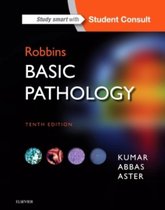
Robbins Basic Pathology
10th Edition
Author(s)Vinay Kumar; MBBS; MD;
FRCPath; Abul K. Abbas; MBBS and
Jon C. Aster; MD; PhD
Print ISBN: 9780323353175
,Question 1
A researcher examines a cell in which the nucleus contains DNA
organized into chromatin and associated with histone proteins. Which
function is most directly associated with the cell's genome?
A. Synthesis of ATP through oxidative phosphorylation
B. Storage and transmission of hereditary information
C. Degradation of extracellular proteins
D. Assembly of secreted collagen fibers
Correct Answer: B. Storage and transmission of hereditary information
,Rationale: The genome contains the cell's hereditary information and
provides the instructions required for cellular structure and function.
ATP production occurs primarily in mitochondria, extracellular protein
degradation involves lysosomal and proteasomal systems, and collagen
fiber assembly involves the secretory pathway and extracellular matrix.
Question 2
A cell is exposed to a condition that increases the need for synthesis of
new proteins. Which organelle is primarily responsible for translating
messenger RNA into protein?
A. Ribosome
B. Lysosome
C. Peroxisome
D. Golgi apparatus
Correct Answer: A. Ribosome
Rationale: Ribosomes translate messenger RNA into polypeptide chains
and are therefore central to protein synthesis. Lysosomes digest cellular
material, peroxisomes participate in oxidative reactions, and the Golgi
apparatus modifies and sorts proteins after synthesis.
Question 3
A genetic disorder results from failure to remove an abnormal cellular
protein efficiently. Which normal cellular system is most directly
responsible for selective degradation of many intracellular proteins?
A. Proteasome
B. Golgi apparatus
C. Mitochondrion
D. Nucleolus
, Correct Answer: A. Proteasome
Rationale: The ubiquitin-proteasome system is an important
mechanism for selective degradation of intracellular proteins,
particularly damaged or short-lived proteins. The Golgi modifies and
sorts proteins, mitochondria generate cellular energy, and the nucleolus
is involved primarily in ribosomal RNA synthesis and ribosome
assembly.
Question 4
A patient has a disorder in which a lysosomal enzyme is deficient,
resulting in accumulation of undegraded material within cells. Which
cellular process is most directly impaired?
A. Oxidative phosphorylation
B. Intracellular digestion
C. DNA replication
D. Messenger RNA transcription
Correct Answer: B. Intracellular digestion
Rationale: Lysosomes contain hydrolytic enzymes that digest cellular
macromolecules and material delivered to them. Oxidative
phosphorylation occurs in mitochondria, while DNA replication and
transcription occur primarily in the nucleus.
Question 5
A cell increases its ATP production when its energy requirements rise.
Which organelle is primarily responsible for generating ATP through
oxidative phosphorylation?
A. Lysosome
B. Golgi apparatus
10th Edition
Author(s)Vinay Kumar; MBBS; MD;
FRCPath; Abul K. Abbas; MBBS and
Jon C. Aster; MD; PhD
Print ISBN: 9780323353175
,Question 1
A researcher examines a cell in which the nucleus contains DNA
organized into chromatin and associated with histone proteins. Which
function is most directly associated with the cell's genome?
A. Synthesis of ATP through oxidative phosphorylation
B. Storage and transmission of hereditary information
C. Degradation of extracellular proteins
D. Assembly of secreted collagen fibers
Correct Answer: B. Storage and transmission of hereditary information
,Rationale: The genome contains the cell's hereditary information and
provides the instructions required for cellular structure and function.
ATP production occurs primarily in mitochondria, extracellular protein
degradation involves lysosomal and proteasomal systems, and collagen
fiber assembly involves the secretory pathway and extracellular matrix.
Question 2
A cell is exposed to a condition that increases the need for synthesis of
new proteins. Which organelle is primarily responsible for translating
messenger RNA into protein?
A. Ribosome
B. Lysosome
C. Peroxisome
D. Golgi apparatus
Correct Answer: A. Ribosome
Rationale: Ribosomes translate messenger RNA into polypeptide chains
and are therefore central to protein synthesis. Lysosomes digest cellular
material, peroxisomes participate in oxidative reactions, and the Golgi
apparatus modifies and sorts proteins after synthesis.
Question 3
A genetic disorder results from failure to remove an abnormal cellular
protein efficiently. Which normal cellular system is most directly
responsible for selective degradation of many intracellular proteins?
A. Proteasome
B. Golgi apparatus
C. Mitochondrion
D. Nucleolus
, Correct Answer: A. Proteasome
Rationale: The ubiquitin-proteasome system is an important
mechanism for selective degradation of intracellular proteins,
particularly damaged or short-lived proteins. The Golgi modifies and
sorts proteins, mitochondria generate cellular energy, and the nucleolus
is involved primarily in ribosomal RNA synthesis and ribosome
assembly.
Question 4
A patient has a disorder in which a lysosomal enzyme is deficient,
resulting in accumulation of undegraded material within cells. Which
cellular process is most directly impaired?
A. Oxidative phosphorylation
B. Intracellular digestion
C. DNA replication
D. Messenger RNA transcription
Correct Answer: B. Intracellular digestion
Rationale: Lysosomes contain hydrolytic enzymes that digest cellular
macromolecules and material delivered to them. Oxidative
phosphorylation occurs in mitochondria, while DNA replication and
transcription occur primarily in the nucleus.
Question 5
A cell increases its ATP production when its energy requirements rise.
Which organelle is primarily responsible for generating ATP through
oxidative phosphorylation?
A. Lysosome
B. Golgi apparatus