
Radiologic Science For TechnologistsS Stuvia: the best study material from your fellow students
Stuvia.com - The Marketplace to Buy and Sell your Study Material
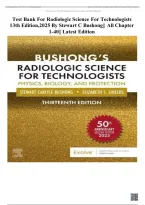
Test Bank For Radiologic Science For Technologists
13th Edition,2025 By Stewart C Bushong|| All Chapter
1-40|| Latest Edition
,Radiologic Science For TechnologistsS Stuvia: the best study material from your fellow students
Stuvia.com - The Marketplace to Buy and Sell your Study Material
Table Of Contents
1. Part I: Radiologic Physicsessential Concepts Of Radiologic Science
2. Basic Physics Primer
3. The Structure Of Matter
4. Electromagnetic Energy
5. Electricity, Magnetism, And Electromagnetism
6. Part Ii: X-Radiation
7. The X-Ray Imaging System
8. The X-Ray Tube
9. X-Ray Production
10. X-Ray Emission
11. X-Ray Interaction With Matter
12. Part Iii: X-Ray Imaging
13. Computed Radiography
14. Digital Radiography
15. Digital Radiographic Technique
16. Image Acquisition
17. Scatter Radiation
18. Digital Image Descriptors And Evaluation
19. Radiographic Artifacts
20. Part Iv: Advanced Medical Imaging
21. Mammography
22. Fluoroscopy
23. Interventional Radiology
24. Computed Tomography
25. Tomosynthesis
26. Part V: Medical Image Display
27. Patient-Image Optimization
28. Viewing The Medical Image
29. Medical Image Informatics
30. Digital Display Device
31. Part Vi: The Medical Image
32. Imaging Science
33. Artificial Intelligence
34. Quantum Computing
35. Image Perception
36. Part Vii: Radiobiology
37. Human Biology
38. Fundamental Principles Of Radiobiology
39. Molecular Radiobiology
40. Cellular Radiobiology
41. Deterministic Effects Of Radiation
42. Stochastic Effects Of Radiation
43. Part Viii: Radiation Protection
44. Health Physics
45. Designing For Radiation Protection
46. Radiography/Fluoroscopy Patient Radiation Dose
47. Computed Tomography Patient Radiation Dose
48. Patient Radiation Dose Management
49. Occupational Radiation Dose Management
purchased by bestsolutions chrispo () via www.stuvia.com
,Radiologic Science For TechnologistsS Stuvia: the best study material from your fellow students
chapter 01: essential concepts of radiologic science bushong: radiologic science for technologists, 13th edition
multiple choice
1. matter is measured in .
a. kilograms
b. joules
c. electron volts
d. rems
Ans:
a matter is measured in kilograms.
2. atoms and molecules are the fundamental building blocks of .
a. energy
b. radiation
c. matter
d. gravity
Ans: atoms and molecules are the fundamental building blocks of matter.
c
3. ice and steam are examples of two forms of .
a. matter
b. radiation
c. energy
d. work
ice and steam are examples of two forms of matter.
Ans:
a 4. the formula e = mc2 is the basis for the theory that led to the development of .
a. x-rays
b. electromagnetic radiation
c. nuclear power
d. cathode ray tubes
the formula e = mc 2 is the basis for the theory that led to the development of nuclear power.
Ans: 5. radio waves, light, and x-rays are all examples of energy.
c a. nuclear
b. thermal
c. electrical
d. electromagnetic
electromagnetic energy includes radio waves, light, and x-rays as well as other parts of the spectrum.
Ans:
d
your study documents are worth more than you think
upload your first document now
, Radiologic Science For TechnologistsS Stuvia: the best study material from your fellow students
stuvia.com - the marketplace to buy and sell your study material
5 6. a moving object has energy.
a. potential
b. kinetic
c. nuclear
d. electromagnetic
Ans:
b a moving object has kinetic energy.
7. what is the removal of an electron from an atom called?
a. ionization
b. pair production
c. irradiation
d. electricity
Ans: the removal of an electron from an atom is called ionization.
a
8. ionizing radiation is capable of removing from atoms as it passes through
the matter.
a. neutrons
b. protons
c. electrons
d. ions
ionizing radiation is capable of removing electrons from atoms as it passes through the
Ans: matter.
c
9. the energy of x-rays is _ .
a. thermal
b. potential
c. kinetic
d. electromagnetic
x-rays are a form of electromagnetic energy.
Ans:
d 10. the biggest source of man-made ionizing radiation exposure to the public is
.
a. atomic fallout
b. diagnostic x-rays
c. smoke detectors
d. nuclear power plants
medical x-ray exposure is the biggest source of man-made radiation.
Ans:
11. in the united states, we are exposed to _ msv/year of ionizing radiation from
b
the natural environment.
a. 0 to 5
b. 5 to 20
c. 20 to 90
see all study documents for radiologic science for technologistss
Stuvia.com - The Marketplace to Buy and Sell your Study Material
Test Bank For Radiologic Science For Technologists
13th Edition,2025 By Stewart C Bushong|| All Chapter
1-40|| Latest Edition
,Radiologic Science For TechnologistsS Stuvia: the best study material from your fellow students
Stuvia.com - The Marketplace to Buy and Sell your Study Material
Table Of Contents
1. Part I: Radiologic Physicsessential Concepts Of Radiologic Science
2. Basic Physics Primer
3. The Structure Of Matter
4. Electromagnetic Energy
5. Electricity, Magnetism, And Electromagnetism
6. Part Ii: X-Radiation
7. The X-Ray Imaging System
8. The X-Ray Tube
9. X-Ray Production
10. X-Ray Emission
11. X-Ray Interaction With Matter
12. Part Iii: X-Ray Imaging
13. Computed Radiography
14. Digital Radiography
15. Digital Radiographic Technique
16. Image Acquisition
17. Scatter Radiation
18. Digital Image Descriptors And Evaluation
19. Radiographic Artifacts
20. Part Iv: Advanced Medical Imaging
21. Mammography
22. Fluoroscopy
23. Interventional Radiology
24. Computed Tomography
25. Tomosynthesis
26. Part V: Medical Image Display
27. Patient-Image Optimization
28. Viewing The Medical Image
29. Medical Image Informatics
30. Digital Display Device
31. Part Vi: The Medical Image
32. Imaging Science
33. Artificial Intelligence
34. Quantum Computing
35. Image Perception
36. Part Vii: Radiobiology
37. Human Biology
38. Fundamental Principles Of Radiobiology
39. Molecular Radiobiology
40. Cellular Radiobiology
41. Deterministic Effects Of Radiation
42. Stochastic Effects Of Radiation
43. Part Viii: Radiation Protection
44. Health Physics
45. Designing For Radiation Protection
46. Radiography/Fluoroscopy Patient Radiation Dose
47. Computed Tomography Patient Radiation Dose
48. Patient Radiation Dose Management
49. Occupational Radiation Dose Management
purchased by bestsolutions chrispo () via www.stuvia.com
,Radiologic Science For TechnologistsS Stuvia: the best study material from your fellow students
chapter 01: essential concepts of radiologic science bushong: radiologic science for technologists, 13th edition
multiple choice
1. matter is measured in .
a. kilograms
b. joules
c. electron volts
d. rems
Ans:
a matter is measured in kilograms.
2. atoms and molecules are the fundamental building blocks of .
a. energy
b. radiation
c. matter
d. gravity
Ans: atoms and molecules are the fundamental building blocks of matter.
c
3. ice and steam are examples of two forms of .
a. matter
b. radiation
c. energy
d. work
ice and steam are examples of two forms of matter.
Ans:
a 4. the formula e = mc2 is the basis for the theory that led to the development of .
a. x-rays
b. electromagnetic radiation
c. nuclear power
d. cathode ray tubes
the formula e = mc 2 is the basis for the theory that led to the development of nuclear power.
Ans: 5. radio waves, light, and x-rays are all examples of energy.
c a. nuclear
b. thermal
c. electrical
d. electromagnetic
electromagnetic energy includes radio waves, light, and x-rays as well as other parts of the spectrum.
Ans:
d
your study documents are worth more than you think
upload your first document now
, Radiologic Science For TechnologistsS Stuvia: the best study material from your fellow students
stuvia.com - the marketplace to buy and sell your study material
5 6. a moving object has energy.
a. potential
b. kinetic
c. nuclear
d. electromagnetic
Ans:
b a moving object has kinetic energy.
7. what is the removal of an electron from an atom called?
a. ionization
b. pair production
c. irradiation
d. electricity
Ans: the removal of an electron from an atom is called ionization.
a
8. ionizing radiation is capable of removing from atoms as it passes through
the matter.
a. neutrons
b. protons
c. electrons
d. ions
ionizing radiation is capable of removing electrons from atoms as it passes through the
Ans: matter.
c
9. the energy of x-rays is _ .
a. thermal
b. potential
c. kinetic
d. electromagnetic
x-rays are a form of electromagnetic energy.
Ans:
d 10. the biggest source of man-made ionizing radiation exposure to the public is
.
a. atomic fallout
b. diagnostic x-rays
c. smoke detectors
d. nuclear power plants
medical x-ray exposure is the biggest source of man-made radiation.
Ans:
11. in the united states, we are exposed to _ msv/year of ionizing radiation from
b
the natural environment.
a. 0 to 5
b. 5 to 20
c. 20 to 90
see all study documents for radiologic science for technologistss


