
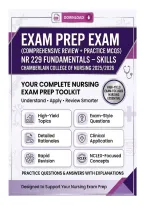
,NR 229 Fundamentals – Skills Exam Prep —
Comprehensive Review + Practice MCQs —
Chamberlain College of Nursing 2025/2026
1. A nurse is preparing to enter a patient's room to perform routine physical care. Which action should occur
before touching the patient or equipment?
A. Apply sterile gloves
B. Perform hand hygiene
C. Raise the patient's bed
D. Obtain the patient's temperature
Correct Answer: B — Perform hand hygiene
Rationale: Hand hygiene should be performed before patient contact because it significantly reduces
transmission of microorganisms between healthcare personnel, patients, and contaminated surfaces. This is
the single most important infection control measure.
2. A patient is placed on contact precautions for methicillin-resistant Staphylococcus aureus (MRSA). Which
personal protective equipment (PPE) is required when entering the room?
A. Gloves only
B. Gloves and gown
C. Mask, gown, and gloves
D. N95 respirator, gloves, and gown
Correct Answer: B — Gloves and gown
,Rationale: Contact precautions require gloves and a gown when entering the patient's room. A mask is not
required unless there is a risk of splashing. N95 respirators are used for airborne precautions.
3. What is the correct order for donning personal protective equipment (PPE)?
A. Gloves, gown, mask, goggles
B. Gown, gloves, mask, goggles
C. Gown, mask, goggles, gloves
D. Mask, gown, gloves, goggles
Correct Answer: C — Gown, mask, goggles, gloves
Rationale: The correct sequence is gown first, then mask or respirator, followed by goggles or face shield, and
finally gloves to ensure proper protection and minimize contamination risk. Gloves are applied last to prevent
contamination of other PPE.
4. A nurse is removing personal protective equipment (PPE) after leaving a patient's room. Which item should
be removed first?
A. Gloves
B. Gown
C. Mask
D. Eye protection
Correct Answer: A — Gloves
, Rationale: Gloves are removed first because they are the most contaminated. The correct removal sequence is
gloves, eye protection, gown, then mask. The mask is removed last because it protects the face from aerosols.
5. A patient is placed on airborne precautions for suspected tuberculosis. Which type of room is required?
A. Standard private room
B. Negative-pressure isolation room
C. Positive-pressure isolation room
D. Room with a HEPA filter only
Correct Answer: B — Negative-pressure isolation room
Rationale: Airborne precautions require a negative-pressure room with at least 6–12 air exchanges per hour.
Negative pressure prevents contaminated air from escaping the room and infecting others. A HEPA filter alone
does not create negative pressure.
6. Hand hygiene with soap and water is required instead of alcohol-based hand rub in which situation?
A. Before touching a patient
B. After removing gloves
C. When hands are visibly soiled
D. Before administering medications
Correct Answer: C — When hands are visibly soiled
Comprehensive Review + Practice MCQs —
Chamberlain College of Nursing 2025/2026
1. A nurse is preparing to enter a patient's room to perform routine physical care. Which action should occur
before touching the patient or equipment?
A. Apply sterile gloves
B. Perform hand hygiene
C. Raise the patient's bed
D. Obtain the patient's temperature
Correct Answer: B — Perform hand hygiene
Rationale: Hand hygiene should be performed before patient contact because it significantly reduces
transmission of microorganisms between healthcare personnel, patients, and contaminated surfaces. This is
the single most important infection control measure.
2. A patient is placed on contact precautions for methicillin-resistant Staphylococcus aureus (MRSA). Which
personal protective equipment (PPE) is required when entering the room?
A. Gloves only
B. Gloves and gown
C. Mask, gown, and gloves
D. N95 respirator, gloves, and gown
Correct Answer: B — Gloves and gown
,Rationale: Contact precautions require gloves and a gown when entering the patient's room. A mask is not
required unless there is a risk of splashing. N95 respirators are used for airborne precautions.
3. What is the correct order for donning personal protective equipment (PPE)?
A. Gloves, gown, mask, goggles
B. Gown, gloves, mask, goggles
C. Gown, mask, goggles, gloves
D. Mask, gown, gloves, goggles
Correct Answer: C — Gown, mask, goggles, gloves
Rationale: The correct sequence is gown first, then mask or respirator, followed by goggles or face shield, and
finally gloves to ensure proper protection and minimize contamination risk. Gloves are applied last to prevent
contamination of other PPE.
4. A nurse is removing personal protective equipment (PPE) after leaving a patient's room. Which item should
be removed first?
A. Gloves
B. Gown
C. Mask
D. Eye protection
Correct Answer: A — Gloves
, Rationale: Gloves are removed first because they are the most contaminated. The correct removal sequence is
gloves, eye protection, gown, then mask. The mask is removed last because it protects the face from aerosols.
5. A patient is placed on airborne precautions for suspected tuberculosis. Which type of room is required?
A. Standard private room
B. Negative-pressure isolation room
C. Positive-pressure isolation room
D. Room with a HEPA filter only
Correct Answer: B — Negative-pressure isolation room
Rationale: Airborne precautions require a negative-pressure room with at least 6–12 air exchanges per hour.
Negative pressure prevents contaminated air from escaping the room and infecting others. A HEPA filter alone
does not create negative pressure.
6. Hand hygiene with soap and water is required instead of alcohol-based hand rub in which situation?
A. Before touching a patient
B. After removing gloves
C. When hands are visibly soiled
D. Before administering medications
Correct Answer: C — When hands are visibly soiled


