PSYC 255 Exam 1 - Liberty University w/ Dr. Friberg Test with Answers
Rated A
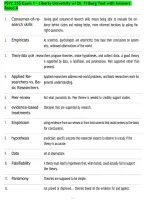
1. Consumer-of-re- Having good consumer-of-research skills means being able to evaluate the evi-
search skills dence behind claims and making better, more informed decisions by asking the
right questions.
2. Empiricists As scientists, psychologists are empiricists; they base their conclusions on system-
atic, unbiased observations of the world.
3. Theory-data cycle researchers propose theories, make hypotheses, and collect data. A good theory
is supported by data, is falsifiable, and parsimonious. Well supported rather than
proved.
4. Applied Re- Applied researchers address real-world problems, and basic researchers work for
searchers vs. Ba- general understanding.
sic Researchers
5. Peer-review Not what journalists do. Peer Review is needed to credibly support studies.
6. evidence-based therapies that are supported by research.
treatments
7. Empiricism using evidence from our senses or from instruments that assist senses as the basis
for conclusions.
8. hypothesis prediction; specific outcome the researcher expects to observe in a study if the
theory is accurate.
9. Data set of observations
10. Falsifiability A theory must lead to hypotheses that, when tested, could actually fail to support
the theory.
11. Parsimony Theories are supposed to be simple.
12. not proved or disproved... theories based on the evidence for and against.
1/8
, PSYC 255 Exam 1 - Liberty University w/ Dr. Friberg Test with Answers
Rated A
weight of the evi-
dence
13. applied research done with a practical problem in mind
14. basic research not intended to address a specific, practical problem. the goal is to enhance the
general body of knowledge.
15. Translational Re- use of lessons from basic research to develop and test applications.
search
16. Research vs. Ex- Research has an advantage over experience because researchers design studies
perience that include appropriate comparison groups.
17. Confounds alternative explanations to real-world situations.
18. Confederate actor playing a specific role for the experimenter.
19. Probabilistic the findings are not expected to explain all cases all of the time.
20. availability things that pop up to our mind tend to guide our thinking.
heuristic
21. present/present the name for our failure to consider appropriate comparison groups.
bias
22. confirmation bias the tendency to only look at information that agrees with what we already believe.
23. bias blind spot the belief that we are unlikely to fall prey to other bias.
24. empirical journal the results of a research study.
articles
25. Review journal provide a summary of all the published studies that have been done in one
articles research area.
2/8
Rated A
1. Consumer-of-re- Having good consumer-of-research skills means being able to evaluate the evi-
search skills dence behind claims and making better, more informed decisions by asking the
right questions.
2. Empiricists As scientists, psychologists are empiricists; they base their conclusions on system-
atic, unbiased observations of the world.
3. Theory-data cycle researchers propose theories, make hypotheses, and collect data. A good theory
is supported by data, is falsifiable, and parsimonious. Well supported rather than
proved.
4. Applied Re- Applied researchers address real-world problems, and basic researchers work for
searchers vs. Ba- general understanding.
sic Researchers
5. Peer-review Not what journalists do. Peer Review is needed to credibly support studies.
6. evidence-based therapies that are supported by research.
treatments
7. Empiricism using evidence from our senses or from instruments that assist senses as the basis
for conclusions.
8. hypothesis prediction; specific outcome the researcher expects to observe in a study if the
theory is accurate.
9. Data set of observations
10. Falsifiability A theory must lead to hypotheses that, when tested, could actually fail to support
the theory.
11. Parsimony Theories are supposed to be simple.
12. not proved or disproved... theories based on the evidence for and against.
1/8
, PSYC 255 Exam 1 - Liberty University w/ Dr. Friberg Test with Answers
Rated A
weight of the evi-
dence
13. applied research done with a practical problem in mind
14. basic research not intended to address a specific, practical problem. the goal is to enhance the
general body of knowledge.
15. Translational Re- use of lessons from basic research to develop and test applications.
search
16. Research vs. Ex- Research has an advantage over experience because researchers design studies
perience that include appropriate comparison groups.
17. Confounds alternative explanations to real-world situations.
18. Confederate actor playing a specific role for the experimenter.
19. Probabilistic the findings are not expected to explain all cases all of the time.
20. availability things that pop up to our mind tend to guide our thinking.
heuristic
21. present/present the name for our failure to consider appropriate comparison groups.
bias
22. confirmation bias the tendency to only look at information that agrees with what we already believe.
23. bias blind spot the belief that we are unlikely to fall prey to other bias.
24. empirical journal the results of a research study.
articles
25. Review journal provide a summary of all the published studies that have been done in one
articles research area.
2/8