
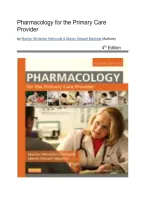
Pharmacology for the Primary Care
Provider
by Marilyn Winterton Edmunds & Maren Stewart Mayhew (Authors)
4th Edition
,TABLE OF CONTENTS
Unit 1: Foundations of Prescriptive Practice
1. Prescriptive Authority and Role Implementation: Tradition vs. Change
2. Historical Review of Prescriptive Authority: The Role of Nurses (NPs, CNMs, CRNAs, and CNSs) and
Physician Assistants
Unit 2: Pharmacokinetics and Pharmacodynamics
3. General Pharmacokinetic and Pharmacodynamic Principles
4. Special Populations: Geriatrics
5. Special Populations: Pediatrics
6. Special Populations: Pregnant and Nursing Women
7. Over-the-Counter Medications
8. Complementary and Alternative Therapies
Unit 3: The Art and Science of Pharmacotherapeutics
9. Establishing the Therapeutic Relationship
10. Practical Tips on Writing Prescriptions
11. Evidence-Based Decision-Making and Treatment Guidelines
12. Design and Implementation of Patient Education
PART TWO: DRUG MONOGRAPHS
Unit 4: Topical Agents
13. Dermatologic Agents
14. Eye, Ear, Throat, and Mouth Agents
Unit 5: Respiratory Agents
,15. Upper Respiratory Agents
16. Asthma and Chronic Obstructive Pulmonary Disease Medications
Unit 6: Cardiovascular Agents
17. Hypertension and Miscellaneous Antihypertensive Medications
18. Coronary Artery Disease and Antianginal Medications
19. Heart Failure and Digoxin
20. β-Blockers
21. Calcium Channel Blockers
22. ACE Inhibitors and Angiotensin Receptor Blockers
23. Antiarrhythmic Agents
24. Antihyperlipidemic Agents
25. Agents that Act on Blood
Unit 7: Gastrointestinal Agents
26. Antacids and the Management of GERD
27. Histamine-2 Blockers and Proton Pump Inhibitors
28. Laxatives
29. Antidiarrheals
30. Antiemetics
31. Medications for Irritable Bowel Syndrome and Other Gastrointestinal Problems
Unit 8: Renal/Genitourinary Agents
, 32. Diuretics
33. Male Genitourinary Agents
34. Drugs for Urinary Incontinence and Urinary Analgesia
Unit 9: Musculoskeletal Agents
35. Acetaminophen
36. Aspirin and Nonsteroidal Antiinflammatory Drugs
37. Disease-Modifying Antirheumatic Drugs and Immune Modulators
38. Gout Medications
39. Osteoporosis Treatment
40. Muscle Relaxants
Unit 10: Central Nervous System Agents
41. Medications for Attention Deficit Hyperactivity Disorder
42. Medications for Dementia
43. Analgesia and Pain Management
44. Migraine Medications
45. Antiepileptics
46. Antiparkinson Agents
Unit 11: Psychotropic Agents
47. Antidepressants
48. Antianxiety and Antiinsomnia Agents
Provider
by Marilyn Winterton Edmunds & Maren Stewart Mayhew (Authors)
4th Edition
,TABLE OF CONTENTS
Unit 1: Foundations of Prescriptive Practice
1. Prescriptive Authority and Role Implementation: Tradition vs. Change
2. Historical Review of Prescriptive Authority: The Role of Nurses (NPs, CNMs, CRNAs, and CNSs) and
Physician Assistants
Unit 2: Pharmacokinetics and Pharmacodynamics
3. General Pharmacokinetic and Pharmacodynamic Principles
4. Special Populations: Geriatrics
5. Special Populations: Pediatrics
6. Special Populations: Pregnant and Nursing Women
7. Over-the-Counter Medications
8. Complementary and Alternative Therapies
Unit 3: The Art and Science of Pharmacotherapeutics
9. Establishing the Therapeutic Relationship
10. Practical Tips on Writing Prescriptions
11. Evidence-Based Decision-Making and Treatment Guidelines
12. Design and Implementation of Patient Education
PART TWO: DRUG MONOGRAPHS
Unit 4: Topical Agents
13. Dermatologic Agents
14. Eye, Ear, Throat, and Mouth Agents
Unit 5: Respiratory Agents
,15. Upper Respiratory Agents
16. Asthma and Chronic Obstructive Pulmonary Disease Medications
Unit 6: Cardiovascular Agents
17. Hypertension and Miscellaneous Antihypertensive Medications
18. Coronary Artery Disease and Antianginal Medications
19. Heart Failure and Digoxin
20. β-Blockers
21. Calcium Channel Blockers
22. ACE Inhibitors and Angiotensin Receptor Blockers
23. Antiarrhythmic Agents
24. Antihyperlipidemic Agents
25. Agents that Act on Blood
Unit 7: Gastrointestinal Agents
26. Antacids and the Management of GERD
27. Histamine-2 Blockers and Proton Pump Inhibitors
28. Laxatives
29. Antidiarrheals
30. Antiemetics
31. Medications for Irritable Bowel Syndrome and Other Gastrointestinal Problems
Unit 8: Renal/Genitourinary Agents
, 32. Diuretics
33. Male Genitourinary Agents
34. Drugs for Urinary Incontinence and Urinary Analgesia
Unit 9: Musculoskeletal Agents
35. Acetaminophen
36. Aspirin and Nonsteroidal Antiinflammatory Drugs
37. Disease-Modifying Antirheumatic Drugs and Immune Modulators
38. Gout Medications
39. Osteoporosis Treatment
40. Muscle Relaxants
Unit 10: Central Nervous System Agents
41. Medications for Attention Deficit Hyperactivity Disorder
42. Medications for Dementia
43. Analgesia and Pain Management
44. Migraine Medications
45. Antiepileptics
46. Antiparkinson Agents
Unit 11: Psychotropic Agents
47. Antidepressants
48. Antianxiety and Antiinsomnia Agents


