
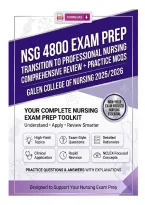
,NSG 4800 Transition to Professional
Nursing Exam Prep — Comprehensive
Review + Practice MCQs — Galen
College of Nursing 2025/2026
1. A newly licensed nurse experiences "reality shock" during the first months of practice. Which statement best
describes this phenomenon?
A. Excitement about learning new clinical skills
B. Discrepancy between values taught in nursing school and actual work environment
C. A structured orientation period with a preceptor
D. The process of earning specialty certification
Correct Answer: B
Rationale: Reality shock occurs when new nurses discover the gap between the idealized role taught in school
and the actual demands, constraints, and workplace values. This can lead to disillusionment if not addressed
through mentorship and support .
2. According to Benner's Novice to Expert model, a nurse who can recognize patterns and prioritize care based
on experience but still relies on rules for unusual situations is at which level?
A. Novice
B. Advanced Beginner
C. Competent
D. Proficient
Correct Answer: C
Rationale: The competent nurse (typically 2–3 years of experience) can see actions in terms of long-range
goals, consciously analyzes problems, and manages multiple tasks efficiently but may lack the speed and
flexibility of the proficient or expert nurse .
,3. Which action by a new graduate nurse best demonstrates successful role transition?
A. Accepting assignments without questioning, even if unsafe
B. Seeking feedback and mentoring from experienced colleagues
C. Avoiding difficult conversations with physicians
D. Relying solely on the preceptor to make clinical decisions
Correct Answer: B
Rationale: Seeking feedback, being open to learning, and developing professional relationships are key
components of successful role transition from novice to competent nurse .
4. A charge nurse observes that a new graduate is anxious and overwhelmed. Which strategy is most helpful in
supporting the new nurse's transition?
A. Assigning the most difficult patients to accelerate learning
B. Telling the nurse to "fake it until you make it"
C. Providing structured preceptorship and regular debriefing sessions
D. Encouraging independent practice without assistance
Correct Answer: C
Rationale: Structured orientation programs with a consistent preceptor and opportunities for reflection and
debriefing decrease anxiety, increase confidence, and improve retention of new graduates .
5. During a job interview, a nurse asks about the facility's nurse residency program. What does this indicate to
the interviewer?
A. The nurse is unsure of their clinical skills
B. The nurse is committed to lifelong learning and a smooth transition to practice
C. The nurse wants a reduced workload
, D. The nurse expects a higher salary
Correct Answer: B
Rationale: Nurse residency programs support new graduates in developing clinical competence and
confidence. Asking about such a program demonstrates foresight and commitment to professional growth .
6. Which of the following best defines professional nursing identity?
A. The degree a nurse holds
B. The specialty certification a nurse has earned
C. A sense of oneself as a nurse influenced by values, beliefs, and experiences
D. The position title within an organization
Correct Answer: C
Rationale: Professional identity is the internalization of the core values and perspectives of the nursing
profession; it is how the nurse perceives and enacts the professional role .
7. A nurse reflects on a difficult patient situation and identifies what could have been done differently. This is
an example of:
A. Rumination
B. Reflective practice
C. Self-criticism
D. Rationalization
Correct Answer: B
Rationale: Reflective practice is a deliberate process of analyzing clinical experiences to improve future practice
and enhance clinical judgment .
8. The term "lateral violence" in nursing refers to:
Nursing Exam Prep — Comprehensive
Review + Practice MCQs — Galen
College of Nursing 2025/2026
1. A newly licensed nurse experiences "reality shock" during the first months of practice. Which statement best
describes this phenomenon?
A. Excitement about learning new clinical skills
B. Discrepancy between values taught in nursing school and actual work environment
C. A structured orientation period with a preceptor
D. The process of earning specialty certification
Correct Answer: B
Rationale: Reality shock occurs when new nurses discover the gap between the idealized role taught in school
and the actual demands, constraints, and workplace values. This can lead to disillusionment if not addressed
through mentorship and support .
2. According to Benner's Novice to Expert model, a nurse who can recognize patterns and prioritize care based
on experience but still relies on rules for unusual situations is at which level?
A. Novice
B. Advanced Beginner
C. Competent
D. Proficient
Correct Answer: C
Rationale: The competent nurse (typically 2–3 years of experience) can see actions in terms of long-range
goals, consciously analyzes problems, and manages multiple tasks efficiently but may lack the speed and
flexibility of the proficient or expert nurse .
,3. Which action by a new graduate nurse best demonstrates successful role transition?
A. Accepting assignments without questioning, even if unsafe
B. Seeking feedback and mentoring from experienced colleagues
C. Avoiding difficult conversations with physicians
D. Relying solely on the preceptor to make clinical decisions
Correct Answer: B
Rationale: Seeking feedback, being open to learning, and developing professional relationships are key
components of successful role transition from novice to competent nurse .
4. A charge nurse observes that a new graduate is anxious and overwhelmed. Which strategy is most helpful in
supporting the new nurse's transition?
A. Assigning the most difficult patients to accelerate learning
B. Telling the nurse to "fake it until you make it"
C. Providing structured preceptorship and regular debriefing sessions
D. Encouraging independent practice without assistance
Correct Answer: C
Rationale: Structured orientation programs with a consistent preceptor and opportunities for reflection and
debriefing decrease anxiety, increase confidence, and improve retention of new graduates .
5. During a job interview, a nurse asks about the facility's nurse residency program. What does this indicate to
the interviewer?
A. The nurse is unsure of their clinical skills
B. The nurse is committed to lifelong learning and a smooth transition to practice
C. The nurse wants a reduced workload
, D. The nurse expects a higher salary
Correct Answer: B
Rationale: Nurse residency programs support new graduates in developing clinical competence and
confidence. Asking about such a program demonstrates foresight and commitment to professional growth .
6. Which of the following best defines professional nursing identity?
A. The degree a nurse holds
B. The specialty certification a nurse has earned
C. A sense of oneself as a nurse influenced by values, beliefs, and experiences
D. The position title within an organization
Correct Answer: C
Rationale: Professional identity is the internalization of the core values and perspectives of the nursing
profession; it is how the nurse perceives and enacts the professional role .
7. A nurse reflects on a difficult patient situation and identifies what could have been done differently. This is
an example of:
A. Rumination
B. Reflective practice
C. Self-criticism
D. Rationalization
Correct Answer: B
Rationale: Reflective practice is a deliberate process of analyzing clinical experiences to improve future practice
and enhance clinical judgment .
8. The term "lateral violence" in nursing refers to:


