
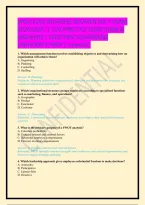
WGU C201 BUSINESS ACUMEN OA 2 EXAM
2026/2027 | 120 PRACTICE QUESTIONS &
ANSWERS | WESTERN GOVERNORS
UNIVERSITY PREP | newest!!
1. Which management function involves establishing objectives and determining how an
organization will achieve them?
A. Organizing
B. Planning
C. Controlling
D. Staffing
Answer: B. Planning
Rationale: Planning establishes organizational objectives and determines the strategies and
actions needed to accomplish them.
2. Which organizational structure groups employees according to specialized functions
such as marketing, finance, and operations?
A. Geographic
B. Product
C. Functional
D. Customer
Answer: C. Functional
Rationale: A functional structure groups employees according to their specialized business
activities.
3. What is the primary purpose of a SWOT analysis?
A. Calculate profitability
B. Evaluate internal and external factors
C. Determine employee compensation
D. Forecast inventory requirements
Answer: B. Evaluate internal and external factors
Rationale: SWOT identifies internal strengths and weaknesses and external opportunities and
threats to support strategic planning.
4. Which leadership approach gives employees substantial freedom to make decisions?
A. Autocratic
B. Participative
C. Laissez-faire
D. Directive
,Answer: C. Laissez-faire
Rationale: Laissez-faire leadership provides employees with considerable autonomy and
limited direct supervision.
5. What is delegation?
A. Eliminating management positions
B. Assigning authority and responsibility to another person
C. Centralizing all decisions
D. Removing organizational controls
Answer: B. Assigning authority and responsibility to another person
Rationale: Delegation occurs when a manager assigns responsibility and appropriate
authority to a subordinate.
6. Which organizational characteristic describes the number of employees reporting
directly to one manager?
A. Chain of command
B. Span of control
C. Departmentalization
D. Formalization
Answer: B. Span of control
Rationale: Span of control refers to the number of employees directly supervised by a
manager.
7. A company divides its sales organization into North, South, East, and West regions.
What type of departmentalization is this?
A. Product
B. Customer
C. Geographic
D. Functional
Answer: C. Geographic
Rationale: Geographic departmentalization organizes activities according to geographic
territories.
8. Which management function compares actual performance with established
standards?
A. Planning
B. Organizing
C. Leading
D. Controlling
Answer: D. Controlling
Rationale: Controlling involves monitoring performance, comparing results with standards,
and correcting deviations.
9. What is a competitive advantage?
A. A temporary accounting loss
B. A factor allowing a firm to outperform competitors
, C. A government regulation
D. A mandatory business process
Answer: B. A factor allowing a firm to outperform competitors
Rationale: Competitive advantage results from capabilities or resources that allow an
organization to create superior value relative to competitors.
10. Which tool evaluates competitive rivalry, supplier power, buyer power, substitutes,
and new entrants?
A. SWOT
B. PERT
C. Porter's Five Forces
D. BCG Matrix
Answer: C. Porter's Five Forces
Rationale: Porter's Five Forces analyzes five major competitive forces affecting an industry.
11. What is the primary purpose of a mission statement?
A. Describe the organization's fundamental purpose
B. List employee salaries
C. Calculate annual taxes
D. Determine inventory levels
Answer: A. Describe the organization's fundamental purpose
Rationale: A mission statement communicates why an organization exists and what it seeks to
accomplish.
12. Which strategy focuses on creating a distinct position in customers' minds?
A. Positioning
B. Outsourcing
C. Benchmarking
D. Forecasting
Answer: A. Positioning
Rationale: Positioning establishes how a product or brand is perceived relative to competing
offerings.
13. Which of the following is an internal factor in SWOT analysis?
A. New regulation
B. Competitor entry
C. Employee expertise
D. Economic recession
Answer: C. Employee expertise
Rationale: Employee expertise is an internal organizational capability and may represent a
strength.
14. Which is an external factor in SWOT analysis?
A. Employee turnover
B. Company culture
2026/2027 | 120 PRACTICE QUESTIONS &
ANSWERS | WESTERN GOVERNORS
UNIVERSITY PREP | newest!!
1. Which management function involves establishing objectives and determining how an
organization will achieve them?
A. Organizing
B. Planning
C. Controlling
D. Staffing
Answer: B. Planning
Rationale: Planning establishes organizational objectives and determines the strategies and
actions needed to accomplish them.
2. Which organizational structure groups employees according to specialized functions
such as marketing, finance, and operations?
A. Geographic
B. Product
C. Functional
D. Customer
Answer: C. Functional
Rationale: A functional structure groups employees according to their specialized business
activities.
3. What is the primary purpose of a SWOT analysis?
A. Calculate profitability
B. Evaluate internal and external factors
C. Determine employee compensation
D. Forecast inventory requirements
Answer: B. Evaluate internal and external factors
Rationale: SWOT identifies internal strengths and weaknesses and external opportunities and
threats to support strategic planning.
4. Which leadership approach gives employees substantial freedom to make decisions?
A. Autocratic
B. Participative
C. Laissez-faire
D. Directive
,Answer: C. Laissez-faire
Rationale: Laissez-faire leadership provides employees with considerable autonomy and
limited direct supervision.
5. What is delegation?
A. Eliminating management positions
B. Assigning authority and responsibility to another person
C. Centralizing all decisions
D. Removing organizational controls
Answer: B. Assigning authority and responsibility to another person
Rationale: Delegation occurs when a manager assigns responsibility and appropriate
authority to a subordinate.
6. Which organizational characteristic describes the number of employees reporting
directly to one manager?
A. Chain of command
B. Span of control
C. Departmentalization
D. Formalization
Answer: B. Span of control
Rationale: Span of control refers to the number of employees directly supervised by a
manager.
7. A company divides its sales organization into North, South, East, and West regions.
What type of departmentalization is this?
A. Product
B. Customer
C. Geographic
D. Functional
Answer: C. Geographic
Rationale: Geographic departmentalization organizes activities according to geographic
territories.
8. Which management function compares actual performance with established
standards?
A. Planning
B. Organizing
C. Leading
D. Controlling
Answer: D. Controlling
Rationale: Controlling involves monitoring performance, comparing results with standards,
and correcting deviations.
9. What is a competitive advantage?
A. A temporary accounting loss
B. A factor allowing a firm to outperform competitors
, C. A government regulation
D. A mandatory business process
Answer: B. A factor allowing a firm to outperform competitors
Rationale: Competitive advantage results from capabilities or resources that allow an
organization to create superior value relative to competitors.
10. Which tool evaluates competitive rivalry, supplier power, buyer power, substitutes,
and new entrants?
A. SWOT
B. PERT
C. Porter's Five Forces
D. BCG Matrix
Answer: C. Porter's Five Forces
Rationale: Porter's Five Forces analyzes five major competitive forces affecting an industry.
11. What is the primary purpose of a mission statement?
A. Describe the organization's fundamental purpose
B. List employee salaries
C. Calculate annual taxes
D. Determine inventory levels
Answer: A. Describe the organization's fundamental purpose
Rationale: A mission statement communicates why an organization exists and what it seeks to
accomplish.
12. Which strategy focuses on creating a distinct position in customers' minds?
A. Positioning
B. Outsourcing
C. Benchmarking
D. Forecasting
Answer: A. Positioning
Rationale: Positioning establishes how a product or brand is perceived relative to competing
offerings.
13. Which of the following is an internal factor in SWOT analysis?
A. New regulation
B. Competitor entry
C. Employee expertise
D. Economic recession
Answer: C. Employee expertise
Rationale: Employee expertise is an internal organizational capability and may represent a
strength.
14. Which is an external factor in SWOT analysis?
A. Employee turnover
B. Company culture


