
WILKES U NIVE RSITY
A+
NSG 530 VERIFIED
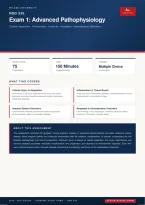
Exam 1: Advanced Pathophysiology
Cellular Adaptation · Inflammation · Immunity · Neoplasia · Hemodynamic Disorders
QUESTIONS TIME FORMAT
75 150 Minutes Multiple Choice
Original items Suggested pacing 4-option items
WHAT TH IS COVE RS
Cellular Injury & Adaptation Inflammation & Tissue Repair
Mechanisms of cell injury, hypoxic/ischemic injury, free radical Acute and chronic inflammatory pathways, chemical mediators, wound
pathology, and cellular adaptive responses (atrophy, hypertrophy, healing phases, and disorders of repair
metaplasia, dysplasia)
Immune System Disorders Neoplasia & Hemodynamic Disorders
Hypersensitivity reactions, autoimmune disease mechanisms, Cancer biology, tumor suppression, metastasis pathways, edema,
immunodeficiency states, and transplant rejection hyperemia, thrombosis, and shock states
A BO U T THIS ASSESSMENT
This assessment evaluates the graduate nursing student's mastery of advanced pathophysiologic principles underlying human
disease. Items integrate cellular and molecular mechanisms with the systemic manifestations of disease, emphasizing the link
between pathogenesis and clinical presentation. Particular focus is placed on cellular adaptation and injury, inflammatory and
immune-mediated processes, neoplastic transformation and progression, and disorders of hemodynamic regulation. Each item
pairs a clinical scenario with a focused rationale connecting the underlying mechanism to the manifestations observed.
Edition · O RIGINAL ST U DY ITEMS · NSG 530 STUVIA ACTUAL EXAM
,NSG 530 · Exam 1: Advanced Pathophysiology 75 Questions
EXAMINATION ITEMS · NSG 530 · 75 QUESTIONS
SECTION 1 · QUESTIONS 1–25
1. A 68-year-old patient with chronic heart failure develops progressive dyspnea and bilateral lower extremity
edema. At the cellular level, cardiac myocytes in this patient's heart are most likely undergoing which
adaptive change in response to chronic volume overload?
A. Dysplasia
B. Metaplasia
C. Hypertrophy
D. Atrophy
Correct Answer: C
Rationale. Chronic volume overload in heart failure produces increased workload on cardiac myocytes, which respond
with hypertrophy (increased cell size) without an increase in cell number. This is a compensatory mechanism but eventually
contributes to contractile dysfunction, fibrosis, and worsening heart failure. Pressure overload (hypertension) also produces
hypertrophy, while disuse produces atrophy.
2. A 55-year-old patient with chronic gastroesophageal reflux disease undergoes upper endoscopy, which
reveals replacement of the normal stratified squamous epithelium of the distal esophagus with intestinal-type
columnar epithelium. This cellular adaptation is best classified as which of the following?
A. Hypertrophy
B. Metaplasia
C. Atrophy
D. Dysplasia
Correct Answer: B
Rationale. Barrett esophagus is a classic example of metaplasia, in which one differentiated cell type (stratified squamous
epithelium) is replaced by another (intestinal-type columnar epithelium with goblet cells) in response to chronic irritation
from acid reflux. This adaptive change provides better resistance to acid but carries an increased risk of progression to
adenocarcinoma through dysplasia.
Original Study Items · For Educational Review Page 1
, NSG 530 · Exam 1: Advanced Pathophysiology 75 Questions
3. A 70-year-old patient with long-standing smoking history has a chest CT that reveals atypical squamous
cells with disordered maturation confined to the bronchial epithelium, without invasion through the basement
membrane. This pathologic finding is best described as which of the following?
A. Metaplasia
B. Hyperplasia
C. Dysplasia
D. Carcinoma in situ
Correct Answer: C
Rationale. Dysplasia is characterized by disordered cell growth with atypical features including pleomorphism,
hyperchromatic nuclei, and abnormal maturation, but the cells remain confined by the basement membrane. Dysplasia is a
precancerous change that may progress to carcinoma in situ if not addressed. Carcinoma in situ represents full-thickness
atypia without basement membrane invasion.
4. A 45-year-old patient develops acute tubular necrosis following an episode of profound hemorrhagic
shock. The cellular injury in this patient's renal tubular cells is most directly mediated by which mechanism?
A. Hypoxic injury due to decreased ATP production and failure of sodium-potassium pump
B. Autoimmune destruction of tubular cells
C. Direct chemical injury to tubular cells
D. Bacterial infection of the renal parenchyma
Correct Answer: A
Rationale. Hemorrhagic shock produces systemic hypoperfusion, resulting in hypoxic injury to renal tubular cells.
Decreased oxygen delivery reduces ATP production, causing failure of the sodium-potassium ATPase, intracellular sodium
accumulation, cellular swelling, and eventual cell death. Calcium influx, reactive oxygen species, and mitochondrial
dysfunction further contribute to irreversible injury.
5. A 65-year-old patient who received radiation therapy for head and neck cancer develops severe mucositis.
The cellular damage in this patient's oral mucosa is most directly mediated by which mechanism?
A. Hydrolysis of intracellular water with formation of reactive oxygen species
B. Stimulation of mucin production
C. Induction of cellular hypertrophy
D. Direct DNA damage with formation of pyrimidine dimers
Correct Answer: A
Rationale. Ionizing radiation produces cellular injury primarily through radiolysis of intracellular water, generating
reactive oxygen species (hydroxyl radicals, superoxide, hydrogen peroxide). These free radicals damage DNA, proteins,
and lipid membranes. The rapidly dividing cells of the oral mucosa are particularly vulnerable, explaining the early
development of mucositis in radiation therapy to the head and neck region.
Original Study Items · For Educational Review Page 2
A+
NSG 530 VERIFIED
Exam 1: Advanced Pathophysiology
Cellular Adaptation · Inflammation · Immunity · Neoplasia · Hemodynamic Disorders
QUESTIONS TIME FORMAT
75 150 Minutes Multiple Choice
Original items Suggested pacing 4-option items
WHAT TH IS COVE RS
Cellular Injury & Adaptation Inflammation & Tissue Repair
Mechanisms of cell injury, hypoxic/ischemic injury, free radical Acute and chronic inflammatory pathways, chemical mediators, wound
pathology, and cellular adaptive responses (atrophy, hypertrophy, healing phases, and disorders of repair
metaplasia, dysplasia)
Immune System Disorders Neoplasia & Hemodynamic Disorders
Hypersensitivity reactions, autoimmune disease mechanisms, Cancer biology, tumor suppression, metastasis pathways, edema,
immunodeficiency states, and transplant rejection hyperemia, thrombosis, and shock states
A BO U T THIS ASSESSMENT
This assessment evaluates the graduate nursing student's mastery of advanced pathophysiologic principles underlying human
disease. Items integrate cellular and molecular mechanisms with the systemic manifestations of disease, emphasizing the link
between pathogenesis and clinical presentation. Particular focus is placed on cellular adaptation and injury, inflammatory and
immune-mediated processes, neoplastic transformation and progression, and disorders of hemodynamic regulation. Each item
pairs a clinical scenario with a focused rationale connecting the underlying mechanism to the manifestations observed.
Edition · O RIGINAL ST U DY ITEMS · NSG 530 STUVIA ACTUAL EXAM
,NSG 530 · Exam 1: Advanced Pathophysiology 75 Questions
EXAMINATION ITEMS · NSG 530 · 75 QUESTIONS
SECTION 1 · QUESTIONS 1–25
1. A 68-year-old patient with chronic heart failure develops progressive dyspnea and bilateral lower extremity
edema. At the cellular level, cardiac myocytes in this patient's heart are most likely undergoing which
adaptive change in response to chronic volume overload?
A. Dysplasia
B. Metaplasia
C. Hypertrophy
D. Atrophy
Correct Answer: C
Rationale. Chronic volume overload in heart failure produces increased workload on cardiac myocytes, which respond
with hypertrophy (increased cell size) without an increase in cell number. This is a compensatory mechanism but eventually
contributes to contractile dysfunction, fibrosis, and worsening heart failure. Pressure overload (hypertension) also produces
hypertrophy, while disuse produces atrophy.
2. A 55-year-old patient with chronic gastroesophageal reflux disease undergoes upper endoscopy, which
reveals replacement of the normal stratified squamous epithelium of the distal esophagus with intestinal-type
columnar epithelium. This cellular adaptation is best classified as which of the following?
A. Hypertrophy
B. Metaplasia
C. Atrophy
D. Dysplasia
Correct Answer: B
Rationale. Barrett esophagus is a classic example of metaplasia, in which one differentiated cell type (stratified squamous
epithelium) is replaced by another (intestinal-type columnar epithelium with goblet cells) in response to chronic irritation
from acid reflux. This adaptive change provides better resistance to acid but carries an increased risk of progression to
adenocarcinoma through dysplasia.
Original Study Items · For Educational Review Page 1
, NSG 530 · Exam 1: Advanced Pathophysiology 75 Questions
3. A 70-year-old patient with long-standing smoking history has a chest CT that reveals atypical squamous
cells with disordered maturation confined to the bronchial epithelium, without invasion through the basement
membrane. This pathologic finding is best described as which of the following?
A. Metaplasia
B. Hyperplasia
C. Dysplasia
D. Carcinoma in situ
Correct Answer: C
Rationale. Dysplasia is characterized by disordered cell growth with atypical features including pleomorphism,
hyperchromatic nuclei, and abnormal maturation, but the cells remain confined by the basement membrane. Dysplasia is a
precancerous change that may progress to carcinoma in situ if not addressed. Carcinoma in situ represents full-thickness
atypia without basement membrane invasion.
4. A 45-year-old patient develops acute tubular necrosis following an episode of profound hemorrhagic
shock. The cellular injury in this patient's renal tubular cells is most directly mediated by which mechanism?
A. Hypoxic injury due to decreased ATP production and failure of sodium-potassium pump
B. Autoimmune destruction of tubular cells
C. Direct chemical injury to tubular cells
D. Bacterial infection of the renal parenchyma
Correct Answer: A
Rationale. Hemorrhagic shock produces systemic hypoperfusion, resulting in hypoxic injury to renal tubular cells.
Decreased oxygen delivery reduces ATP production, causing failure of the sodium-potassium ATPase, intracellular sodium
accumulation, cellular swelling, and eventual cell death. Calcium influx, reactive oxygen species, and mitochondrial
dysfunction further contribute to irreversible injury.
5. A 65-year-old patient who received radiation therapy for head and neck cancer develops severe mucositis.
The cellular damage in this patient's oral mucosa is most directly mediated by which mechanism?
A. Hydrolysis of intracellular water with formation of reactive oxygen species
B. Stimulation of mucin production
C. Induction of cellular hypertrophy
D. Direct DNA damage with formation of pyrimidine dimers
Correct Answer: A
Rationale. Ionizing radiation produces cellular injury primarily through radiolysis of intracellular water, generating
reactive oxygen species (hydroxyl radicals, superoxide, hydrogen peroxide). These free radicals damage DNA, proteins,
and lipid membranes. The rapidly dividing cells of the oral mucosa are particularly vulnerable, explaining the early
development of mucositis in radiation therapy to the head and neck region.
Original Study Items · For Educational Review Page 2


