
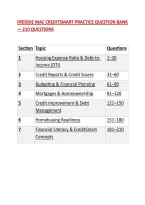
FREDDIE MAC CREDITSMART PRACTICE QUESTION BANK
— 210 QUESTIONS
Section Topic Questions
1 Housing Expense Ratio & Debt-to- 1–30
Income (DTI)
2 Credit Reports & Credit Scores 31–60
3 Budgeting & Financial Planning 61–90
4 Mortgages & Homeownership 91–120
5 Credit Improvement & Debt 121–150
Management
6 Homebuying Readiness 151–180
7 Financial Literacy & CreditSmart 181–210
Concepts
,Questions 1–30: Housing Expense Ratio & DTI
1. The percentage of gross monthly income used to pay housing
expenses is called the:
A) Credit utilization ratio
B) Housing expense ratio
C) Debt settlement ratio
D) Savings ratio
Answer: B
Explanation: The housing expense ratio measures housing-related
expenses as a percentage of gross monthly income.
2. Which expense is generally included when calculating a housing
expense ratio?
A) Electricity used in the home
B) Cell phone service
C) Principal and interest on the mortgage
D) Groceries
Answer: C
Explanation: Mortgage principal and interest are core components of
the housing expense calculation.
3. Which expense is generally NOT included in the housing expense
ratio?
,A) Property taxes
B) Homeowners insurance
C) Mortgage principal
D) Utility bills
Answer: D
Explanation: Utilities such as electricity, gas, and water are generally
not included in the standard housing expense ratio.
4. A borrower's gross monthly income is $6,000 and monthly housing
expenses are $1,800. What is the housing expense ratio?
A) 20%
B) 25%
C) 30%
D) 35%
Answer: C
Explanation: $1,800 ÷ $6,000 = 0.30, or 30%.
5. Which income figure is generally used when calculating a debt-to-
income ratio?
A) Gross monthly income
B) Take-home pay after taxes
C) Annual spending
D) Net worth
Answer: A
, Explanation: DTI calculations generally compare monthly debt
obligations with gross monthly income.
6. What does the debt-to-income ratio primarily measure?
A) The value of a person's home
B) The percentage of income committed to debt obligations
C) The amount of savings in a bank account
D) The interest rate on a mortgage
Answer: B
Explanation: DTI measures how much of a borrower's gross income is
committed to recurring debt obligations.
7. A borrower earns $5,000 gross monthly income and has $1,500 in
monthly debt payments. What is the DTI?
A) 20%
B) 25%
C) 30%
D) 35%
Answer: C
Explanation: $1,500 ÷ $5,000 = 30%.
8. Which item would generally be considered a recurring debt
obligation?
— 210 QUESTIONS
Section Topic Questions
1 Housing Expense Ratio & Debt-to- 1–30
Income (DTI)
2 Credit Reports & Credit Scores 31–60
3 Budgeting & Financial Planning 61–90
4 Mortgages & Homeownership 91–120
5 Credit Improvement & Debt 121–150
Management
6 Homebuying Readiness 151–180
7 Financial Literacy & CreditSmart 181–210
Concepts
,Questions 1–30: Housing Expense Ratio & DTI
1. The percentage of gross monthly income used to pay housing
expenses is called the:
A) Credit utilization ratio
B) Housing expense ratio
C) Debt settlement ratio
D) Savings ratio
Answer: B
Explanation: The housing expense ratio measures housing-related
expenses as a percentage of gross monthly income.
2. Which expense is generally included when calculating a housing
expense ratio?
A) Electricity used in the home
B) Cell phone service
C) Principal and interest on the mortgage
D) Groceries
Answer: C
Explanation: Mortgage principal and interest are core components of
the housing expense calculation.
3. Which expense is generally NOT included in the housing expense
ratio?
,A) Property taxes
B) Homeowners insurance
C) Mortgage principal
D) Utility bills
Answer: D
Explanation: Utilities such as electricity, gas, and water are generally
not included in the standard housing expense ratio.
4. A borrower's gross monthly income is $6,000 and monthly housing
expenses are $1,800. What is the housing expense ratio?
A) 20%
B) 25%
C) 30%
D) 35%
Answer: C
Explanation: $1,800 ÷ $6,000 = 0.30, or 30%.
5. Which income figure is generally used when calculating a debt-to-
income ratio?
A) Gross monthly income
B) Take-home pay after taxes
C) Annual spending
D) Net worth
Answer: A
, Explanation: DTI calculations generally compare monthly debt
obligations with gross monthly income.
6. What does the debt-to-income ratio primarily measure?
A) The value of a person's home
B) The percentage of income committed to debt obligations
C) The amount of savings in a bank account
D) The interest rate on a mortgage
Answer: B
Explanation: DTI measures how much of a borrower's gross income is
committed to recurring debt obligations.
7. A borrower earns $5,000 gross monthly income and has $1,500 in
monthly debt payments. What is the DTI?
A) 20%
B) 25%
C) 30%
D) 35%
Answer: C
Explanation: $1,500 ÷ $5,000 = 30%.
8. Which item would generally be considered a recurring debt
obligation?


