
NUR 239- Exam 3
Study online at https://quizlet.com/_i1p3yq
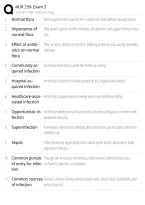
1. Normal flora Microorganisms that naturally live on and in the body without causing disease.
2. Importance of They protect against harmful microbes, aid digestion, and support immune func-
normal flora tion.
3. Effect of antibi- They can kill or disturb normal flora, reducing protection and causing secondary
otics on normal infections.
flora
4. Community-ac- An infection that starts outside the healthcare setting.
quired infection
5. Hospital-ac- An infection caused by microbes picked up in a hospital environment.
quired infection
6. Healthcare-asso- An infection acquired while receiving care in any healthcare setting.
ciated infection
7. Opportunistic in- An infection where normal flora microbes become pathogenic in someone with
fection weakened immunity.
8. Superinfection A secondary infection that develops after normal flora are disrupted, often from
antibiotic use.
9. Sepsis A life-threatening organ dysfunction caused by the body's abnormal or faulty
response to infection.
10. Common portals Through skin or mucous membranes, direct contact, indirect contact (vec-
of entry for infec- tor/fomite), ingestion, or inhalation.
tion
11. Common sources Humans, animals, fomites, vehicles (food, water, blood, feces, body fluids), and
of infection vectors (insects).
, NUR 239- Exam 3
Study online at https://quizlet.com/_i1p3yq
12. Local signs of Redness, heat, swelling, pain, and loss of function.
acute inflamma-
tion
13. Systemic signs of Fever, elevated WBC, fatigue, and anorexia.
acute inflamma-
tion
14. Signs of chronic Ongoing tissue damage and repair, scar tissue or granuloma formation, and
inflammation persistent fatigue.
15. Incubation stage Active microbe replication between exposure and symptoms; the person is asymp-
of infection tomatic.
16. Prodromal stage General nonspecific symptoms like fatigue, headache, or mild fever appear; most
of infection contagious stage.
17. Acute stage of in- Rapid microbe growth and maximum symptoms such as swollen lymph nodes,
fection muscle pain, and high WBC.
18. Convalescent Infection is contained, tissues repair, and the person returns to normal, sometimes
stage of infection with lingering fatigue.
19. Antibiotics lead- Ampicillin, cephalosporins, and clindamycin.
ing to yeast or C.
diff infections
20. Infections Oral or vaginal yeast infections and pseudomembranous colitis (C. diff).
caused by
ampicillin,
cephalosporins,
and clindamycin
21. Oral vancomycin or metronidazole.
Study online at https://quizlet.com/_i1p3yq
1. Normal flora Microorganisms that naturally live on and in the body without causing disease.
2. Importance of They protect against harmful microbes, aid digestion, and support immune func-
normal flora tion.
3. Effect of antibi- They can kill or disturb normal flora, reducing protection and causing secondary
otics on normal infections.
flora
4. Community-ac- An infection that starts outside the healthcare setting.
quired infection
5. Hospital-ac- An infection caused by microbes picked up in a hospital environment.
quired infection
6. Healthcare-asso- An infection acquired while receiving care in any healthcare setting.
ciated infection
7. Opportunistic in- An infection where normal flora microbes become pathogenic in someone with
fection weakened immunity.
8. Superinfection A secondary infection that develops after normal flora are disrupted, often from
antibiotic use.
9. Sepsis A life-threatening organ dysfunction caused by the body's abnormal or faulty
response to infection.
10. Common portals Through skin or mucous membranes, direct contact, indirect contact (vec-
of entry for infec- tor/fomite), ingestion, or inhalation.
tion
11. Common sources Humans, animals, fomites, vehicles (food, water, blood, feces, body fluids), and
of infection vectors (insects).
, NUR 239- Exam 3
Study online at https://quizlet.com/_i1p3yq
12. Local signs of Redness, heat, swelling, pain, and loss of function.
acute inflamma-
tion
13. Systemic signs of Fever, elevated WBC, fatigue, and anorexia.
acute inflamma-
tion
14. Signs of chronic Ongoing tissue damage and repair, scar tissue or granuloma formation, and
inflammation persistent fatigue.
15. Incubation stage Active microbe replication between exposure and symptoms; the person is asymp-
of infection tomatic.
16. Prodromal stage General nonspecific symptoms like fatigue, headache, or mild fever appear; most
of infection contagious stage.
17. Acute stage of in- Rapid microbe growth and maximum symptoms such as swollen lymph nodes,
fection muscle pain, and high WBC.
18. Convalescent Infection is contained, tissues repair, and the person returns to normal, sometimes
stage of infection with lingering fatigue.
19. Antibiotics lead- Ampicillin, cephalosporins, and clindamycin.
ing to yeast or C.
diff infections
20. Infections Oral or vaginal yeast infections and pseudomembranous colitis (C. diff).
caused by
ampicillin,
cephalosporins,
and clindamycin
21. Oral vancomycin or metronidazole.


