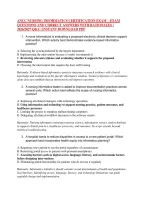
ANCC NURSING INFORMATICS CERTIFICATION EXAM – EXAM
QUESTIONS AND CORRECT ANSWERS WITH RATIONALES |
2026/2027 Q&A | INSTANT DOWNLOAD PDF
1. A nurse informaticist is evaluating a proposed electronic clinical decision-support
intervention. Which activity best demonstrates evidence-based informatics
practice?
A. Selecting the system preferred by the largest department
B. Implementing the intervention because a vendor recommends it
C. Reviewing relevant evidence and evaluating whether it supports the proposed
intervention
D. Choosing the intervention that requires the least staff training
Rationale: Evidence-based informatics practice integrates research evidence with clinical
knowledge and evaluation of the specific informatics solution. Vendor preference or convenience
alone does not establish that an intervention will improve outcomes.
2. A nursing informatics leader is asked to improve documentation practices across
several units. Which action best reflects the scope of nursing informatics
practice?
A. Replacing all clinical managers with technology specialists
B. Using information and technology to support nursing practice, patient outcomes, and
healthcare processes
C. Limiting the project to repairing malfunctioning computers
D. Delegating all clinical workflow decisions to the software vendor
Rationale: Nursing informatics integrates nursing science, information science, and technology
to support clinical practice, healthcare processes, and outcomes. Its scope extends beyond
technical troubleshooting.
3. A hospital wants to reduce disparities in access to a new patient portal. Which
approach best incorporates health equity into informatics planning?
A. Requiring every patient to use the portal regardless of circumstances
B. Restricting portal access to patients with personal smartphones
C. Assessing barriers such as digital access, language, literacy, and socioeconomic factors
before designing interventions
D. Eliminating portal functionality for patients who do not use it regularly
Rationale: Informatics initiatives should consider social determinants of health and population-
level barriers. Identifying access, language, literacy, and technology limitations can guide
equitable design and implementation.
, 4. An informatics nurse is comparing two workflow-improvement proposals. Which
evidence would be most useful before selecting an intervention?
A. The number of employees who verbally support it
B. The vendor's advertising materials
C. The age of the current electronic health record
D. Peer-reviewed evidence, organizational data, workflow findings, and outcome
evaluations
Rationale: A sound evidence-based decision incorporates multiple relevant sources, including
research evidence and local performance data. Promotional material or informal opinions alone
are insufficient.
5. A nurse informaticist is explaining the DIKW framework to a new analyst. Which
example represents information rather than raw data?
A. 38.2°C
B. Heart rate 112 beats/minute
C. The patient's temperature has increased from 37.1°C to 38.2°C over four hours
D. A temperature value stored in a database field
Rationale: Data are individual observations. Information results when data are organized or
placed into context so that a meaningful relationship or pattern can be recognized.
6. A clinical technology project is experiencing resistance from nurses who believe
the new workflow will increase documentation time. Which approach is most
consistent with effective change management?
A. Preventing staff from discussing the change until implementation
B. Requiring immediate adoption without feedback
C. Replacing resistant employees
D. Engaging affected users, identifying concerns, communicating the rationale, and
incorporating appropriate feedback
Rationale: Successful change management recognizes the effect of change on people and
processes. Early stakeholder involvement and meaningful communication can identify barriers
and improve adoption.
7. During an informatics project, a nurse discovers that a proposed workflow could
unintentionally expose protected health information. What should the informatics
nurse do first?
A. Continue implementation and address the concern later
B. Delete the affected data
C. Assess the privacy and security risk and escalate it through the appropriate
, organizational process
D. Discuss the patient's information with other staff to determine whether the concern is valid
Rationale: Potential privacy and security risks require structured assessment and appropriate
escalation. Informal disclosure of protected information could create an additional privacy
problem.
8. An organization is developing a policy governing the use of clinical data for
secondary analysis. Which consideration is most important?
A. Whether the database is large enough
B. Whether the data can be exported quickly
C. Whether the project uses the newest software
D. Whether applicable legal, ethical, privacy, security, and organizational requirements are
addressed
Rationale: Secondary use of clinical information must account for applicable privacy, security,
legal, and ethical requirements rather than focusing solely on technical feasibility.
9. An informatics nurse is helping an interdisciplinary team resolve disagreement
about a new medication-documentation workflow. Which action is most
appropriate?
A. Allow the most senior participant to make the decision
B. Avoid discussing the disagreement
C. Clarify the underlying concerns, establish shared goals, and facilitate a collaborative
solution
D. Ask the vendor to decide which department is correct
Rationale: Constructive conflict management focuses on understanding the underlying issues
and identifying a solution that supports shared objectives. Authority alone does not necessarily
resolve the underlying workflow problem.
10. A nurse informaticist is preparing a strategic plan for a clinical technology
program. Which component is most appropriate?
A. A list of unrelated software products
B. Long-term objectives linked to organizational priorities, resources, and measurable
outcomes
C. Only the current year's help-desk tickets
D. A list of employees who should receive additional training
Rationale: Strategic planning establishes longer-term direction and connects objectives with
organizational priorities, resources, and measurable results.
QUESTIONS AND CORRECT ANSWERS WITH RATIONALES |
2026/2027 Q&A | INSTANT DOWNLOAD PDF
1. A nurse informaticist is evaluating a proposed electronic clinical decision-support
intervention. Which activity best demonstrates evidence-based informatics
practice?
A. Selecting the system preferred by the largest department
B. Implementing the intervention because a vendor recommends it
C. Reviewing relevant evidence and evaluating whether it supports the proposed
intervention
D. Choosing the intervention that requires the least staff training
Rationale: Evidence-based informatics practice integrates research evidence with clinical
knowledge and evaluation of the specific informatics solution. Vendor preference or convenience
alone does not establish that an intervention will improve outcomes.
2. A nursing informatics leader is asked to improve documentation practices across
several units. Which action best reflects the scope of nursing informatics
practice?
A. Replacing all clinical managers with technology specialists
B. Using information and technology to support nursing practice, patient outcomes, and
healthcare processes
C. Limiting the project to repairing malfunctioning computers
D. Delegating all clinical workflow decisions to the software vendor
Rationale: Nursing informatics integrates nursing science, information science, and technology
to support clinical practice, healthcare processes, and outcomes. Its scope extends beyond
technical troubleshooting.
3. A hospital wants to reduce disparities in access to a new patient portal. Which
approach best incorporates health equity into informatics planning?
A. Requiring every patient to use the portal regardless of circumstances
B. Restricting portal access to patients with personal smartphones
C. Assessing barriers such as digital access, language, literacy, and socioeconomic factors
before designing interventions
D. Eliminating portal functionality for patients who do not use it regularly
Rationale: Informatics initiatives should consider social determinants of health and population-
level barriers. Identifying access, language, literacy, and technology limitations can guide
equitable design and implementation.
, 4. An informatics nurse is comparing two workflow-improvement proposals. Which
evidence would be most useful before selecting an intervention?
A. The number of employees who verbally support it
B. The vendor's advertising materials
C. The age of the current electronic health record
D. Peer-reviewed evidence, organizational data, workflow findings, and outcome
evaluations
Rationale: A sound evidence-based decision incorporates multiple relevant sources, including
research evidence and local performance data. Promotional material or informal opinions alone
are insufficient.
5. A nurse informaticist is explaining the DIKW framework to a new analyst. Which
example represents information rather than raw data?
A. 38.2°C
B. Heart rate 112 beats/minute
C. The patient's temperature has increased from 37.1°C to 38.2°C over four hours
D. A temperature value stored in a database field
Rationale: Data are individual observations. Information results when data are organized or
placed into context so that a meaningful relationship or pattern can be recognized.
6. A clinical technology project is experiencing resistance from nurses who believe
the new workflow will increase documentation time. Which approach is most
consistent with effective change management?
A. Preventing staff from discussing the change until implementation
B. Requiring immediate adoption without feedback
C. Replacing resistant employees
D. Engaging affected users, identifying concerns, communicating the rationale, and
incorporating appropriate feedback
Rationale: Successful change management recognizes the effect of change on people and
processes. Early stakeholder involvement and meaningful communication can identify barriers
and improve adoption.
7. During an informatics project, a nurse discovers that a proposed workflow could
unintentionally expose protected health information. What should the informatics
nurse do first?
A. Continue implementation and address the concern later
B. Delete the affected data
C. Assess the privacy and security risk and escalate it through the appropriate
, organizational process
D. Discuss the patient's information with other staff to determine whether the concern is valid
Rationale: Potential privacy and security risks require structured assessment and appropriate
escalation. Informal disclosure of protected information could create an additional privacy
problem.
8. An organization is developing a policy governing the use of clinical data for
secondary analysis. Which consideration is most important?
A. Whether the database is large enough
B. Whether the data can be exported quickly
C. Whether the project uses the newest software
D. Whether applicable legal, ethical, privacy, security, and organizational requirements are
addressed
Rationale: Secondary use of clinical information must account for applicable privacy, security,
legal, and ethical requirements rather than focusing solely on technical feasibility.
9. An informatics nurse is helping an interdisciplinary team resolve disagreement
about a new medication-documentation workflow. Which action is most
appropriate?
A. Allow the most senior participant to make the decision
B. Avoid discussing the disagreement
C. Clarify the underlying concerns, establish shared goals, and facilitate a collaborative
solution
D. Ask the vendor to decide which department is correct
Rationale: Constructive conflict management focuses on understanding the underlying issues
and identifying a solution that supports shared objectives. Authority alone does not necessarily
resolve the underlying workflow problem.
10. A nurse informaticist is preparing a strategic plan for a clinical technology
program. Which component is most appropriate?
A. A list of unrelated software products
B. Long-term objectives linked to organizational priorities, resources, and measurable
outcomes
C. Only the current year's help-desk tickets
D. A list of employees who should receive additional training
Rationale: Strategic planning establishes longer-term direction and connects objectives with
organizational priorities, resources, and measurable results.