
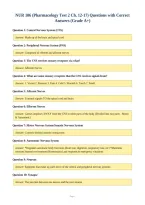
NUR 106 (Pharmacology Test 2 Ch. 12-17) Questions with Correct
Answers (Grade A+)
Question 1: Central Nervous System (CNS)
Answer: Made up of the brain and spinal cord
Question 2: Peripheral Nervous System (PNS)
Answer: Composed of efferent and afferent nerves
Question 3: The CNS receives sensory receptors via what?
Answer: Afferent Nerves
Question 4: What are some sensory receptors that the CNS receives signals from?
Answer: 1. Vision 2. Pressure 3. Pain 4. Cold 5. Warmth 6. Touch 7. Smell
Question 5: Afferent Nerves
Answer: Transmit signals TO the spinal cord and brain
Question 6: Efferent Nerves
Answer: Carries impulses AWAY from the CNS to other parts of the body (Divided into two parts - Motor
& Autonomic)
Question 7: Motor Nervous System/Somatic Nervous System
Answer: Controls skeletal muscle contractions
Question 8: Autonomic Nervous System
Answer: *Regulates automatic body functions (heart rate, digestion, respiratory rate, etc) *Maintains
constant internal environment (Homeostasis) and responds to emergency situations
Question 9: Neurons
Answer: Segments that make up each nerve of the central and peripheral nervous systems
Question 10: Synapse
Answer: The junction between one neuron and the next neuron
Page 1
,Question 11: Neurotransmitters
Answer: Chemical substances that cause transmission of nerve signals or impulses. They activate receptors
at the end of organs such as heart, glands, and smooth muscles
Question 12: Sympathetic Branch of ANS
Answer: Speeds up normal processes (Requires a quick response "Fight-or-Flight" response)
Question 13: Parasympathetic Branch of ANS
Answer: Slows down the normal processes (No immediate action require "Rest-and-Digest" response)
Question 14: What nerve ending liberates Acetylcholine?
Answer: Cholinergic Fibers
Question 15: What nerve ending liberates Norepinephrine?
Answer: Adrenergic Fibers
Question 16: What does adrenergic fibers stimulate in the heart?
Answer: Increases the heart rate
Question 17: What does cholinergic fibers stimulate in the heart?
Answer: Decreases the heart rate (Slows)
Question 18: What does adrenergic fibers stimulate in the eyes?
Answer: Pupil dilation
Question 19: What does cholinergic fibers stimulate in the eyes?
Answer: Pupil constriction
Question 20: Norepinephrine = Adrenergic = Sympathetic
Answer: Speeds up
Question 21: Acetylcholine = Cholinergic = Parasympathetic
Answer: Slows down
Page 2
,Question 22: Cholinergic Agents (Parasympathomimetic Agents)
Answer: Causes effects similar to that of acetylcholine in the body (Slows down processes)
Question 23: Adrenergic Agents (Sympathomimetic Agents)
Answer: Causes effects similar to that of adrenergic neurotransmitters in the body (Speeds up processes)
Question 24: Anticholinergic Agents
Answer: Agents that block or inhibit cholinergic activity (prevents from slowing down)
Question 25: Adrenergic Blocking Agents
Answer: Inhibit the adrenergic system (prevents from speeding up)
Question 26: Catecholamines
Answer: Naturally neurotransmitters found in the body and can be synthetically manufactured
(Norepinephrine, Epinephrine, Dopamine)
Question 27: Where is Norepinephrine naturally found?
Answer: Secreted from nerve terminals
Question 28: Where is Epinephrine naturally found?
Answer: Adrenal Medulla
Question 29: Where is Dopamine naturally found?
Answer: Selected sites in the brain, kidneys, and GI tract
Question 30: Noncatecholamines
Answer: Act in a similar way as catecholamines but are more selective for certain types of receptors. They
are not as fast acting and have a longer duration of action
Question 31: Papilations
Answer: Racing Heart
Question 32: Tachycardia
Answer: Rapid Heart Rate
Page 3
, Question 33: Orthostatic Hypotension
Answer: Low BP (Blood Pressure) happens when standing after sitting or laying
Question 34: Common Side Effects of Adrenergic Agents
Answer: 1. Palpitations (Racing Heart) 2. Tachycardia (Rapid Heartbeat/Rate) 3. Skin Flushing 4. Dizziness
5. Tremors 6. Orthostatic Hypotension (Low BP happens while standing after sitting or laying)
Question 35: Serious Adverse Effects of Adrenergic Agents
Answer: 1. Dysrhythmias (Irregular Heartbeat) 2. Chest Pain 3. Sever Hypotension (Low BP) 4.
Hypertension (High BP) 5. Anginal Pain (Chest pain due to reduced oxygenation to cardiac muscle) 6.
Nausea 7. Vomiting
Question 36: Vasoconstrictors
Answer: These drugs contract blood vessels (Used to raise/increase BP)
Question 37: Phenylephrine
Answer: Vasoconstrictor
Question 38: Norepinephrine
Answer: Vasoconstrictor
Question 39: Metaraminol
Answer: Vasoconstrictor
Question 40: Bronchodilator
Answer: Opens Airway
Question 41: Albuterol
Answer: Bronchodilator
Question 42: Ephedrine
Answer: Vasoconstrictor/Bronchodilator
Question 43: Cardiac Stimulants
Answer: Increases the heart rate
Page 4
Answers (Grade A+)
Question 1: Central Nervous System (CNS)
Answer: Made up of the brain and spinal cord
Question 2: Peripheral Nervous System (PNS)
Answer: Composed of efferent and afferent nerves
Question 3: The CNS receives sensory receptors via what?
Answer: Afferent Nerves
Question 4: What are some sensory receptors that the CNS receives signals from?
Answer: 1. Vision 2. Pressure 3. Pain 4. Cold 5. Warmth 6. Touch 7. Smell
Question 5: Afferent Nerves
Answer: Transmit signals TO the spinal cord and brain
Question 6: Efferent Nerves
Answer: Carries impulses AWAY from the CNS to other parts of the body (Divided into two parts - Motor
& Autonomic)
Question 7: Motor Nervous System/Somatic Nervous System
Answer: Controls skeletal muscle contractions
Question 8: Autonomic Nervous System
Answer: *Regulates automatic body functions (heart rate, digestion, respiratory rate, etc) *Maintains
constant internal environment (Homeostasis) and responds to emergency situations
Question 9: Neurons
Answer: Segments that make up each nerve of the central and peripheral nervous systems
Question 10: Synapse
Answer: The junction between one neuron and the next neuron
Page 1
,Question 11: Neurotransmitters
Answer: Chemical substances that cause transmission of nerve signals or impulses. They activate receptors
at the end of organs such as heart, glands, and smooth muscles
Question 12: Sympathetic Branch of ANS
Answer: Speeds up normal processes (Requires a quick response "Fight-or-Flight" response)
Question 13: Parasympathetic Branch of ANS
Answer: Slows down the normal processes (No immediate action require "Rest-and-Digest" response)
Question 14: What nerve ending liberates Acetylcholine?
Answer: Cholinergic Fibers
Question 15: What nerve ending liberates Norepinephrine?
Answer: Adrenergic Fibers
Question 16: What does adrenergic fibers stimulate in the heart?
Answer: Increases the heart rate
Question 17: What does cholinergic fibers stimulate in the heart?
Answer: Decreases the heart rate (Slows)
Question 18: What does adrenergic fibers stimulate in the eyes?
Answer: Pupil dilation
Question 19: What does cholinergic fibers stimulate in the eyes?
Answer: Pupil constriction
Question 20: Norepinephrine = Adrenergic = Sympathetic
Answer: Speeds up
Question 21: Acetylcholine = Cholinergic = Parasympathetic
Answer: Slows down
Page 2
,Question 22: Cholinergic Agents (Parasympathomimetic Agents)
Answer: Causes effects similar to that of acetylcholine in the body (Slows down processes)
Question 23: Adrenergic Agents (Sympathomimetic Agents)
Answer: Causes effects similar to that of adrenergic neurotransmitters in the body (Speeds up processes)
Question 24: Anticholinergic Agents
Answer: Agents that block or inhibit cholinergic activity (prevents from slowing down)
Question 25: Adrenergic Blocking Agents
Answer: Inhibit the adrenergic system (prevents from speeding up)
Question 26: Catecholamines
Answer: Naturally neurotransmitters found in the body and can be synthetically manufactured
(Norepinephrine, Epinephrine, Dopamine)
Question 27: Where is Norepinephrine naturally found?
Answer: Secreted from nerve terminals
Question 28: Where is Epinephrine naturally found?
Answer: Adrenal Medulla
Question 29: Where is Dopamine naturally found?
Answer: Selected sites in the brain, kidneys, and GI tract
Question 30: Noncatecholamines
Answer: Act in a similar way as catecholamines but are more selective for certain types of receptors. They
are not as fast acting and have a longer duration of action
Question 31: Papilations
Answer: Racing Heart
Question 32: Tachycardia
Answer: Rapid Heart Rate
Page 3
, Question 33: Orthostatic Hypotension
Answer: Low BP (Blood Pressure) happens when standing after sitting or laying
Question 34: Common Side Effects of Adrenergic Agents
Answer: 1. Palpitations (Racing Heart) 2. Tachycardia (Rapid Heartbeat/Rate) 3. Skin Flushing 4. Dizziness
5. Tremors 6. Orthostatic Hypotension (Low BP happens while standing after sitting or laying)
Question 35: Serious Adverse Effects of Adrenergic Agents
Answer: 1. Dysrhythmias (Irregular Heartbeat) 2. Chest Pain 3. Sever Hypotension (Low BP) 4.
Hypertension (High BP) 5. Anginal Pain (Chest pain due to reduced oxygenation to cardiac muscle) 6.
Nausea 7. Vomiting
Question 36: Vasoconstrictors
Answer: These drugs contract blood vessels (Used to raise/increase BP)
Question 37: Phenylephrine
Answer: Vasoconstrictor
Question 38: Norepinephrine
Answer: Vasoconstrictor
Question 39: Metaraminol
Answer: Vasoconstrictor
Question 40: Bronchodilator
Answer: Opens Airway
Question 41: Albuterol
Answer: Bronchodilator
Question 42: Ephedrine
Answer: Vasoconstrictor/Bronchodilator
Question 43: Cardiac Stimulants
Answer: Increases the heart rate
Page 4


