
IUPUI BIOL-N261 Anatomy Final Exam - Practice Questions & Verified Answers
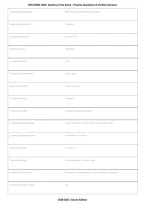
Hypothalamus(Hormones) ADH, Oxytocin, somatostatin, dopamine
pineal glans(hormones) melatonin
parathyroid(hormones) produces PTH
Heart(Hormones) ANP, BNP
Kidney( hormones) EPO
Adipose tissue(hormones) leptin, restin
pancreas(hormones) insulin, glucagon
gonads(hormones) androgen
ovaries( hormones) estrogen, progesterone, inhibin
anterior pituitary(hormones) growth hormone, LH, FSH, TSH, prolactin, Msh, ACTH
posterior pituitary(hormones) stores ADH and oxytocin
Thyroid(hormones) T3, and T4
Thymus(hormones) releases thymosin, creates T cells
Adrenal Gland(hormones) Epinephrine, norepinephrine, cortisol, aldosterone, adrogens
is blood a connective tissue? yes
2026-2027 | Stuvia Edition
, IUPUI BIOL-N261 Anatomy Final Exam - Practice Questions & Verified Answers
functions of blood 1. distributes nutrients, oxygen, and hormones
2. delivers metabolic waste to the kidneys for excretion
3. transports immunilogical cells that provide defense against pathogens and toxins
4. stabilizes pH and electrolytes
5. its clotting rxn restricts the loss of fluid
6. stabilizes body temp by absorbing and redistributing heat
components of blood plasma and formed elements
what is plasma liquid matrix, serum, albumins, globulins, fibrinogens.
what are formed elements of blood RBC, WBC, platelets
appearance and function of erythrocytes appearance- anucleic, biconcave shape
function-transport oxygen and CO2
appearance and function of neutrophils appearance- granular/multilobed
function-first responder (attack and digest)
appearance and function of monocyte appearance- agranular/kidney bean
function-becomes macrophage
appearance and function of basophil appearance-granular, bilobe nucleus (hard to see)
function- releases histamine/heparin
appearance and function of lymphocytes appearance- agranular, large nucleus, little cytoplasm
funtion-adaptive/specific immunity
appearance and function of eosiniphil appearance-orange stain/granular/bilobed
function-allergic reactions, parasitic infection
appearance and function of thrombocytesflattened, clotting rxn
anucleated, agranular
blood flow through the heart step 1. Superior vena cava
blood flow through the heart step 2. right atrium
blood flow through the heart step 3. tricuspid valve
2026-2027 | Stuvia Edition
Hypothalamus(Hormones) ADH, Oxytocin, somatostatin, dopamine
pineal glans(hormones) melatonin
parathyroid(hormones) produces PTH
Heart(Hormones) ANP, BNP
Kidney( hormones) EPO
Adipose tissue(hormones) leptin, restin
pancreas(hormones) insulin, glucagon
gonads(hormones) androgen
ovaries( hormones) estrogen, progesterone, inhibin
anterior pituitary(hormones) growth hormone, LH, FSH, TSH, prolactin, Msh, ACTH
posterior pituitary(hormones) stores ADH and oxytocin
Thyroid(hormones) T3, and T4
Thymus(hormones) releases thymosin, creates T cells
Adrenal Gland(hormones) Epinephrine, norepinephrine, cortisol, aldosterone, adrogens
is blood a connective tissue? yes
2026-2027 | Stuvia Edition
, IUPUI BIOL-N261 Anatomy Final Exam - Practice Questions & Verified Answers
functions of blood 1. distributes nutrients, oxygen, and hormones
2. delivers metabolic waste to the kidneys for excretion
3. transports immunilogical cells that provide defense against pathogens and toxins
4. stabilizes pH and electrolytes
5. its clotting rxn restricts the loss of fluid
6. stabilizes body temp by absorbing and redistributing heat
components of blood plasma and formed elements
what is plasma liquid matrix, serum, albumins, globulins, fibrinogens.
what are formed elements of blood RBC, WBC, platelets
appearance and function of erythrocytes appearance- anucleic, biconcave shape
function-transport oxygen and CO2
appearance and function of neutrophils appearance- granular/multilobed
function-first responder (attack and digest)
appearance and function of monocyte appearance- agranular/kidney bean
function-becomes macrophage
appearance and function of basophil appearance-granular, bilobe nucleus (hard to see)
function- releases histamine/heparin
appearance and function of lymphocytes appearance- agranular, large nucleus, little cytoplasm
funtion-adaptive/specific immunity
appearance and function of eosiniphil appearance-orange stain/granular/bilobed
function-allergic reactions, parasitic infection
appearance and function of thrombocytesflattened, clotting rxn
anucleated, agranular
blood flow through the heart step 1. Superior vena cava
blood flow through the heart step 2. right atrium
blood flow through the heart step 3. tricuspid valve
2026-2027 | Stuvia Edition


