
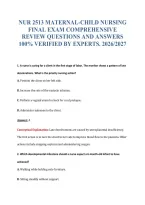
NUR 2513 MATERNAL-CHILD NURSING
FINAL EXAM COMPREHENSIVE
REVIEW QUESTIONS AND ANSWERS
100% VERIFIED BY EXPERTS. 2026/2027
1. A nurse is caring for a client in the first stage of labor. The monitor shows a pattern of late
decelerations. What is the priority nursing action?
A. Position the client on her left side.
B. Increase the rate of the oxytocin infusion.
C. Perform a vaginal exam to check for cord prolapse.
D. Administer naloxone to the client.
Answer: A
Conceptual Explanation: Late decelerations are caused by uteroplacental insufficiency.
The first action is to turn the client to her side to improve blood flow to the placenta. Other
actions include stopping oxytocin and administering oxygen.
2. Which developmental milestone should a nurse expect a 6-month-old infant to have
achieved?
A. Walking while holding onto furniture.
B. Sitting steadily without support.
,C. Using a neat pincer grasp.
D. Rolling from back to abdomen.
Answer: D
Conceptual Explanation: By 6 months, infants typically roll from back to abdomen. Sitting
steadily usually occurs at 8 months, and pincer grasp at 9-10 months.
3. A client at 34 weeks gestation presents with sudden-onset painless vaginal bleeding. What
condition should the nurse suspect?
A. Abruptio placentae
B. Preterm labor
C. Placenta previa
D. Uterine rupture
Answer: C
Conceptual Explanation: Placenta previa is characterized by painless, bright red vaginal
bleeding in the second or third trimester. Abruptio placentae usually involves painful
bleeding.
4. Which medication is typically administered to a newborn within 1-2 hours of birth to
prevent ophthalmia neonatorum?
A. Hepatitis B vaccine
B. Vitamin K (Phytonadione)
, C. Erythromycin ophthalmic ointment
D. Gentamicin drops
Answer: C
Conceptual Explanation: Erythromycin ointment is mandatory in most states to prevent
blindness caused by gonorrhea or chlamydia during delivery.
5. A toddler is hospitalized with laryngotracheobronchitis (croup). Which clinical
manifestation requires immediate intervention?
A. Barking cough
B. Inspiratory stridor at rest
C. Hoarseness
D. Low-grade fever
Answer: B
Conceptual Explanation: Stridor at rest indicates significant airway narrowing and
impending respiratory distress, requiring immediate medical attention.
6. When assessing a client with preeclampsia receiving magnesium sulfate, which finding is
the most concerning?
A. Feeling of warmth and flushing
B. Deep tendon reflexes of 2+
C. Urine output of 40 mL per hour
FINAL EXAM COMPREHENSIVE
REVIEW QUESTIONS AND ANSWERS
100% VERIFIED BY EXPERTS. 2026/2027
1. A nurse is caring for a client in the first stage of labor. The monitor shows a pattern of late
decelerations. What is the priority nursing action?
A. Position the client on her left side.
B. Increase the rate of the oxytocin infusion.
C. Perform a vaginal exam to check for cord prolapse.
D. Administer naloxone to the client.
Answer: A
Conceptual Explanation: Late decelerations are caused by uteroplacental insufficiency.
The first action is to turn the client to her side to improve blood flow to the placenta. Other
actions include stopping oxytocin and administering oxygen.
2. Which developmental milestone should a nurse expect a 6-month-old infant to have
achieved?
A. Walking while holding onto furniture.
B. Sitting steadily without support.
,C. Using a neat pincer grasp.
D. Rolling from back to abdomen.
Answer: D
Conceptual Explanation: By 6 months, infants typically roll from back to abdomen. Sitting
steadily usually occurs at 8 months, and pincer grasp at 9-10 months.
3. A client at 34 weeks gestation presents with sudden-onset painless vaginal bleeding. What
condition should the nurse suspect?
A. Abruptio placentae
B. Preterm labor
C. Placenta previa
D. Uterine rupture
Answer: C
Conceptual Explanation: Placenta previa is characterized by painless, bright red vaginal
bleeding in the second or third trimester. Abruptio placentae usually involves painful
bleeding.
4. Which medication is typically administered to a newborn within 1-2 hours of birth to
prevent ophthalmia neonatorum?
A. Hepatitis B vaccine
B. Vitamin K (Phytonadione)
, C. Erythromycin ophthalmic ointment
D. Gentamicin drops
Answer: C
Conceptual Explanation: Erythromycin ointment is mandatory in most states to prevent
blindness caused by gonorrhea or chlamydia during delivery.
5. A toddler is hospitalized with laryngotracheobronchitis (croup). Which clinical
manifestation requires immediate intervention?
A. Barking cough
B. Inspiratory stridor at rest
C. Hoarseness
D. Low-grade fever
Answer: B
Conceptual Explanation: Stridor at rest indicates significant airway narrowing and
impending respiratory distress, requiring immediate medical attention.
6. When assessing a client with preeclampsia receiving magnesium sulfate, which finding is
the most concerning?
A. Feeling of warmth and flushing
B. Deep tendon reflexes of 2+
C. Urine output of 40 mL per hour


