
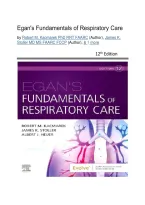
Egan's Fundamentals of Respiratory Care
by Robert M. Kacmarek PhD RRT FAARC (Author), James K.
Stoller MD MS FAARC FCCP (Author), & 1 more
12th Edition
,TABLE OF CONTENTS
I: Foundations of Respiratory Care
1. History of Respiratory Care
2. The Profession of Respiratory Care
3. Quality, Patient Safety, and Communication, and Recordkeeping
4. Principles of Infection Prevention and Control
5. Ethical and Legal Implications of Practice
6. Physical Principles of Respiratory Care
7. E-Medicine in Respiratory Care
8. Fundamentals of Respiratory Care Research
II: Applied Anatomy and Physiology
9. The Respiratory System
10. The Cardiovascular System
11. Ventilation
12. Gas Exchange and Transport
13. Solutions, Body Fluids, and Electrolytes
14. Acid-Base Balance
15. Regulation of Breathing
III: Assessment of Respiratory Disorders
16. Bedside Assessment of the Patient
17. Interpreting Clinical and Laboratory Data
18. Interpreting the Electrocardiogram
19. Analysis and Monitoring of Gas Exchange
20. Pulmonary Function Testing
21. Review of Thoracic Imaging
22. Flexible Bronchoscopy and the Respiratory Therapist
23. Nutrition Assessment
IV: Review of Cardiopulmonary Disease
24. Pulmonary Infections
25. Obstructive Lung Disease: Chronic Obstructive Pulmonary Disease (COPD), Asthma, and Related
Diseases
26. Interstitial Lung Disease
27. Pleural Diseases
28. Pulmonary Vascular Disease
29. Acute Respiratory Distress Syndrome (ARDS)
30. Respiratory Management of Trauma, Obesity, Near Drowning, and Burns
31. Heart Failure
32. Lung Cancer
33. Neuromuscular and Other Diseases of the Chest Wall
34. Disorders of Sleep
,35. Neonatal and Pediatric Respiratory Disorders
V: Basic Therapeutics
36. Airway Pharmacology
37. Airway Management
38. Emergency Cardiovascular Life Support
39. Humidity and Bland Aerosol Therapy
40. Aerosol Drug Therapy
41. Storage and Delivery of Medical Gases
42. Medical Gas Therapy
43. Lung Expansion Therapy
44. Airway Clearance Therapy (ACT)
VI: Acute and Critical Care
45. Respiratory Failure and the Need for Ventilatory Support
46. Mechanical Ventilators
47. Physiology of Ventilatory Support
48. Patient-Ventilator Interaction
49. Initiating and Adjusting Invasive Ventilatory Support
50. Noninvasive Ventilation
51. Extracorporeal Life Support (ECLS)
52. Monitoring the Patient in the Intensive Care Unit
53. Discontinuing Ventilatory Support
54. Neonatal and Pediatric Respiratory Care
VII: Patient Education and Long-Term Care
55. Patient Education and Health Promotion
56. Cardiopulmonary Rehabilitation
57. Respiratory Care in Alternative Settings
58. Ethics and End-of-Life Care
, Test Bank: Egan's Fundamentals of Respiratory Care, 12th Edition
(Kacmarek, Stoller, & Heuer, 2021)
Chapters 1–58 Multiple Choice Questions
CHAPTER 1: History of Respiratory Care
1. The profession of respiratory care originated primarily from the need to:
A. Perform chest physiotherapy
B. Administer medical gases, particularly oxygen
C. Manage mechanical ventilators
D. Conduct pulmonary function testing
Answer: B
Rationale: The respiratory care profession evolved from the need to safely and effectively administer
oxygen therapy in the 1940s.
2. The organization originally known as the Inhalation Therapy Association (ITA) is now called the:
A. National Board for Respiratory Care (NBRC)
B. American Thoracic Society (ATS)
C. American Association for Respiratory Care (AARC)
D. Commission on Accreditation for Respiratory Care (CoARC)
Answer: C
Rationale: The ITA underwent several name changes and is now known as the AARC, the professional
organization representing respiratory therapists.
3. Which physician is widely recognized as the "father of inhalation therapy"?
A. Thomas Petty
B. Edwin R. Levine
C. Albert Andrews
D. Forrest Bird
Answer: C
Rationale: Albert Andrews, a physician, is credited with pioneering efforts that led to the development of
the inhalation therapy profession.
4. The credentialing organization that administers the CRT and RRT examinations is the:
A. AARC
by Robert M. Kacmarek PhD RRT FAARC (Author), James K.
Stoller MD MS FAARC FCCP (Author), & 1 more
12th Edition
,TABLE OF CONTENTS
I: Foundations of Respiratory Care
1. History of Respiratory Care
2. The Profession of Respiratory Care
3. Quality, Patient Safety, and Communication, and Recordkeeping
4. Principles of Infection Prevention and Control
5. Ethical and Legal Implications of Practice
6. Physical Principles of Respiratory Care
7. E-Medicine in Respiratory Care
8. Fundamentals of Respiratory Care Research
II: Applied Anatomy and Physiology
9. The Respiratory System
10. The Cardiovascular System
11. Ventilation
12. Gas Exchange and Transport
13. Solutions, Body Fluids, and Electrolytes
14. Acid-Base Balance
15. Regulation of Breathing
III: Assessment of Respiratory Disorders
16. Bedside Assessment of the Patient
17. Interpreting Clinical and Laboratory Data
18. Interpreting the Electrocardiogram
19. Analysis and Monitoring of Gas Exchange
20. Pulmonary Function Testing
21. Review of Thoracic Imaging
22. Flexible Bronchoscopy and the Respiratory Therapist
23. Nutrition Assessment
IV: Review of Cardiopulmonary Disease
24. Pulmonary Infections
25. Obstructive Lung Disease: Chronic Obstructive Pulmonary Disease (COPD), Asthma, and Related
Diseases
26. Interstitial Lung Disease
27. Pleural Diseases
28. Pulmonary Vascular Disease
29. Acute Respiratory Distress Syndrome (ARDS)
30. Respiratory Management of Trauma, Obesity, Near Drowning, and Burns
31. Heart Failure
32. Lung Cancer
33. Neuromuscular and Other Diseases of the Chest Wall
34. Disorders of Sleep
,35. Neonatal and Pediatric Respiratory Disorders
V: Basic Therapeutics
36. Airway Pharmacology
37. Airway Management
38. Emergency Cardiovascular Life Support
39. Humidity and Bland Aerosol Therapy
40. Aerosol Drug Therapy
41. Storage and Delivery of Medical Gases
42. Medical Gas Therapy
43. Lung Expansion Therapy
44. Airway Clearance Therapy (ACT)
VI: Acute and Critical Care
45. Respiratory Failure and the Need for Ventilatory Support
46. Mechanical Ventilators
47. Physiology of Ventilatory Support
48. Patient-Ventilator Interaction
49. Initiating and Adjusting Invasive Ventilatory Support
50. Noninvasive Ventilation
51. Extracorporeal Life Support (ECLS)
52. Monitoring the Patient in the Intensive Care Unit
53. Discontinuing Ventilatory Support
54. Neonatal and Pediatric Respiratory Care
VII: Patient Education and Long-Term Care
55. Patient Education and Health Promotion
56. Cardiopulmonary Rehabilitation
57. Respiratory Care in Alternative Settings
58. Ethics and End-of-Life Care
, Test Bank: Egan's Fundamentals of Respiratory Care, 12th Edition
(Kacmarek, Stoller, & Heuer, 2021)
Chapters 1–58 Multiple Choice Questions
CHAPTER 1: History of Respiratory Care
1. The profession of respiratory care originated primarily from the need to:
A. Perform chest physiotherapy
B. Administer medical gases, particularly oxygen
C. Manage mechanical ventilators
D. Conduct pulmonary function testing
Answer: B
Rationale: The respiratory care profession evolved from the need to safely and effectively administer
oxygen therapy in the 1940s.
2. The organization originally known as the Inhalation Therapy Association (ITA) is now called the:
A. National Board for Respiratory Care (NBRC)
B. American Thoracic Society (ATS)
C. American Association for Respiratory Care (AARC)
D. Commission on Accreditation for Respiratory Care (CoARC)
Answer: C
Rationale: The ITA underwent several name changes and is now known as the AARC, the professional
organization representing respiratory therapists.
3. Which physician is widely recognized as the "father of inhalation therapy"?
A. Thomas Petty
B. Edwin R. Levine
C. Albert Andrews
D. Forrest Bird
Answer: C
Rationale: Albert Andrews, a physician, is credited with pioneering efforts that led to the development of
the inhalation therapy profession.
4. The credentialing organization that administers the CRT and RRT examinations is the:
A. AARC


