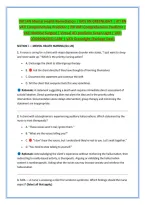
VATI RN Mental Health Remediation | VATI RN GREENLIGHT | ATI RN
VATI Comprehensive Predictor | PN VATI Comprehensive Predictor |
VATI Medical Surgical | Virtual ATI predictor Green Light | VATI
COORDINATED CARE | VATI Greenlight {Package Deal}
SECTION I — MENTAL HEALTH NURSING (Q1–20)
1. A nurse is caring for a client with major depressive disorder who states, "I just want to sleep
and never wake up." Which is the priority nursing action?
• A. Encourage the client to attend group therapy
• B. Ask the client directly if they have thoughts of harming themselves
• C. Document the statement and continue the shift
• D. Tell the client that everyone feels this way sometimes
Rationale: A statement suggesting a death wish requires immediate direct assessment of
suicidal ideation. Direct questioning does not plant the idea and is the priority safety
intervention. Documentation alone delays intervention; group therapy and minimizing the
statement are inappropriate.
2. A client with schizophrenia is experiencing auditory hallucinations. Which statement by the
nurse is most therapeutic?
• A. "Those voices aren't real; ignore them."
• B. "What are the voices telling you?"
• C. "I don't hear the voices, but I understand they're real to you. Let's walk together."
• D. "You need to stop talking to yourself."
Rationale: Acknowledging the client's experience without reinforcing the hallucination, then
redirecting to reality-based activity, is therapeutic. Arguing or validating the hallucination
content is nontherapeutic. Asking what the voices say may increase anxiety and reinforce the
hallucination.
3. SATA — A nurse is assessing a client for serotonin syndrome. Which findings should the nurse
expect? (Select all that apply.)
, • A. Hyperthermia
• B. Clonus
• C. Bradycardia
• D. Agitation
• E. Diaphoresis
Rationale: Serotonin syndrome presents with mental status changes, autonomic instability
(hyperthermia, tachycardia, diaphoresis), and neuromuscular abnormalities (clonus,
hyperreflexia). Bradycardia is not expected; tachycardia is.
4. A client taking lithium reports nausea, vomiting, and coarse hand tremors. The lithium level is
2.1 mEq/L. Which action should the nurse take first?
• A. Administer the next scheduled dose
• B. Encourage increased fluid intake
• C. Hold the medication and notify the provider
• D. Document the findings as expected
Rationale: A lithium level of 2.1 mEq/L is toxic (therapeutic range 0.6–1.2 mEq/L). Coarse
tremors, vomiting, and nausea indicate toxicity. The nurse must hold the drug and notify the
provider immediately.
5. A nurse is caring for a client with anorexia nervosa. Which intervention is appropriate during
the initial refeeding phase?
• A. Allow the client to choose all foods
• B. Monitor for refeeding syndrome (electrolytes, cardiac rhythm)
• C. Weigh the client weekly
• D. Encourage vigorous exercise
Rationale: Refeeding syndrome can cause dangerous shifts in potassium, phosphorus, and
magnesium, leading to cardiac dysrhythmias. Close electrolyte and cardiac monitoring is
essential. Daily weights, not weekly, are typical; exercise is restricted early on.
,6. A client with bipolar disorder in the manic phase is pacing and talking loudly. Which action
should the nurse take?
• A. Provide a quiet, low-stimulus environment
• B. Engage the client in a group activity
• C. Tell the client to sit down and be quiet
• D. Turn on the television for distraction
Rationale: Reducing environmental stimulation decreases manic escalation. Group activity
and TV add stimulation. Authoritarian commands escalate behavior.
7. A nurse is teaching a client about disulfiram. Which statement indicates understanding?
• A. "I can drink alcohol in moderation."
• B. "I must avoid alcohol-containing products like mouthwash and cough syrup."
• C. "I should take this with alcohol to test my reaction."
• D. "This medication cures alcoholism."
Rationale: Disulfiram produces a severe reaction (flushing, vomiting, tachycardia,
hypotension) with any alcohol exposure, including hidden sources. It is an adjunct, not a cure,
and complete abstinence is required.
8. SATA — Which findings indicate a client is experiencing alcohol withdrawal? (Select all that
apply.)
• A. Tremors
• B. Tachycardia
• C. Diaphoresis
• D. Bradycardia
• E. Hallucinations
, Rationale: Alcohol withdrawal causes autonomic hyperactivity (tachycardia, diaphoresis,
tremors) and can progress to hallucinations and seizures. Bradycardia is not expected.
9. A client with PTSD reports nightmares and hypervigilance. Which nursing intervention is most
appropriate?
• A. Encourage the client to avoid discussing the trauma
• B. Teach grounding techniques and promote a safe environment
• C. Administer a PRN antipsychotic immediately
• D. Restrict family visits
Rationale: Grounding techniques and safety are first-line for PTSD symptom management.
Avoiding discussion is not helpful; antipsychotics are not first-line; restricting visitors is
nontherapeutic.
10. A nurse is assessing a client with narcissistic personality disorder. Which behavior is
characteristic?
• A. Grandiosity and need for admiration
• B. Excessive fear of abandonment
• C. Social withdrawal and odd beliefs
• D. Compulsive rituals
Rationale: Narcissistic personality disorder features grandiosity, a need for admiration, and
lack of empathy. Fear of abandonment is borderline; odd beliefs are schizotypal; compulsions
are obsessive-compulsive.
11. A client on haloperidol develops a stiff neck and difficulty swallowing. Which medication
should the nurse anticipate administering?
• A. Lorazepam
• B. Benztropine
• C. Fluoxetine
VATI Comprehensive Predictor | PN VATI Comprehensive Predictor |
VATI Medical Surgical | Virtual ATI predictor Green Light | VATI
COORDINATED CARE | VATI Greenlight {Package Deal}
SECTION I — MENTAL HEALTH NURSING (Q1–20)
1. A nurse is caring for a client with major depressive disorder who states, "I just want to sleep
and never wake up." Which is the priority nursing action?
• A. Encourage the client to attend group therapy
• B. Ask the client directly if they have thoughts of harming themselves
• C. Document the statement and continue the shift
• D. Tell the client that everyone feels this way sometimes
Rationale: A statement suggesting a death wish requires immediate direct assessment of
suicidal ideation. Direct questioning does not plant the idea and is the priority safety
intervention. Documentation alone delays intervention; group therapy and minimizing the
statement are inappropriate.
2. A client with schizophrenia is experiencing auditory hallucinations. Which statement by the
nurse is most therapeutic?
• A. "Those voices aren't real; ignore them."
• B. "What are the voices telling you?"
• C. "I don't hear the voices, but I understand they're real to you. Let's walk together."
• D. "You need to stop talking to yourself."
Rationale: Acknowledging the client's experience without reinforcing the hallucination, then
redirecting to reality-based activity, is therapeutic. Arguing or validating the hallucination
content is nontherapeutic. Asking what the voices say may increase anxiety and reinforce the
hallucination.
3. SATA — A nurse is assessing a client for serotonin syndrome. Which findings should the nurse
expect? (Select all that apply.)
, • A. Hyperthermia
• B. Clonus
• C. Bradycardia
• D. Agitation
• E. Diaphoresis
Rationale: Serotonin syndrome presents with mental status changes, autonomic instability
(hyperthermia, tachycardia, diaphoresis), and neuromuscular abnormalities (clonus,
hyperreflexia). Bradycardia is not expected; tachycardia is.
4. A client taking lithium reports nausea, vomiting, and coarse hand tremors. The lithium level is
2.1 mEq/L. Which action should the nurse take first?
• A. Administer the next scheduled dose
• B. Encourage increased fluid intake
• C. Hold the medication and notify the provider
• D. Document the findings as expected
Rationale: A lithium level of 2.1 mEq/L is toxic (therapeutic range 0.6–1.2 mEq/L). Coarse
tremors, vomiting, and nausea indicate toxicity. The nurse must hold the drug and notify the
provider immediately.
5. A nurse is caring for a client with anorexia nervosa. Which intervention is appropriate during
the initial refeeding phase?
• A. Allow the client to choose all foods
• B. Monitor for refeeding syndrome (electrolytes, cardiac rhythm)
• C. Weigh the client weekly
• D. Encourage vigorous exercise
Rationale: Refeeding syndrome can cause dangerous shifts in potassium, phosphorus, and
magnesium, leading to cardiac dysrhythmias. Close electrolyte and cardiac monitoring is
essential. Daily weights, not weekly, are typical; exercise is restricted early on.
,6. A client with bipolar disorder in the manic phase is pacing and talking loudly. Which action
should the nurse take?
• A. Provide a quiet, low-stimulus environment
• B. Engage the client in a group activity
• C. Tell the client to sit down and be quiet
• D. Turn on the television for distraction
Rationale: Reducing environmental stimulation decreases manic escalation. Group activity
and TV add stimulation. Authoritarian commands escalate behavior.
7. A nurse is teaching a client about disulfiram. Which statement indicates understanding?
• A. "I can drink alcohol in moderation."
• B. "I must avoid alcohol-containing products like mouthwash and cough syrup."
• C. "I should take this with alcohol to test my reaction."
• D. "This medication cures alcoholism."
Rationale: Disulfiram produces a severe reaction (flushing, vomiting, tachycardia,
hypotension) with any alcohol exposure, including hidden sources. It is an adjunct, not a cure,
and complete abstinence is required.
8. SATA — Which findings indicate a client is experiencing alcohol withdrawal? (Select all that
apply.)
• A. Tremors
• B. Tachycardia
• C. Diaphoresis
• D. Bradycardia
• E. Hallucinations
, Rationale: Alcohol withdrawal causes autonomic hyperactivity (tachycardia, diaphoresis,
tremors) and can progress to hallucinations and seizures. Bradycardia is not expected.
9. A client with PTSD reports nightmares and hypervigilance. Which nursing intervention is most
appropriate?
• A. Encourage the client to avoid discussing the trauma
• B. Teach grounding techniques and promote a safe environment
• C. Administer a PRN antipsychotic immediately
• D. Restrict family visits
Rationale: Grounding techniques and safety are first-line for PTSD symptom management.
Avoiding discussion is not helpful; antipsychotics are not first-line; restricting visitors is
nontherapeutic.
10. A nurse is assessing a client with narcissistic personality disorder. Which behavior is
characteristic?
• A. Grandiosity and need for admiration
• B. Excessive fear of abandonment
• C. Social withdrawal and odd beliefs
• D. Compulsive rituals
Rationale: Narcissistic personality disorder features grandiosity, a need for admiration, and
lack of empathy. Fear of abandonment is borderline; odd beliefs are schizotypal; compulsions
are obsessive-compulsive.
11. A client on haloperidol develops a stiff neck and difficulty swallowing. Which medication
should the nurse anticipate administering?
• A. Lorazepam
• B. Benztropine
• C. Fluoxetine