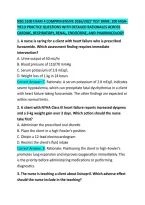
NSG 3100 EXAM 4 COMPREHENSIVE 2026/2027 TEST BANK: 200 HIGH-
YIELD PRACTICE QUESTIONS WITH DETAILED RATIONALES ACROSS
CARDIAC, RESPIRATORY, RENAL, ENDOCRINE, AND PHARMACOLOGY
1. A nurse is caring for a client with heart failure who is prescribed
furosemide. Which assessment finding requires immediate
intervention?
A. Urine output of 50 mL/hr
B. Blood pressure of 110/70 mmHg
C. Serum potassium of 2.8 mEq/L
D. Weight loss of 1 kg in 24 hours
Correct Answer: C. Rationale: A serum potassium of 2.8 mEq/L indicates
severe hypokalemia, which can precipitate fatal dysrhythmias in a client
with heart failure taking furosemide. The other findings are expected or
within normal limits.
2. A client with NYHA Class III heart failure reports increased dyspnea
and a 3-kg weight gain over 3 days. Which action should the nurse
take first?
A. Administer the prescribed oral diuretic
B. Place the client in a high-Fowler's position
C. Obtain a 12-lead electrocardiogram
D. Restrict the client's fluid intake
Correct Answer: B. Rationale: Positioning the client in high-Fowler's
promotes lung expansion and improves oxygenation immediately. This
is the priority before administering medications or performing
diagnostics.
3. The nurse is teaching a client about lisinopril. Which adverse effect
should the nurse include in the teaching?
,A. Dry, persistent cough
B. Bradycardia
C. Hyperkalemia
D. Constipation
Correct Answer: A. Rationale: ACE inhibitors like lisinopril are commonly
associated with a dry, persistent cough due to the accumulation of
bradykinin. Bradycardia is associated with beta-blockers.
4. A client is prescribed carvedilol for heart failure. The nurse should
hold the medication and notify the provider if the client's heart rate is
below what parameter?
A. 50 bpm
B. 60 bpm
C. 70 bpm
D. 80 bpm
Correct Answer: A. Rationale: Carvedilol is a beta-blocker that slows the
heart rate. It is typically held if the heart rate is below 50-55 bpm to
prevent symptomatic bradycardia and heart block.
5. A client with heart failure is receiving digoxin. Which assessment
finding indicates digoxin toxicity?
A. Heart rate of 88 bpm
B. Nausea and visual disturbances
C. Blood pressure of 130/80 mmHg
D. Respiratory rate of 18 breaths/min
Correct Answer: B. Rationale: Early signs of digoxin toxicity include
anorexia, nausea, vomiting, and visual disturbances such as yellow-
green halos. Bradycardia is also a common sign.
,6. The nurse is reviewing the laboratory results of a client taking
spironolactone. Which value should the nurse report to the provider
immediately?
A. Sodium 138 mEq/L
B. Potassium 6.2 mEq/L
C. Creatinine 1.0 mg/dL
D. BUN 18 mg/dL
Correct Answer: B. Rationale: Spironolactone is a potassium-sparing
diuretic. A potassium level of 6.2 mEq/L indicates hyperkalemia, which
can cause life-threatening cardiac dysrhythmias and requires immediate
intervention.
7. A client with a history of myocardial infarction is prescribed aspirin.
The nurse understands that this medication is prescribed for which
purpose?
A. To relieve pain
B. To prevent platelet aggregation
C. To lower blood pressure
D. To decrease heart rate
Correct Answer: B. Rationale: Low-dose aspirin is prescribed post-MI as
an antiplatelet agent to prevent clot formation and reduce the risk of
recurrent myocardial infarction.
8. A nurse is caring for a client receiving a heparin infusion. Which
laboratory value should the nurse monitor to evaluate the
effectiveness of the therapy?
A. PT/INR
B. aPTT
C. Platelet count
D. Bleeding time
, Correct Answer: B. Rationale: The activated partial thromboplastin time
(aPTT) is used to monitor the therapeutic effect of unfractionated
heparin. The therapeutic range is typically 1.5 to 2.5 times the control
value.
9. A client is receiving warfarin for atrial fibrillation. Which dietary
instruction should the nurse provide?
A. Increase intake of green leafy vegetables
B. Maintain a consistent intake of vitamin K
C. Avoid all foods containing calcium
D. Take the medication with grapefruit juice
Correct Answer: B. Rationale: Vitamin K antagonizes warfarin. Clients
should maintain a consistent daily intake of vitamin K-rich foods rather
than drastically increasing or decreasing them to keep INR levels stable.
10. A client presents to the emergency department with crushing
chest pain. Which action should the nurse take first?
A. Obtain a 12-lead ECG
B. Administer sublingual nitroglycerin
C. Apply supplemental oxygen
D. Establish intravenous access
Correct Answer: A. Rationale: Obtaining a 12-lead ECG is the priority
within the first 10 minutes of arrival for a client with chest pain to
determine if ST-elevation myocardial infarction (STEMI) is present,
guiding immediate reperfusion therapy.
11. A client is prescribed nitroglycerin sublingual for angina. Which
instruction should the nurse include?
A. Swallow the tablet with a full glass of water
B. Call 911 if chest pain persists after 3 doses
YIELD PRACTICE QUESTIONS WITH DETAILED RATIONALES ACROSS
CARDIAC, RESPIRATORY, RENAL, ENDOCRINE, AND PHARMACOLOGY
1. A nurse is caring for a client with heart failure who is prescribed
furosemide. Which assessment finding requires immediate
intervention?
A. Urine output of 50 mL/hr
B. Blood pressure of 110/70 mmHg
C. Serum potassium of 2.8 mEq/L
D. Weight loss of 1 kg in 24 hours
Correct Answer: C. Rationale: A serum potassium of 2.8 mEq/L indicates
severe hypokalemia, which can precipitate fatal dysrhythmias in a client
with heart failure taking furosemide. The other findings are expected or
within normal limits.
2. A client with NYHA Class III heart failure reports increased dyspnea
and a 3-kg weight gain over 3 days. Which action should the nurse
take first?
A. Administer the prescribed oral diuretic
B. Place the client in a high-Fowler's position
C. Obtain a 12-lead electrocardiogram
D. Restrict the client's fluid intake
Correct Answer: B. Rationale: Positioning the client in high-Fowler's
promotes lung expansion and improves oxygenation immediately. This
is the priority before administering medications or performing
diagnostics.
3. The nurse is teaching a client about lisinopril. Which adverse effect
should the nurse include in the teaching?
,A. Dry, persistent cough
B. Bradycardia
C. Hyperkalemia
D. Constipation
Correct Answer: A. Rationale: ACE inhibitors like lisinopril are commonly
associated with a dry, persistent cough due to the accumulation of
bradykinin. Bradycardia is associated with beta-blockers.
4. A client is prescribed carvedilol for heart failure. The nurse should
hold the medication and notify the provider if the client's heart rate is
below what parameter?
A. 50 bpm
B. 60 bpm
C. 70 bpm
D. 80 bpm
Correct Answer: A. Rationale: Carvedilol is a beta-blocker that slows the
heart rate. It is typically held if the heart rate is below 50-55 bpm to
prevent symptomatic bradycardia and heart block.
5. A client with heart failure is receiving digoxin. Which assessment
finding indicates digoxin toxicity?
A. Heart rate of 88 bpm
B. Nausea and visual disturbances
C. Blood pressure of 130/80 mmHg
D. Respiratory rate of 18 breaths/min
Correct Answer: B. Rationale: Early signs of digoxin toxicity include
anorexia, nausea, vomiting, and visual disturbances such as yellow-
green halos. Bradycardia is also a common sign.
,6. The nurse is reviewing the laboratory results of a client taking
spironolactone. Which value should the nurse report to the provider
immediately?
A. Sodium 138 mEq/L
B. Potassium 6.2 mEq/L
C. Creatinine 1.0 mg/dL
D. BUN 18 mg/dL
Correct Answer: B. Rationale: Spironolactone is a potassium-sparing
diuretic. A potassium level of 6.2 mEq/L indicates hyperkalemia, which
can cause life-threatening cardiac dysrhythmias and requires immediate
intervention.
7. A client with a history of myocardial infarction is prescribed aspirin.
The nurse understands that this medication is prescribed for which
purpose?
A. To relieve pain
B. To prevent platelet aggregation
C. To lower blood pressure
D. To decrease heart rate
Correct Answer: B. Rationale: Low-dose aspirin is prescribed post-MI as
an antiplatelet agent to prevent clot formation and reduce the risk of
recurrent myocardial infarction.
8. A nurse is caring for a client receiving a heparin infusion. Which
laboratory value should the nurse monitor to evaluate the
effectiveness of the therapy?
A. PT/INR
B. aPTT
C. Platelet count
D. Bleeding time
, Correct Answer: B. Rationale: The activated partial thromboplastin time
(aPTT) is used to monitor the therapeutic effect of unfractionated
heparin. The therapeutic range is typically 1.5 to 2.5 times the control
value.
9. A client is receiving warfarin for atrial fibrillation. Which dietary
instruction should the nurse provide?
A. Increase intake of green leafy vegetables
B. Maintain a consistent intake of vitamin K
C. Avoid all foods containing calcium
D. Take the medication with grapefruit juice
Correct Answer: B. Rationale: Vitamin K antagonizes warfarin. Clients
should maintain a consistent daily intake of vitamin K-rich foods rather
than drastically increasing or decreasing them to keep INR levels stable.
10. A client presents to the emergency department with crushing
chest pain. Which action should the nurse take first?
A. Obtain a 12-lead ECG
B. Administer sublingual nitroglycerin
C. Apply supplemental oxygen
D. Establish intravenous access
Correct Answer: A. Rationale: Obtaining a 12-lead ECG is the priority
within the first 10 minutes of arrival for a client with chest pain to
determine if ST-elevation myocardial infarction (STEMI) is present,
guiding immediate reperfusion therapy.
11. A client is prescribed nitroglycerin sublingual for angina. Which
instruction should the nurse include?
A. Swallow the tablet with a full glass of water
B. Call 911 if chest pain persists after 3 doses