
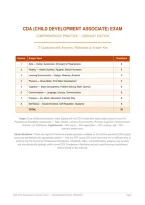
CDA (CHILD DEVELOPMENT ASSOCIATE) EXAM
COMPREHENSIVE PRACTICE • 2026/2027 EDITION
70 Questions with Answers, Rationales & Answer Key
Section Subject Area Questions
1 Safe — Safety, Supervision, Emergency Preparedness 9
2 Healthy — Health, Nutrition, Hygiene, Illness Prevention 9
3 Learning Environments — Design, Materials, Routines 9
4 Physical — Gross Motor, Fine Motor Development 9
5 Cognitive — Brain Development, Problem-Solving, Math, Science 9
6 Communication — Language, Literacy, Communication 9
7 Creative — Art, Music, Movement, Dramatic Play 8
8 Self/Social — Social-Emotional, Self-Regulation, Guidance 8
TOTAL 70
Scope: Early childhood education review aligned with the CDA Credential's eight subject areas (Council for
Professional Recognition framework) — Safe, Healthy, Learning Environments, Physical, Cognitive, Communication,
Creative, and Self/Social. Cognitive mix: ~30% recall • ~50% application • ~20% analysis, with ~75%
scenario-based items.
Study disclaimer. These are original AI-authored practice questions modeled on the publicly described CDA subject
areas and developmentally appropriate practice — they are NOT actual CDA exam items and are not affiliated with or
endorsed by the Council for Professional Recognition. Standards, ratios, and health/safety guidance vary by state
and are periodically updated; verify current CDA Competency Standards and your state/licensing requirements
before relying on this material.
CDA (Child Development Associate) Exam — Comprehensive Practice (2026/2027) Page 1
, Section 1: Safe — Safety Practices, Supervision, Emergency Preparedness (9 questions)
Q1. A teacher is supervising the playground when she is asked to step inside for a phone call. What is the
most appropriate action?
A. Leave the children briefly since they are playing well
B. Ensure another qualified adult takes over supervision before stepping away, maintaining required ratios
C. Ask an older child to watch the group
D. Take the call outside while glancing over occasionally
Correct Answer: B
Rationale: Children must be supervised at all times and child-to-staff ratios maintained, so another qualified adult
must take over before she leaves. Leaving children unsupervised or relying on a child is unsafe and violates ratio
requirements.
Q2. Which practice best reflects safe sleep for an infant?
A. Placing the infant on the stomach with a soft blanket
B. Placing the infant on the back to sleep on a firm, flat surface with no soft bedding
C. Allowing the infant to sleep in a car seat for naps
D. Propping the infant with pillows on the side
Correct Answer: B
Rationale: Safe sleep guidelines call for placing infants on their backs on a firm, flat surface free of soft bedding
to reduce SIDS risk. Stomach/side positions, pillows, and routine car-seat sleeping increase suffocation and
SIDS risk.
Q3. During a fire drill, what is the caregiver's first priority?
A. Gather all the art supplies
B. Safely evacuate all children using the planned route and take attendance
C. Call the parents
D. Finish the current activity
Correct Answer: B
Rationale: The priority in a fire drill is the safe, orderly evacuation of all children by the planned route with a
headcount/attendance to ensure no one is left behind. Collecting supplies or finishing activities delays evacuation
and endangers children.
Q4. A caregiver notices a cleaning spray bottle left on a low shelf in the toddler room. What should she
do?
A. Immediately move it to a locked, inaccessible location out of children's reach
B. Tell the toddlers not to touch it
C. Move it to a slightly higher shelf
D. Leave it since toddlers are supervised
Correct Answer: A
Rationale: Hazardous chemicals must be stored locked and inaccessible to children, so the caregiver should
immediately secure it. Relying on supervision, verbal warnings, or a slightly higher shelf does not eliminate the
poisoning hazard.
CDA (Child Development Associate) Exam — Comprehensive Practice (2026/2027) Page 2
, Q5. Which is the best example of active supervision?
A. Leaving the room to prepare snack while children nap
B. Positioning yourself to see and hear all children, scanning and counting frequently, and staying engaged
C. Sitting at a desk completing paperwork while children play
D. Watching only the child who is most active
Correct Answer: B
Rationale: Active supervision means positioning to see/hear all children, scanning, counting, and staying
engaged. Doing paperwork, watching only one child, or leaving the room all leave children inadequately
supervised.
Q6. Before children arrive, a teacher should inspect the outdoor play area primarily to:
A. Set up a snack table
B. Identify and remove hazards such as broken equipment, debris, or standing water
C. Arrange the toys attractively
D. Water the plants
Correct Answer: B
Rationale: A safety check identifies and removes hazards like broken equipment, sharp debris, or standing water
before children use the area. Aesthetics, snacks, and plants are secondary to hazard removal.
Q7. A child falls and hits her head, then seems dazed. In addition to first aid, the caregiver must:
A. Assume she is fine if she stops crying
B. Only tell another teacher
C. Wait until pickup to mention it
D. Document the injury and notify the parents/guardians (and seek medical help if warranted) per policy
Correct Answer: D
Rationale: Head injuries require first aid, documentation, prompt parent notification, and medical attention if
warranted per policy. Delaying notification or assuming the child is fine could miss a serious injury.
Q8. What is the purpose of practicing emergency drills (fire, lockdown, severe weather) regularly?
A. So staff and children know what to do and can respond quickly and calmly in a real emergency
B. To fill time in the schedule
C. Because parents request it
D. To scare children into behaving
Correct Answer: A
Rationale: Regular drills build familiarity so staff and children respond quickly and calmly during real
emergencies. They are a preparedness measure, not a time-filler or discipline tool.
CDA (Child Development Associate) Exam — Comprehensive Practice (2026/2027) Page 3
COMPREHENSIVE PRACTICE • 2026/2027 EDITION
70 Questions with Answers, Rationales & Answer Key
Section Subject Area Questions
1 Safe — Safety, Supervision, Emergency Preparedness 9
2 Healthy — Health, Nutrition, Hygiene, Illness Prevention 9
3 Learning Environments — Design, Materials, Routines 9
4 Physical — Gross Motor, Fine Motor Development 9
5 Cognitive — Brain Development, Problem-Solving, Math, Science 9
6 Communication — Language, Literacy, Communication 9
7 Creative — Art, Music, Movement, Dramatic Play 8
8 Self/Social — Social-Emotional, Self-Regulation, Guidance 8
TOTAL 70
Scope: Early childhood education review aligned with the CDA Credential's eight subject areas (Council for
Professional Recognition framework) — Safe, Healthy, Learning Environments, Physical, Cognitive, Communication,
Creative, and Self/Social. Cognitive mix: ~30% recall • ~50% application • ~20% analysis, with ~75%
scenario-based items.
Study disclaimer. These are original AI-authored practice questions modeled on the publicly described CDA subject
areas and developmentally appropriate practice — they are NOT actual CDA exam items and are not affiliated with or
endorsed by the Council for Professional Recognition. Standards, ratios, and health/safety guidance vary by state
and are periodically updated; verify current CDA Competency Standards and your state/licensing requirements
before relying on this material.
CDA (Child Development Associate) Exam — Comprehensive Practice (2026/2027) Page 1
, Section 1: Safe — Safety Practices, Supervision, Emergency Preparedness (9 questions)
Q1. A teacher is supervising the playground when she is asked to step inside for a phone call. What is the
most appropriate action?
A. Leave the children briefly since they are playing well
B. Ensure another qualified adult takes over supervision before stepping away, maintaining required ratios
C. Ask an older child to watch the group
D. Take the call outside while glancing over occasionally
Correct Answer: B
Rationale: Children must be supervised at all times and child-to-staff ratios maintained, so another qualified adult
must take over before she leaves. Leaving children unsupervised or relying on a child is unsafe and violates ratio
requirements.
Q2. Which practice best reflects safe sleep for an infant?
A. Placing the infant on the stomach with a soft blanket
B. Placing the infant on the back to sleep on a firm, flat surface with no soft bedding
C. Allowing the infant to sleep in a car seat for naps
D. Propping the infant with pillows on the side
Correct Answer: B
Rationale: Safe sleep guidelines call for placing infants on their backs on a firm, flat surface free of soft bedding
to reduce SIDS risk. Stomach/side positions, pillows, and routine car-seat sleeping increase suffocation and
SIDS risk.
Q3. During a fire drill, what is the caregiver's first priority?
A. Gather all the art supplies
B. Safely evacuate all children using the planned route and take attendance
C. Call the parents
D. Finish the current activity
Correct Answer: B
Rationale: The priority in a fire drill is the safe, orderly evacuation of all children by the planned route with a
headcount/attendance to ensure no one is left behind. Collecting supplies or finishing activities delays evacuation
and endangers children.
Q4. A caregiver notices a cleaning spray bottle left on a low shelf in the toddler room. What should she
do?
A. Immediately move it to a locked, inaccessible location out of children's reach
B. Tell the toddlers not to touch it
C. Move it to a slightly higher shelf
D. Leave it since toddlers are supervised
Correct Answer: A
Rationale: Hazardous chemicals must be stored locked and inaccessible to children, so the caregiver should
immediately secure it. Relying on supervision, verbal warnings, or a slightly higher shelf does not eliminate the
poisoning hazard.
CDA (Child Development Associate) Exam — Comprehensive Practice (2026/2027) Page 2
, Q5. Which is the best example of active supervision?
A. Leaving the room to prepare snack while children nap
B. Positioning yourself to see and hear all children, scanning and counting frequently, and staying engaged
C. Sitting at a desk completing paperwork while children play
D. Watching only the child who is most active
Correct Answer: B
Rationale: Active supervision means positioning to see/hear all children, scanning, counting, and staying
engaged. Doing paperwork, watching only one child, or leaving the room all leave children inadequately
supervised.
Q6. Before children arrive, a teacher should inspect the outdoor play area primarily to:
A. Set up a snack table
B. Identify and remove hazards such as broken equipment, debris, or standing water
C. Arrange the toys attractively
D. Water the plants
Correct Answer: B
Rationale: A safety check identifies and removes hazards like broken equipment, sharp debris, or standing water
before children use the area. Aesthetics, snacks, and plants are secondary to hazard removal.
Q7. A child falls and hits her head, then seems dazed. In addition to first aid, the caregiver must:
A. Assume she is fine if she stops crying
B. Only tell another teacher
C. Wait until pickup to mention it
D. Document the injury and notify the parents/guardians (and seek medical help if warranted) per policy
Correct Answer: D
Rationale: Head injuries require first aid, documentation, prompt parent notification, and medical attention if
warranted per policy. Delaying notification or assuming the child is fine could miss a serious injury.
Q8. What is the purpose of practicing emergency drills (fire, lockdown, severe weather) regularly?
A. So staff and children know what to do and can respond quickly and calmly in a real emergency
B. To fill time in the schedule
C. Because parents request it
D. To scare children into behaving
Correct Answer: A
Rationale: Regular drills build familiarity so staff and children respond quickly and calmly during real
emergencies. They are a preparedness measure, not a time-filler or discipline tool.
CDA (Child Development Associate) Exam — Comprehensive Practice (2026/2027) Page 3


