
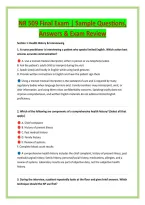
NR 509 Final Exam | Sample Questions,
Answers & Exam Review
Section 1: Health History & Interviewing
1. A nurse practitioner is interviewing a patient who speaks limited English. Which action best
ensures accurate communication?
A. Use a trained medical interpreter, either in person or via telephone/video
B. Ask the patient's adult child to interpret during the visit
C. Speak slowly and loudly in English while using hand gestures
D. Provide written instructions in English and have the patient sign them
Using a trained medical interpreter is the standard of care and is required by many
regulatory bodies when language barriers exist. Family members may misinterpret, omit, or
alter information, and using them raises confidentiality concerns. Speaking loudly does not
improve comprehension, and written English materials do not address limited English
proficiency.
2. Which of the following are components of a comprehensive health history? (Select all that
apply.)
A. Chief complaint
B. History of present illness
C. Past medical history
D. Family history
E. Review of systems
F. Complete blood count results
A comprehensive health history includes the chief complaint, history of present illness, past
medical/surgical history, family history, personal/social history, medications, allergies, and a
review of systems. Laboratory results are part of objective data, not the subjective health
history.
3. During the interview, a patient repeatedly looks at the floor and gives brief answers. Which
technique should the NP use first?
,A. Ask increasingly direct yes/no questions
B. Use open-ended questions and allow periods of silence
C. Immediately refer the patient for psychiatric evaluation
D. Document that the patient is noncompliant
Open-ended questions and silence encourage patients to share concerns at their own pace.
Direct yes/no questions may limit disclosure, and jumping to psychiatric referral or labeling the
patient noncompliant is premature and judgmental.
4. A patient reports chest pain. Which question is most important to ask first?
A. "Does the pain radiate to your back?"
B. "Have you ever had this pain before?"
C. "What were you doing when the pain started?"
D. "Does anything make the pain better?"
Establishing the onset and precipitating factors of chest pain is critical for differentiating
cardiac from non-cardiac causes. While radiation, history, and relieving factors are important,
the OPQRST mnemonic begins with onset and provocation.
5. Which statement best describes the purpose of the review of systems (ROS)?
A. It replaces the physical examination
B. It systematically inquires about symptoms in each body system
C. It documents only the patient's chief complaint
D. It is used only for pediatric patients
The ROS is a systematic head-to-toe review of symptoms by body system. It does not
replace the physical exam, is not limited to the chief complaint, and is used across the lifespan.
6. A patient states, "I've been having headaches." Which response best facilitates the history
of present illness?
A. "You probably need more sleep."
B. "Tell me more about when the headaches started and what they feel like."
C. "Do you want me to prescribe something?"
D. "Headaches are common; don't worry."
, The HPQ requires exploration of onset, location, duration, character, aggravating/relieving
factors, and timing. Offering premature reassurance or treatment before assessment is
inappropriate.
7. Which of the following are appropriate for establishing rapport during the interview?
(Select all that apply.)
A. Sitting at eye level with the patient
B. Using the patient's preferred name
C. Maintaining open body posture
D. Interrupting to keep the visit on schedule
E. Acknowledging the patient's concerns
Rapport is built through eye-level positioning, respectful address, open posture, and
acknowledgment of concerns. Interrupting patients disrupts the narrative and reduces
satisfaction and accuracy.
8. A patient is describing a family history of premature coronary artery disease. Which factor
is most significant?
A. A grandparent with hypertension at age 80
B. A sibling with myocardial infarction at age 48
C. A parent with type 2 diabetes at age 70
D. An aunt with breast cancer at age 65
Premature cardiovascular disease in a first-degree relative (male <55, female <65) is a major
risk factor. The sibling's MI at 48 is the most significant. Late-onset conditions in extended
relatives are less indicative of hereditary risk.
9. Which question is most appropriate for assessing a patient's functional status?
A. "What medications do you take?"
B. "Are you able to perform your usual activities of daily living?"
C. "When was your last tetanus shot?"
D. "Do you have any allergies?"
, Functional status assessment evaluates the patient's ability to perform ADLs and IADLs.
Medication, immunization, and allergy questions address other components of the history.
10. During a history, a patient becomes tearful when discussing a recent loss. What is the NP's
best response?
A. Change the subject to avoid discomfort
B. Acknowledge the emotion and allow the patient to express feelings
C. Tell the patient that crying is not helpful
D. Immediately end the interview
Therapeutic communication includes acknowledging emotions and allowing expression.
Avoiding, dismissing, or abruptly ending the interview undermines trust and rapport.
11. Which of the following are "red flags" in a health history that require urgent evaluation?
(Select all that apply.)
A. Unexplained weight loss
B. Night sweats
C. New onset of severe headache ("worst headache of my life")
D. Painless lymphadenopathy
E. Seasonal allergies
Unexplained weight loss, night sweats, thunderclap headache, and painless
lymphadenopathy are concerning for malignancy, infection, or vascular events. Seasonal
allergies are common and not typically urgent.
12. A patient reports a penicillin allergy. Which follow-up question is most important?
A. "Do you have any other allergies?"
B. "What happens when you take penicillin?"
C. "Who told you that you were allergic?"
D. "Have you ever taken amoxicillin?"
Clarifying the nature of the reaction (e.g., rash vs. anaphylaxis) is essential for safe
prescribing. Other questions are relevant but secondary to characterizing the reaction.
Answers & Exam Review
Section 1: Health History & Interviewing
1. A nurse practitioner is interviewing a patient who speaks limited English. Which action best
ensures accurate communication?
A. Use a trained medical interpreter, either in person or via telephone/video
B. Ask the patient's adult child to interpret during the visit
C. Speak slowly and loudly in English while using hand gestures
D. Provide written instructions in English and have the patient sign them
Using a trained medical interpreter is the standard of care and is required by many
regulatory bodies when language barriers exist. Family members may misinterpret, omit, or
alter information, and using them raises confidentiality concerns. Speaking loudly does not
improve comprehension, and written English materials do not address limited English
proficiency.
2. Which of the following are components of a comprehensive health history? (Select all that
apply.)
A. Chief complaint
B. History of present illness
C. Past medical history
D. Family history
E. Review of systems
F. Complete blood count results
A comprehensive health history includes the chief complaint, history of present illness, past
medical/surgical history, family history, personal/social history, medications, allergies, and a
review of systems. Laboratory results are part of objective data, not the subjective health
history.
3. During the interview, a patient repeatedly looks at the floor and gives brief answers. Which
technique should the NP use first?
,A. Ask increasingly direct yes/no questions
B. Use open-ended questions and allow periods of silence
C. Immediately refer the patient for psychiatric evaluation
D. Document that the patient is noncompliant
Open-ended questions and silence encourage patients to share concerns at their own pace.
Direct yes/no questions may limit disclosure, and jumping to psychiatric referral or labeling the
patient noncompliant is premature and judgmental.
4. A patient reports chest pain. Which question is most important to ask first?
A. "Does the pain radiate to your back?"
B. "Have you ever had this pain before?"
C. "What were you doing when the pain started?"
D. "Does anything make the pain better?"
Establishing the onset and precipitating factors of chest pain is critical for differentiating
cardiac from non-cardiac causes. While radiation, history, and relieving factors are important,
the OPQRST mnemonic begins with onset and provocation.
5. Which statement best describes the purpose of the review of systems (ROS)?
A. It replaces the physical examination
B. It systematically inquires about symptoms in each body system
C. It documents only the patient's chief complaint
D. It is used only for pediatric patients
The ROS is a systematic head-to-toe review of symptoms by body system. It does not
replace the physical exam, is not limited to the chief complaint, and is used across the lifespan.
6. A patient states, "I've been having headaches." Which response best facilitates the history
of present illness?
A. "You probably need more sleep."
B. "Tell me more about when the headaches started and what they feel like."
C. "Do you want me to prescribe something?"
D. "Headaches are common; don't worry."
, The HPQ requires exploration of onset, location, duration, character, aggravating/relieving
factors, and timing. Offering premature reassurance or treatment before assessment is
inappropriate.
7. Which of the following are appropriate for establishing rapport during the interview?
(Select all that apply.)
A. Sitting at eye level with the patient
B. Using the patient's preferred name
C. Maintaining open body posture
D. Interrupting to keep the visit on schedule
E. Acknowledging the patient's concerns
Rapport is built through eye-level positioning, respectful address, open posture, and
acknowledgment of concerns. Interrupting patients disrupts the narrative and reduces
satisfaction and accuracy.
8. A patient is describing a family history of premature coronary artery disease. Which factor
is most significant?
A. A grandparent with hypertension at age 80
B. A sibling with myocardial infarction at age 48
C. A parent with type 2 diabetes at age 70
D. An aunt with breast cancer at age 65
Premature cardiovascular disease in a first-degree relative (male <55, female <65) is a major
risk factor. The sibling's MI at 48 is the most significant. Late-onset conditions in extended
relatives are less indicative of hereditary risk.
9. Which question is most appropriate for assessing a patient's functional status?
A. "What medications do you take?"
B. "Are you able to perform your usual activities of daily living?"
C. "When was your last tetanus shot?"
D. "Do you have any allergies?"
, Functional status assessment evaluates the patient's ability to perform ADLs and IADLs.
Medication, immunization, and allergy questions address other components of the history.
10. During a history, a patient becomes tearful when discussing a recent loss. What is the NP's
best response?
A. Change the subject to avoid discomfort
B. Acknowledge the emotion and allow the patient to express feelings
C. Tell the patient that crying is not helpful
D. Immediately end the interview
Therapeutic communication includes acknowledging emotions and allowing expression.
Avoiding, dismissing, or abruptly ending the interview undermines trust and rapport.
11. Which of the following are "red flags" in a health history that require urgent evaluation?
(Select all that apply.)
A. Unexplained weight loss
B. Night sweats
C. New onset of severe headache ("worst headache of my life")
D. Painless lymphadenopathy
E. Seasonal allergies
Unexplained weight loss, night sweats, thunderclap headache, and painless
lymphadenopathy are concerning for malignancy, infection, or vascular events. Seasonal
allergies are common and not typically urgent.
12. A patient reports a penicillin allergy. Which follow-up question is most important?
A. "Do you have any other allergies?"
B. "What happens when you take penicillin?"
C. "Who told you that you were allergic?"
D. "Have you ever taken amoxicillin?"
Clarifying the nature of the reaction (e.g., rash vs. anaphylaxis) is essential for safe
prescribing. Other questions are relevant but secondary to characterizing the reaction.


