
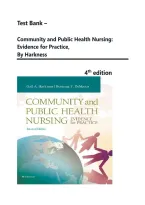
Test Bank –
Community and Public Health Nursing:
Evidence for Practice,
By Harkness
4th edition
,Table of content
Part One: The Context of Community and Public Health Nursing
Chapter 1 Foundations of Public Health Nursing
Chapter 2 Public Health Systems
Chapter 3 Health Policy, Politics, and Reform
Chapter 4 Global Health
Part Two: Evidence-Based Practice and Population Health
Chapter 5 Frameworks for Health Promotion, Disease Prevention, and Risk Reduction
Chapter 6 Epidemiology: The Science of Prevention
Chapter 7 Describing Health Conditions: Understanding and Using Rates
Chapter 8 Gathering Evidence for Public Health Practice
Part Three: Implementing Nursing Practice in Community Settings
Chapter 9 Planning for Community Change
Chapter 10 Cultural Awareness, Sensitivity, and Respect
Chapter 11 Community Assessment
Chapter 12 Care Management, Case Management, and Home Healthcare
Chapter 13 Family Assessment
Part Four: Challenges in Community and Public Health Nursing
Chapter 14 Risk of Infectious and Communicable Diseases
Chapter 15 Emerging Infectious Diseases
Chapter 16 Violence and Abuse
Chapter 17 Substance use Disorder
Chapter 18 Health Inequities in Populations
Chapter 19 Environmental Health
Chapter 20 Community Preparedness: Disaster and Terrorism
Part Five: Specialty Practice
Chapter 21 Community Mental Health
Chapter 22 School Health
Chapter 23 Innovative Community Engagement Practice to Advance Population Health
Chapter 24 Palliative and End-of-Life Care
Chapter 25 Occupational Health Nursing
,PART ONE: THE CONTEXT OF COMMUNITY AND PUBLIC HEALTH NURSING
CHAPTER 1: Foundations of Public Health Nursing
1. Which of the following best defines public health nursing?
A. Nursing care provided exclusively in hospital settings to large populations
B. The practice of promoting and protecting the health of populations using knowledge from
nursing, social, and public health sciences
C. The delivery of acute care services to individuals in community clinics
D. The administration of medications to patients in long-term care facilities
Answer: B
Rationale: Public health nursing is defined as the practice of promoting and protecting the
health of populations using knowledge from nursing, social, and public health sciences. It
focuses on populations rather than individuals and emphasizes prevention.
2. Which early public health nurse is credited with establishing the first visiting nurse service in
the United States?
A. Florence Nightingale
B. Lillian Wald
C. Clara Barton
D. Mary Breckinridge
Answer: B
Rationale: Lillian Wald founded the Henry Street Settlement in 1893 in New York City, which is
considered the first organized visiting nurse service in the United States.
3. The core functions of public health include all of the following EXCEPT:
A. Assessment
B. Policy development
C. Assurance
D. Direct clinical intervention
Answer: D
Rationale: The three core functions of public health are assessment, policy development, and
assurance. Direct clinical intervention is not considered a core function, though it may be a
component of services provided.
, 4. Which level of prevention focuses on early detection and prompt treatment of disease?
A. Primary prevention
B. Secondary prevention
C. Tertiary prevention
D. Quaternary prevention
Answer: B
Rationale: Secondary prevention involves early detection and prompt treatment of disease
through screening and early intervention. Primary prevention prevents disease before it occurs;
tertiary prevention manages long-term conditions.
5. A public health nurse conducts a community-wide blood pressure screening event. This is an
example of which level of prevention?
A. Primary
B. Secondary
C. Tertiary
D. Primordial
Answer: B
Rationale: Blood pressure screening is a secondary prevention activity because it focuses on
early detection of hypertension before complications develop.
6. Which of the following is an example of primary prevention?
A. Administering immunizations to school-age children
B. Conducting mammography screenings
C. Providing rehabilitation after a stroke
D. Managing diabetes through medication compliance
Answer: A
Rationale: Immunizations are a classic example of primary prevention because they prevent the
occurrence of disease before it starts.
7. The 10 Essential Public Health Services are organized around which framework?
A. The Nursing Process
B. The three core functions of public health
C. Maslow's Hierarchy of Needs
D. The Health Belief Model
Community and Public Health Nursing:
Evidence for Practice,
By Harkness
4th edition
,Table of content
Part One: The Context of Community and Public Health Nursing
Chapter 1 Foundations of Public Health Nursing
Chapter 2 Public Health Systems
Chapter 3 Health Policy, Politics, and Reform
Chapter 4 Global Health
Part Two: Evidence-Based Practice and Population Health
Chapter 5 Frameworks for Health Promotion, Disease Prevention, and Risk Reduction
Chapter 6 Epidemiology: The Science of Prevention
Chapter 7 Describing Health Conditions: Understanding and Using Rates
Chapter 8 Gathering Evidence for Public Health Practice
Part Three: Implementing Nursing Practice in Community Settings
Chapter 9 Planning for Community Change
Chapter 10 Cultural Awareness, Sensitivity, and Respect
Chapter 11 Community Assessment
Chapter 12 Care Management, Case Management, and Home Healthcare
Chapter 13 Family Assessment
Part Four: Challenges in Community and Public Health Nursing
Chapter 14 Risk of Infectious and Communicable Diseases
Chapter 15 Emerging Infectious Diseases
Chapter 16 Violence and Abuse
Chapter 17 Substance use Disorder
Chapter 18 Health Inequities in Populations
Chapter 19 Environmental Health
Chapter 20 Community Preparedness: Disaster and Terrorism
Part Five: Specialty Practice
Chapter 21 Community Mental Health
Chapter 22 School Health
Chapter 23 Innovative Community Engagement Practice to Advance Population Health
Chapter 24 Palliative and End-of-Life Care
Chapter 25 Occupational Health Nursing
,PART ONE: THE CONTEXT OF COMMUNITY AND PUBLIC HEALTH NURSING
CHAPTER 1: Foundations of Public Health Nursing
1. Which of the following best defines public health nursing?
A. Nursing care provided exclusively in hospital settings to large populations
B. The practice of promoting and protecting the health of populations using knowledge from
nursing, social, and public health sciences
C. The delivery of acute care services to individuals in community clinics
D. The administration of medications to patients in long-term care facilities
Answer: B
Rationale: Public health nursing is defined as the practice of promoting and protecting the
health of populations using knowledge from nursing, social, and public health sciences. It
focuses on populations rather than individuals and emphasizes prevention.
2. Which early public health nurse is credited with establishing the first visiting nurse service in
the United States?
A. Florence Nightingale
B. Lillian Wald
C. Clara Barton
D. Mary Breckinridge
Answer: B
Rationale: Lillian Wald founded the Henry Street Settlement in 1893 in New York City, which is
considered the first organized visiting nurse service in the United States.
3. The core functions of public health include all of the following EXCEPT:
A. Assessment
B. Policy development
C. Assurance
D. Direct clinical intervention
Answer: D
Rationale: The three core functions of public health are assessment, policy development, and
assurance. Direct clinical intervention is not considered a core function, though it may be a
component of services provided.
, 4. Which level of prevention focuses on early detection and prompt treatment of disease?
A. Primary prevention
B. Secondary prevention
C. Tertiary prevention
D. Quaternary prevention
Answer: B
Rationale: Secondary prevention involves early detection and prompt treatment of disease
through screening and early intervention. Primary prevention prevents disease before it occurs;
tertiary prevention manages long-term conditions.
5. A public health nurse conducts a community-wide blood pressure screening event. This is an
example of which level of prevention?
A. Primary
B. Secondary
C. Tertiary
D. Primordial
Answer: B
Rationale: Blood pressure screening is a secondary prevention activity because it focuses on
early detection of hypertension before complications develop.
6. Which of the following is an example of primary prevention?
A. Administering immunizations to school-age children
B. Conducting mammography screenings
C. Providing rehabilitation after a stroke
D. Managing diabetes through medication compliance
Answer: A
Rationale: Immunizations are a classic example of primary prevention because they prevent the
occurrence of disease before it starts.
7. The 10 Essential Public Health Services are organized around which framework?
A. The Nursing Process
B. The three core functions of public health
C. Maslow's Hierarchy of Needs
D. The Health Belief Model


