
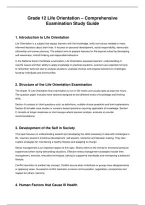
Grade 12 Life Orientation – Comprehensive
Examination Study Guide
1. Introduction to Life Orientation
Life Orientation is a subject that equips learners with the knowledge, skills and values needed to make
informed decisions about their lives. It focuses on personal development, social responsibility, democratic
citizenship and career planning. The subject aims to prepare learners for life beyond school by developing
self-awareness, critical thinking and responsible behaviour.
In the National Senior Certificate examination, Life Orientation assesses learners’ understanding of
real-life issues and their ability to apply knowledge in practical situations. Learners are expected not only
to remember facts but also to analyse situations, evaluate choices and propose solutions to challenges
faced by individuals and communities.
2. Structure of the Life Orientation Examination
The Grade 12 Life Orientation final examination is out of 100 marks and usually lasts at least two hours.
The question paper includes three sections designed to test different levels of knowledge and thinking
skills.
Section A consists of short questions such as definitions, multiple-choice questions and brief explanations.
Section B includes case studies or scenario-based questions requiring application of knowledge. Section
C consists of longer responses or short essays where learners analyse, evaluate or provide
recommendations.
3. Development of the Self in Society
This topic focuses on understanding oneself and developing the skills necessary to deal with challenges in
life. Learners examine emotional development, self-esteem, resilience and decision-making. They also
explore strategies for maintaining a healthy lifestyle and adapting to change.
Stress management is an important aspect of this topic. Stress refers to the mental or emotional pressure
experienced when facing demanding situations. Effective stress management strategies include time
management, exercise, relaxation techniques, talking to supportive individuals and maintaining a balanced
lifestyle.
Conflict resolution is another key concept. Conflict occurs when individuals or groups have disagreements
or opposing views. Successful conflict resolution involves communication, negotiation, compromise and
respect for others’ opinions.
4. Human Factors that Cause Ill Health
, Human behaviour can contribute to poor health outcomes. Risky behaviours such as substance abuse,
unsafe sexual practices, poor diet and lack of exercise may lead to serious health problems.
Substance abuse refers to the harmful use of alcohol, drugs or other substances. It can lead to addiction,
mental health problems, family conflict and poor academic performance. Preventing substance abuse
involves education, awareness and strong support systems.
Unsafe sexual behaviour can result in sexually transmitted infections (STIs), including HIV, and
unintended pregnancies. Education, responsible decision-making and access to healthcare services are
important for prevention.
5. Social and Environmental Responsibility
This topic encourages learners to take responsibility for their communities and the environment. It
highlights the importance of safe living environments and sustainable development.
Government plays a key role in providing services such as healthcare, housing, sanitation and education.
Citizens also have a responsibility to protect their environment by conserving resources, reducing waste
and participating in community initiatives.
6. Democracy and Human Rights
South Africa is a democratic country founded on the principles of equality, freedom and human dignity.
The Constitution protects the rights of all citizens and ensures that government is accountable to the
people.
Responsible citizenship involves respecting the rights of others, participating in democratic processes
such as voting, and contributing positively to society.
The media plays an important role in democracy by informing the public, exposing corruption and providing
platforms for discussion. However, media can also influence public opinion and therefore must operate
responsibly.
7. Careers and Career Choices
Choosing a career is one of the most important decisions learners make. This topic helps learners explore
career opportunities, understand the job market and prepare for life after school.
Unemployment is a significant challenge in many societies. It can result from factors such as lack of skills,
economic decline or technological changes. Solutions may include entrepreneurship, further education
and skills development.
A job contract outlines the terms and conditions of employment, including salary, working hours, leave and
responsibilities.
Examination Study Guide
1. Introduction to Life Orientation
Life Orientation is a subject that equips learners with the knowledge, skills and values needed to make
informed decisions about their lives. It focuses on personal development, social responsibility, democratic
citizenship and career planning. The subject aims to prepare learners for life beyond school by developing
self-awareness, critical thinking and responsible behaviour.
In the National Senior Certificate examination, Life Orientation assesses learners’ understanding of
real-life issues and their ability to apply knowledge in practical situations. Learners are expected not only
to remember facts but also to analyse situations, evaluate choices and propose solutions to challenges
faced by individuals and communities.
2. Structure of the Life Orientation Examination
The Grade 12 Life Orientation final examination is out of 100 marks and usually lasts at least two hours.
The question paper includes three sections designed to test different levels of knowledge and thinking
skills.
Section A consists of short questions such as definitions, multiple-choice questions and brief explanations.
Section B includes case studies or scenario-based questions requiring application of knowledge. Section
C consists of longer responses or short essays where learners analyse, evaluate or provide
recommendations.
3. Development of the Self in Society
This topic focuses on understanding oneself and developing the skills necessary to deal with challenges in
life. Learners examine emotional development, self-esteem, resilience and decision-making. They also
explore strategies for maintaining a healthy lifestyle and adapting to change.
Stress management is an important aspect of this topic. Stress refers to the mental or emotional pressure
experienced when facing demanding situations. Effective stress management strategies include time
management, exercise, relaxation techniques, talking to supportive individuals and maintaining a balanced
lifestyle.
Conflict resolution is another key concept. Conflict occurs when individuals or groups have disagreements
or opposing views. Successful conflict resolution involves communication, negotiation, compromise and
respect for others’ opinions.
4. Human Factors that Cause Ill Health
, Human behaviour can contribute to poor health outcomes. Risky behaviours such as substance abuse,
unsafe sexual practices, poor diet and lack of exercise may lead to serious health problems.
Substance abuse refers to the harmful use of alcohol, drugs or other substances. It can lead to addiction,
mental health problems, family conflict and poor academic performance. Preventing substance abuse
involves education, awareness and strong support systems.
Unsafe sexual behaviour can result in sexually transmitted infections (STIs), including HIV, and
unintended pregnancies. Education, responsible decision-making and access to healthcare services are
important for prevention.
5. Social and Environmental Responsibility
This topic encourages learners to take responsibility for their communities and the environment. It
highlights the importance of safe living environments and sustainable development.
Government plays a key role in providing services such as healthcare, housing, sanitation and education.
Citizens also have a responsibility to protect their environment by conserving resources, reducing waste
and participating in community initiatives.
6. Democracy and Human Rights
South Africa is a democratic country founded on the principles of equality, freedom and human dignity.
The Constitution protects the rights of all citizens and ensures that government is accountable to the
people.
Responsible citizenship involves respecting the rights of others, participating in democratic processes
such as voting, and contributing positively to society.
The media plays an important role in democracy by informing the public, exposing corruption and providing
platforms for discussion. However, media can also influence public opinion and therefore must operate
responsibly.
7. Careers and Career Choices
Choosing a career is one of the most important decisions learners make. This topic helps learners explore
career opportunities, understand the job market and prepare for life after school.
Unemployment is a significant challenge in many societies. It can result from factors such as lack of skills,
economic decline or technological changes. Solutions may include entrepreneurship, further education
and skills development.
A job contract outlines the terms and conditions of employment, including salary, working hours, leave and
responsibilities.


