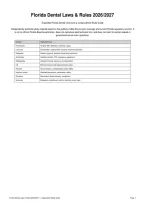
Florida Dental Laws & Rules 2026/2027
Expanded Florida Dental Licensure & Jurisprudence Study Guide
Independently authored study material based on the publicly visible Stuvia topic coverage and current Florida regulatory sources. It
is not an official Florida Board examination, does not reproduce paid test-bank text, and does not claim to contain leaked or
guaranteed actual exam questions.
Domain High-yield focus
Practice Act Chapter 466, definitions, authority, scope
Licensure Examination, endorsement, renewal, inactive/reactivation
Delegation Dentist, hygienist, assistant scope and supervision
Anesthesia Sedation permits, CPR, emergency equipment
Radiography Assistant training, exposure vs interpretation
CE Biennial renewal and required subject areas
Records Documentation, confidentiality, patient rights
Infection control Standard precautions, sterilization, safety
Discipline Misconduct, Board authority, compliance
Scenarios Delegation, anesthesia, records, reporting, exam traps
Florida Dental Laws & Rules 2026/2027 — Independent Study Guide Page 1
, 1. Florida Dental Practice Act — Chapter 466
Q1. What Florida statute is the central chapter governing dentistry, dental hygiene, and dental laboratories?
Answer: Chapter 466, Florida Statutes.
Rationale / exam cue: The Florida Board of Dentistry identifies Chapter 466 as the core dentistry chapter.
Q2. What activities generally fall within the practice of dentistry?
Answer: Diagnosis, treatment planning, treatment of conditions of the teeth and related oral structures, and procedures authorized by the
dental practice act.
Rationale / exam cue: Scope questions should be answered from the current statute and rules.
Q3. Who regulates the practice of dentistry in Florida?
Answer: The Florida Board of Dentistry, within the Florida Department of Health framework.
Rationale / exam cue: The Board establishes and enforces many practice rules under its statutory authority.
Q4. Can a dental laboratory technician independently diagnose a patient?
Answer: No.
Rationale / exam cue: Diagnosis and treatment planning are not delegable to a dental laboratory technician.
Q5. What is the significance of a written prescription for dental laboratory work?
Answer: It defines the dentist-authorized work to be performed by the laboratory.
Rationale / exam cue: Laboratory work does not transfer the dentist's clinical responsibility.
Q6. What is the safest approach when a practice-scope question is ambiguous?
Answer: Check the exact current Florida statute and applicable Board rule.
Rationale / exam cue: Florida law and rules can change.
Q7. What is the difference between licensure and scope of practice?
Answer: Licensure authorizes a person to practice at the professional level; scope defines what that licensee may lawfully perform.
Rationale / exam cue: A license does not authorize every dental procedure.
Q8. Why are Board rules important in addition to Chapter 466?
Answer: Rules provide operational details and requirements implementing the statute.
Rationale / exam cue: Both statutes and administrative rules can be tested.
Q9. Exam application: What Florida statute is the central chapter governing dentistry, dental hygiene, and dental laboratories?
Answer: Chapter 466, Florida Statutes.
Rationale / exam cue: Key point: The Florida Board of Dentistry identifies Chapter 466 as the core dentistry chapter.
Q10. Exam application: Who regulates the practice of dentistry in Florida?
Answer: The Florida Board of Dentistry, within the Florida Department of Health framework.
Rationale / exam cue: Key point: The Board establishes and enforces many practice rules under its statutory authority.
Q11. Exam application: What is the significance of a written prescription for dental laboratory work?
Answer: It defines the dentist-authorized work to be performed by the laboratory.
Rationale / exam cue: Key point: Laboratory work does not transfer the dentist's clinical responsibility.
Q12. Exam application: What is the difference between licensure and scope of practice?
Answer: Licensure authorizes a person to practice at the professional level; scope defines what that licensee may lawfully perform.
Rationale / exam cue: Key point: A license does not authorize every dental procedure.
Florida Dental Laws & Rules 2026/2027 — Independent Study Guide Page 2
Expanded Florida Dental Licensure & Jurisprudence Study Guide
Independently authored study material based on the publicly visible Stuvia topic coverage and current Florida regulatory sources. It
is not an official Florida Board examination, does not reproduce paid test-bank text, and does not claim to contain leaked or
guaranteed actual exam questions.
Domain High-yield focus
Practice Act Chapter 466, definitions, authority, scope
Licensure Examination, endorsement, renewal, inactive/reactivation
Delegation Dentist, hygienist, assistant scope and supervision
Anesthesia Sedation permits, CPR, emergency equipment
Radiography Assistant training, exposure vs interpretation
CE Biennial renewal and required subject areas
Records Documentation, confidentiality, patient rights
Infection control Standard precautions, sterilization, safety
Discipline Misconduct, Board authority, compliance
Scenarios Delegation, anesthesia, records, reporting, exam traps
Florida Dental Laws & Rules 2026/2027 — Independent Study Guide Page 1
, 1. Florida Dental Practice Act — Chapter 466
Q1. What Florida statute is the central chapter governing dentistry, dental hygiene, and dental laboratories?
Answer: Chapter 466, Florida Statutes.
Rationale / exam cue: The Florida Board of Dentistry identifies Chapter 466 as the core dentistry chapter.
Q2. What activities generally fall within the practice of dentistry?
Answer: Diagnosis, treatment planning, treatment of conditions of the teeth and related oral structures, and procedures authorized by the
dental practice act.
Rationale / exam cue: Scope questions should be answered from the current statute and rules.
Q3. Who regulates the practice of dentistry in Florida?
Answer: The Florida Board of Dentistry, within the Florida Department of Health framework.
Rationale / exam cue: The Board establishes and enforces many practice rules under its statutory authority.
Q4. Can a dental laboratory technician independently diagnose a patient?
Answer: No.
Rationale / exam cue: Diagnosis and treatment planning are not delegable to a dental laboratory technician.
Q5. What is the significance of a written prescription for dental laboratory work?
Answer: It defines the dentist-authorized work to be performed by the laboratory.
Rationale / exam cue: Laboratory work does not transfer the dentist's clinical responsibility.
Q6. What is the safest approach when a practice-scope question is ambiguous?
Answer: Check the exact current Florida statute and applicable Board rule.
Rationale / exam cue: Florida law and rules can change.
Q7. What is the difference between licensure and scope of practice?
Answer: Licensure authorizes a person to practice at the professional level; scope defines what that licensee may lawfully perform.
Rationale / exam cue: A license does not authorize every dental procedure.
Q8. Why are Board rules important in addition to Chapter 466?
Answer: Rules provide operational details and requirements implementing the statute.
Rationale / exam cue: Both statutes and administrative rules can be tested.
Q9. Exam application: What Florida statute is the central chapter governing dentistry, dental hygiene, and dental laboratories?
Answer: Chapter 466, Florida Statutes.
Rationale / exam cue: Key point: The Florida Board of Dentistry identifies Chapter 466 as the core dentistry chapter.
Q10. Exam application: Who regulates the practice of dentistry in Florida?
Answer: The Florida Board of Dentistry, within the Florida Department of Health framework.
Rationale / exam cue: Key point: The Board establishes and enforces many practice rules under its statutory authority.
Q11. Exam application: What is the significance of a written prescription for dental laboratory work?
Answer: It defines the dentist-authorized work to be performed by the laboratory.
Rationale / exam cue: Key point: Laboratory work does not transfer the dentist's clinical responsibility.
Q12. Exam application: What is the difference between licensure and scope of practice?
Answer: Licensure authorizes a person to practice at the professional level; scope defines what that licensee may lawfully perform.
Rationale / exam cue: Key point: A license does not authorize every dental procedure.
Florida Dental Laws & Rules 2026/2027 — Independent Study Guide Page 2