
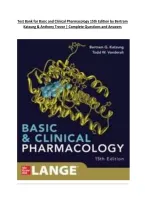
Test Bank for Basic and Clinical Pharmacology 15th Edition by Bertram
Katzung & Anthony Trevor | Complete Questions and Answers
,TABLE OF CONTENTS
Section I — Basic Principles
1. Introduction: The Nature of Drugs & Drug Development & Regulation
2. Drug Receptors & Pharmacodynamics
3. Pharmacokinetics & Pharmacodynamics: Rational Dosing & the Time Course of Drug Action
4. Drug Biotransformation
5. Pharmacogenomics
Section II — Autonomic Drugs
6. Introduction to Autonomic Pharmacology
7. Cholinoceptor-Activating & Cholinesterase-Inhibiting Drugs
8. Cholinoceptor-Blocking Drugs
9. Adrenoceptor Agonists & Sympathomimetic Drugs
10. Adrenoceptor Antagonist Drugs
Section III — Cardiovascular-Renal Drugs
11. Antihypertensive Agents
12. Vasodilators & the Treatment of Angina Pectoris
13. Drugs Used in Heart Failure
14. Agents Used in Cardiac Arrhythmias
15. Diuretic Agents
Section IV — Drugs with Important Actions on Smooth Muscle
16. Histamine, Serotonin, & the Ergot Alkaloids
17. Vasoactive Peptides
18. The Eicosanoids
19. Nitric Oxide
20. Drugs Used in Asthma & Chronic Obstructive Pulmonary Disease
Section V — Drugs That Act in the Central Nervous System
21. Introduction to the Pharmacology of CNS Drugs
22. Sedative-Hypnotic Drugs
23. The Alcohols
, 24. Antiseizure Drugs
25. General Anesthetics
26. Local Anesthetics
27. Skeletal Muscle Relaxants
28. Pharmacologic Management of Parkinsonism & Other Movement Disorders
29. Antipsychotic Agents & Lithium
30. Antidepressant Agents
31. Opioid Agonists & Antagonists
32. Drugs of Abuse
Section VI — Blood, Inflammation & Gout
33. Agents Used in Cytopenias; Hematopoietic Growth Factors
34. Drugs Used in Disorders of Coagulation
35. Agents Used in Dyslipidemia
36. NSAIDs, DMARDs, Nonopioid Analgesics & Drugs Used in Gout
Section VII — Endocrine Drugs
37. Hypothalamic & Pituitary Hormones
38. Thyroid & Antithyroid Drugs
39. Adrenocorticosteroids & Adrenocortical Antagonists
40. Gonadal Hormones & Inhibitors
41. Pancreatic Hormones & Glucose-Lowering Drugs
42. Agents That Affect Bone Mineral Homeostasis
Section VIII — Chemotherapeutic Drugs
43. Beta-Lactam & Other Cell Wall- & Membrane-Active Antibiotics
44. Tetracyclines, Macrolides, Clindamycin, Chloramphenicol, Streptogramins, Oxazolidinones &
Pleuromutilins
45. Aminoglycosides & Spectinomycin
46. Sulfonamides, Trimethoprim & Quinolones
47. Antimycobacterial Drugs
48. Antifungal Agents
, 49. Antiviral Agents
50. Miscellaneous Antimicrobial Agents; Disinfectants, Antiseptics & Sterilants
51. Clinical Use of Antimicrobial Agents
52. Antiprotozoal Drugs
53. Pharmacology of the Antihelminthic Drugs
54. Cancer Chemotherapy
55. Immunopharmacology
Section IX — Toxicology
56. Introduction to Toxicology: Occupational & Environmental
57. Heavy Metal Intoxication & Chelators
58. Management of the Poisoned Patient
Section X — Special Topics
59. Special Aspects of Perinatal & Pediatric Pharmacology
60. Special Aspects of Geriatric Pharmacology
61. Dermatologic Pharmacology
62. Drugs Used in Gastrointestinal Diseases
63. Therapeutic & Toxic Potential of Over-the-Counter Agents
64. Botanicals & Nutritional Supplements
65. Cannabis Pharmacology
66. Rational Prescribing & Prescription Writing
SECTION I — BASIC PRINCIPLES
CHAPTER 1 — Introduction: Nature of Drugs, Drug Development & Regulation
1. Pharmacology is best defined as the study of:
A. Surgical procedures
B. Drugs and their interactions with living systems
C. Microorganisms only
D. Genetic disorders
Answer: B.
Katzung & Anthony Trevor | Complete Questions and Answers
,TABLE OF CONTENTS
Section I — Basic Principles
1. Introduction: The Nature of Drugs & Drug Development & Regulation
2. Drug Receptors & Pharmacodynamics
3. Pharmacokinetics & Pharmacodynamics: Rational Dosing & the Time Course of Drug Action
4. Drug Biotransformation
5. Pharmacogenomics
Section II — Autonomic Drugs
6. Introduction to Autonomic Pharmacology
7. Cholinoceptor-Activating & Cholinesterase-Inhibiting Drugs
8. Cholinoceptor-Blocking Drugs
9. Adrenoceptor Agonists & Sympathomimetic Drugs
10. Adrenoceptor Antagonist Drugs
Section III — Cardiovascular-Renal Drugs
11. Antihypertensive Agents
12. Vasodilators & the Treatment of Angina Pectoris
13. Drugs Used in Heart Failure
14. Agents Used in Cardiac Arrhythmias
15. Diuretic Agents
Section IV — Drugs with Important Actions on Smooth Muscle
16. Histamine, Serotonin, & the Ergot Alkaloids
17. Vasoactive Peptides
18. The Eicosanoids
19. Nitric Oxide
20. Drugs Used in Asthma & Chronic Obstructive Pulmonary Disease
Section V — Drugs That Act in the Central Nervous System
21. Introduction to the Pharmacology of CNS Drugs
22. Sedative-Hypnotic Drugs
23. The Alcohols
, 24. Antiseizure Drugs
25. General Anesthetics
26. Local Anesthetics
27. Skeletal Muscle Relaxants
28. Pharmacologic Management of Parkinsonism & Other Movement Disorders
29. Antipsychotic Agents & Lithium
30. Antidepressant Agents
31. Opioid Agonists & Antagonists
32. Drugs of Abuse
Section VI — Blood, Inflammation & Gout
33. Agents Used in Cytopenias; Hematopoietic Growth Factors
34. Drugs Used in Disorders of Coagulation
35. Agents Used in Dyslipidemia
36. NSAIDs, DMARDs, Nonopioid Analgesics & Drugs Used in Gout
Section VII — Endocrine Drugs
37. Hypothalamic & Pituitary Hormones
38. Thyroid & Antithyroid Drugs
39. Adrenocorticosteroids & Adrenocortical Antagonists
40. Gonadal Hormones & Inhibitors
41. Pancreatic Hormones & Glucose-Lowering Drugs
42. Agents That Affect Bone Mineral Homeostasis
Section VIII — Chemotherapeutic Drugs
43. Beta-Lactam & Other Cell Wall- & Membrane-Active Antibiotics
44. Tetracyclines, Macrolides, Clindamycin, Chloramphenicol, Streptogramins, Oxazolidinones &
Pleuromutilins
45. Aminoglycosides & Spectinomycin
46. Sulfonamides, Trimethoprim & Quinolones
47. Antimycobacterial Drugs
48. Antifungal Agents
, 49. Antiviral Agents
50. Miscellaneous Antimicrobial Agents; Disinfectants, Antiseptics & Sterilants
51. Clinical Use of Antimicrobial Agents
52. Antiprotozoal Drugs
53. Pharmacology of the Antihelminthic Drugs
54. Cancer Chemotherapy
55. Immunopharmacology
Section IX — Toxicology
56. Introduction to Toxicology: Occupational & Environmental
57. Heavy Metal Intoxication & Chelators
58. Management of the Poisoned Patient
Section X — Special Topics
59. Special Aspects of Perinatal & Pediatric Pharmacology
60. Special Aspects of Geriatric Pharmacology
61. Dermatologic Pharmacology
62. Drugs Used in Gastrointestinal Diseases
63. Therapeutic & Toxic Potential of Over-the-Counter Agents
64. Botanicals & Nutritional Supplements
65. Cannabis Pharmacology
66. Rational Prescribing & Prescription Writing
SECTION I — BASIC PRINCIPLES
CHAPTER 1 — Introduction: Nature of Drugs, Drug Development & Regulation
1. Pharmacology is best defined as the study of:
A. Surgical procedures
B. Drugs and their interactions with living systems
C. Microorganisms only
D. Genetic disorders
Answer: B.


