
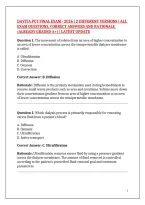
DAVITA PCT FINAL EXAM - 2026 | 2 DIFFERENT VERSIONS | ALL
EXAM QUESTIONS, CORRECT ANSWERS AND RATIONALE
(ALREADY GRADED A+) | LATEST UPDATE
Question 1. The movement of solutes from an area of higher concentration to
an area of lower concentration across the semipermeable dialyzer membrane
is called:
A. Ultrafiltration
B. Diffusion
C. Osmosis
D. Convection
Correct Answer: B. Diffusion
Rationale: Diffusion is the primary mechanism used during hemodialysis to
remove small waste products such as urea and creatinine. Solutes move down
their concentration gradient from an area of higher concentration to an area
of lower concentration across the semipermeable membrane.
Question 2. Which dialysis process is primarily responsible for removing
excess fluid from a patient's blood?
A. Diffusion
B. Osmosis
C. Ultrafiltration
D. Active transport
Correct Answer: C. Ultrafiltration
Rationale: Ultrafiltration removes excess fluid by using a pressure gradient
across the dialyzer membrane. The amount of fluid removed is controlled
according to the patient's prescribed fluid-removal goal and treatment
parameters.
1
,Question 3. A PCT assesses an AV fistula before treatment. Which finding
indicates that the access is functioning?
A. Absence of a pulse
B. Presence of a thrill and bruit
C. Severe swelling
D. Redness and drainage
Correct Answer: B. Presence of a thrill and bruit
Rationale: A thrill is a palpable vibration over the access, while a bruit is the
sound of blood flow heard with a stethoscope. Changes or absence of these
findings can indicate impaired access flow and should be reported promptly.
Question 4. Which action is most important for reducing healthcare-
associated infections in the dialysis setting?
A. Wearing two pairs of gloves
B. Hand hygiene
C. Increasing treatment time
D. Using a larger needle
Correct Answer: B. Hand hygiene
Rationale: Proper hand hygiene before and after patient contact and at
appropriate points during care is one of the most important infection-
prevention measures. Gloves do not replace hand hygiene.
Question 5. A patient becomes dizzy, nauseated, and hypotensive during
dialysis. What should the PCT do?
A. Increase the ultrafiltration rate
B. Notify the nurse and follow the facility's hypotension protocol
C. Encourage the patient to stand
D. Increase the blood-flow rate independently
2
,Correct Answer: B. Notify the nurse and follow the facility's hypotension
protocol
Rationale: Dizziness, nausea, and hypotension can occur when excessive fluid
is removed or when the patient cannot tolerate the treatment. The PCT should
immediately recognize the change, protect the patient from injury, and notify
the nurse while following facility protocol.
Question 6. Which finding is most concerning for an infection at a vascular
access site?
A. Normal bruit
B. Intact skin
C. Redness, warmth, swelling, and drainage
D. Palpable thrill
Correct Answer: C. Redness, warmth, swelling, and drainage
Rationale: Redness, warmth, swelling, tenderness, or drainage may indicate
infection. The finding should be reported promptly so that the patient can
receive appropriate assessment and treatment.
Question 7. What is the primary purpose of the dialysate during
hemodialysis?
A. To clot the patient's blood
B. To create a concentration gradient that facilitates removal of selected
solutes
C. To replace red blood cells
D. To sterilize the patient's blood
Correct Answer: B. To create a concentration gradient that facilitates
removal of selected solutes
Rationale: Dialysate contains carefully controlled concentrations of
electrolytes and other components. Its composition allows waste products
3
, and selected excess substances to move from the blood across the dialyzer
membrane.
Question 8. A patient develops painful muscle cramps during dialysis. Which
complication should the PCT recognize?
A. Possible excessive fluid removal or volume depletion
B. Improved vascular access function
C. Increased hemoglobin
D. Normal response to dialysate
Correct Answer: A. Possible excessive fluid removal or volume depletion
Rationale: Muscle cramps can occur during dialysis, particularly when fluid is
removed rapidly or when the patient's circulating volume becomes too low.
The PCT should report the symptoms and follow the prescribed response
rather than independently changing treatment settings.
Question 9. Which statement about an AV fistula is correct?
A. Blood pressure should routinely be taken on the fistula arm
B. The fistula should be assessed before and after treatment
C. The access arm should routinely be used for venipuncture
D. A fistula does not require assessment if it has been used previously
Correct Answer: B. The fistula should be assessed before and after
treatment
Rationale: Vascular access assessment is an essential part of safe dialysis
care. The access should be checked for signs of infection, bleeding, swelling,
and adequate blood flow, including appropriate assessment of the thrill and
bruit.
Question 10. Which situation requires the PCT to notify the nurse
immediately?
4
EXAM QUESTIONS, CORRECT ANSWERS AND RATIONALE
(ALREADY GRADED A+) | LATEST UPDATE
Question 1. The movement of solutes from an area of higher concentration to
an area of lower concentration across the semipermeable dialyzer membrane
is called:
A. Ultrafiltration
B. Diffusion
C. Osmosis
D. Convection
Correct Answer: B. Diffusion
Rationale: Diffusion is the primary mechanism used during hemodialysis to
remove small waste products such as urea and creatinine. Solutes move down
their concentration gradient from an area of higher concentration to an area
of lower concentration across the semipermeable membrane.
Question 2. Which dialysis process is primarily responsible for removing
excess fluid from a patient's blood?
A. Diffusion
B. Osmosis
C. Ultrafiltration
D. Active transport
Correct Answer: C. Ultrafiltration
Rationale: Ultrafiltration removes excess fluid by using a pressure gradient
across the dialyzer membrane. The amount of fluid removed is controlled
according to the patient's prescribed fluid-removal goal and treatment
parameters.
1
,Question 3. A PCT assesses an AV fistula before treatment. Which finding
indicates that the access is functioning?
A. Absence of a pulse
B. Presence of a thrill and bruit
C. Severe swelling
D. Redness and drainage
Correct Answer: B. Presence of a thrill and bruit
Rationale: A thrill is a palpable vibration over the access, while a bruit is the
sound of blood flow heard with a stethoscope. Changes or absence of these
findings can indicate impaired access flow and should be reported promptly.
Question 4. Which action is most important for reducing healthcare-
associated infections in the dialysis setting?
A. Wearing two pairs of gloves
B. Hand hygiene
C. Increasing treatment time
D. Using a larger needle
Correct Answer: B. Hand hygiene
Rationale: Proper hand hygiene before and after patient contact and at
appropriate points during care is one of the most important infection-
prevention measures. Gloves do not replace hand hygiene.
Question 5. A patient becomes dizzy, nauseated, and hypotensive during
dialysis. What should the PCT do?
A. Increase the ultrafiltration rate
B. Notify the nurse and follow the facility's hypotension protocol
C. Encourage the patient to stand
D. Increase the blood-flow rate independently
2
,Correct Answer: B. Notify the nurse and follow the facility's hypotension
protocol
Rationale: Dizziness, nausea, and hypotension can occur when excessive fluid
is removed or when the patient cannot tolerate the treatment. The PCT should
immediately recognize the change, protect the patient from injury, and notify
the nurse while following facility protocol.
Question 6. Which finding is most concerning for an infection at a vascular
access site?
A. Normal bruit
B. Intact skin
C. Redness, warmth, swelling, and drainage
D. Palpable thrill
Correct Answer: C. Redness, warmth, swelling, and drainage
Rationale: Redness, warmth, swelling, tenderness, or drainage may indicate
infection. The finding should be reported promptly so that the patient can
receive appropriate assessment and treatment.
Question 7. What is the primary purpose of the dialysate during
hemodialysis?
A. To clot the patient's blood
B. To create a concentration gradient that facilitates removal of selected
solutes
C. To replace red blood cells
D. To sterilize the patient's blood
Correct Answer: B. To create a concentration gradient that facilitates
removal of selected solutes
Rationale: Dialysate contains carefully controlled concentrations of
electrolytes and other components. Its composition allows waste products
3
, and selected excess substances to move from the blood across the dialyzer
membrane.
Question 8. A patient develops painful muscle cramps during dialysis. Which
complication should the PCT recognize?
A. Possible excessive fluid removal or volume depletion
B. Improved vascular access function
C. Increased hemoglobin
D. Normal response to dialysate
Correct Answer: A. Possible excessive fluid removal or volume depletion
Rationale: Muscle cramps can occur during dialysis, particularly when fluid is
removed rapidly or when the patient's circulating volume becomes too low.
The PCT should report the symptoms and follow the prescribed response
rather than independently changing treatment settings.
Question 9. Which statement about an AV fistula is correct?
A. Blood pressure should routinely be taken on the fistula arm
B. The fistula should be assessed before and after treatment
C. The access arm should routinely be used for venipuncture
D. A fistula does not require assessment if it has been used previously
Correct Answer: B. The fistula should be assessed before and after
treatment
Rationale: Vascular access assessment is an essential part of safe dialysis
care. The access should be checked for signs of infection, bleeding, swelling,
and adequate blood flow, including appropriate assessment of the thrill and
bruit.
Question 10. Which situation requires the PCT to notify the nurse
immediately?
4


