Check Out ExamLab For More Resources : https://www.stuvia.com/user/examlab
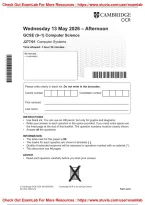
Wednesday 13 May 2026 – Afternoon
GCSE (9–1) Computer Science
J277/01 Computer Systems
Time allowed: 1 hour 30 minutes
Do not use:
* 1 8 5 9 9 2 2 8 1 7 *
• a calculator
* J 2 7 7 0 1 *
Please write clearly in black ink. Do not write in the barcodes.
Centre number Candidate number
First name(s)
Last name
INSTRUCTIONS
• Use black ink. You can use an HB pencil, but only for graphs and diagrams.
• Write your answer to each question in the space provided. If you need extra space use
the lined page at the end of this booklet. The question numbers must be clearly shown.
• Answer all the questions.
INFORMATION
• The total mark for this paper is 80.
• The marks for each question are shown in brackets [ ].
• Quality of extended response will be assessed in questions marked with an asterisk (*).
• This document has 16 pages.
ADVICE
• Read each question carefully before you start your answer.
© Cambridge OCR 2026 [601/8355/X] Cambridge OCR is an exempt Charity
DC (PQ) 352312/5 Turn over
Check Out ExamLab For More Resources : https://www.stuvia.com/user/examlab
,Check Out ExamLab For More Resources : https://www.stuvia.com/user/examlab
2
1 Computers store data in binary.
(a) Tick (✓) one box to identify the statement that is false.
1000 gigabytes is equivalent to 1 petabyte
1000 megabytes is equivalent to 1 gigabyte
2 nibbles is equivalent to 1 byte
1000 bytes is equivalent to 1 kilobyte
[1]
(b) Convert the binary number 11001010 into denary.
..........................................................................................................................................................
..........................................................................................................................................................
..........................................................................................................................................................
..................................................................................................................................................... [1]
(c)
(i) Convert the denary number 64 into hexadecimal.
..........................................................................................................................................................
..........................................................................................................................................................
..........................................................................................................................................................
..................................................................................................................................................... [1]
(ii) Give the smallest 1-digit hexadecimal value and the largest 1-digit hexadecimal value.
Smallest ...........................................................................................................................................
Largest .............................................................................................................................................
[2]
(d) Identify the binary shift that will multiply the binary value 00011001 by 4.
..........................................................................................................................................................
..................................................................................................................................................... [2]
(e) State why computers represent data in binary.
..........................................................................................................................................................
..................................................................................................................................................... [1]
© Cambridge OCR 2026
Check Out ExamLab For More Resources : https://www.stuvia.com/user/examlab
, Check Out ExamLab For More Resources : https://www.stuvia.com/user/examlab
3
(f) Complete the binary addition. Show your working.
1 1 1 0 0 0 1 0
+ 0 0 0 0 1 1 1 1
[2]
2 A hospital has three separate buildings that are in different locations within a city. The hospital
has a network with hundreds of computers that are located in the three buildings.
(a) The network is a WAN (Wide Area Network).
Explain the reasons why the network is a WAN and not a LAN (Local Area Network).
..........................................................................................................................................................
..........................................................................................................................................................
..........................................................................................................................................................
..................................................................................................................................................... [2]
(b) One of the buildings has wired access to the network using Ethernet. Ethernet is an example of a
standard.
State the purpose of a standard.
..........................................................................................................................................................
..................................................................................................................................................... [1]
(c) Some of the data being transferred over the network is confidential.
Explain how encryption can be used to secure the data from unauthorised access during
transmission.
..........................................................................................................................................................
..........................................................................................................................................................
..........................................................................................................................................................
..........................................................................................................................................................
..........................................................................................................................................................
..................................................................................................................................................... [3]
© Cambridge OCR 2026 Turn over
Check Out ExamLab For More Resources : https://www.stuvia.com/user/examlab
Wednesday 13 May 2026 – Afternoon
GCSE (9–1) Computer Science
J277/01 Computer Systems
Time allowed: 1 hour 30 minutes
Do not use:
* 1 8 5 9 9 2 2 8 1 7 *
• a calculator
* J 2 7 7 0 1 *
Please write clearly in black ink. Do not write in the barcodes.
Centre number Candidate number
First name(s)
Last name
INSTRUCTIONS
• Use black ink. You can use an HB pencil, but only for graphs and diagrams.
• Write your answer to each question in the space provided. If you need extra space use
the lined page at the end of this booklet. The question numbers must be clearly shown.
• Answer all the questions.
INFORMATION
• The total mark for this paper is 80.
• The marks for each question are shown in brackets [ ].
• Quality of extended response will be assessed in questions marked with an asterisk (*).
• This document has 16 pages.
ADVICE
• Read each question carefully before you start your answer.
© Cambridge OCR 2026 [601/8355/X] Cambridge OCR is an exempt Charity
DC (PQ) 352312/5 Turn over
Check Out ExamLab For More Resources : https://www.stuvia.com/user/examlab
,Check Out ExamLab For More Resources : https://www.stuvia.com/user/examlab
2
1 Computers store data in binary.
(a) Tick (✓) one box to identify the statement that is false.
1000 gigabytes is equivalent to 1 petabyte
1000 megabytes is equivalent to 1 gigabyte
2 nibbles is equivalent to 1 byte
1000 bytes is equivalent to 1 kilobyte
[1]
(b) Convert the binary number 11001010 into denary.
..........................................................................................................................................................
..........................................................................................................................................................
..........................................................................................................................................................
..................................................................................................................................................... [1]
(c)
(i) Convert the denary number 64 into hexadecimal.
..........................................................................................................................................................
..........................................................................................................................................................
..........................................................................................................................................................
..................................................................................................................................................... [1]
(ii) Give the smallest 1-digit hexadecimal value and the largest 1-digit hexadecimal value.
Smallest ...........................................................................................................................................
Largest .............................................................................................................................................
[2]
(d) Identify the binary shift that will multiply the binary value 00011001 by 4.
..........................................................................................................................................................
..................................................................................................................................................... [2]
(e) State why computers represent data in binary.
..........................................................................................................................................................
..................................................................................................................................................... [1]
© Cambridge OCR 2026
Check Out ExamLab For More Resources : https://www.stuvia.com/user/examlab
, Check Out ExamLab For More Resources : https://www.stuvia.com/user/examlab
3
(f) Complete the binary addition. Show your working.
1 1 1 0 0 0 1 0
+ 0 0 0 0 1 1 1 1
[2]
2 A hospital has three separate buildings that are in different locations within a city. The hospital
has a network with hundreds of computers that are located in the three buildings.
(a) The network is a WAN (Wide Area Network).
Explain the reasons why the network is a WAN and not a LAN (Local Area Network).
..........................................................................................................................................................
..........................................................................................................................................................
..........................................................................................................................................................
..................................................................................................................................................... [2]
(b) One of the buildings has wired access to the network using Ethernet. Ethernet is an example of a
standard.
State the purpose of a standard.
..........................................................................................................................................................
..................................................................................................................................................... [1]
(c) Some of the data being transferred over the network is confidential.
Explain how encryption can be used to secure the data from unauthorised access during
transmission.
..........................................................................................................................................................
..........................................................................................................................................................
..........................................................................................................................................................
..........................................................................................................................................................
..........................................................................................................................................................
..................................................................................................................................................... [3]
© Cambridge OCR 2026 Turn over
Check Out ExamLab For More Resources : https://www.stuvia.com/user/examlab