
d.pdfCNS_questions.docx
!!!!!!!!!!!!!!!!!!!!#######################CNS_questions.docx
CNS_questions.docx - converted.pdf!!!!!!!!!!!!!!!!!!!!!!!!!!!!!!!!!!!!!!!!!!!!!!!!!!!!!!!!!!!!!!!!!!!!!!!!!!!!!!!################################
- converted.pdf!!!!!!!!!!!!!!!!!!!!!!!!!!!!!!!!!!!!!!!!!!!!!!!!!!!!!!!!!!!!!!!!!!!!!!!!!!!!!!!####################################
- converted.pdfCNS_questions.docx - converted.pdf!!!!!!!!!!!!!!!!!!!!!!!!!!!!!!!!!!!!!!
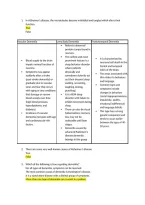
1. In Alzheimer’s disease, the microtubules become misfolded and tangled which alters their
function.
True
False
Vascular Dementia Lewy Body Dementia Frontotemporal Dementia
Refers to abnormal
protein clumps found in
neurons.
The earliest and most
It is characterized by
Blood supply to the brain prominent feature is a
neuronal cell death in the
impairs normal function of sleep behavior disorder
frontal and temporal
neurons where patients
lobes of the brain.
Symptoms may appear physically and
The areas associated with
suddenly after a stroke sometimes violently act
this relates to behaviors
(post-stroke dementia) or out their dreams (sleep
and language.
gradually due to vascular walking, screaming,
Common signs and
wear and tear that occurs laughing, kicking,
symptoms include
with aging or any conditions punching).
changes in behaviors
that damage or narrow It is a REM sleep
(social inappropriateness,
blood vessels over time disorder with failure to
impulsivity, apathy,
(high blood pressure, inhibit movement during
emotional indifference)
hyperlipidemia, and sleep.
and language deficits
diabetes) There can also be visual
This type has a strong
Incidence of vascular hallucinations; memory
genetic component and
dementia increases with age loss may not be
tends to occur earlier
and cardiovascular risk noticeable until later
between the ages of 40-
factors. stages.
50 years.
Dementia caused by
advanced Parkinson’s
disease dementia
belongs in this group
2. There are some very well-known causes of Alzheimer’s disease.
True
False
3. Which of the following is true regarding dementia?
For all types of dementia, symptoms can be reversed.
The most common cause of dementia is Huntington’s disease.
It is a stand-alone disease with a distinct group of symptoms.
More than one type of dementia can co-exist in a patient.
This study source was downloaded by 100000889304135 from nursinghero.com on 09-08-2024 18:32:06 GMT -05:00
NS_questions.docx
!!!!!!!!!!!!!!!!!!!!#######################CNS_questions.docx
CNS_questions.docx
- converted.pdf!!!!!!!!!!!!!!!!!!!!!!!!!!!!!!!!!!!!!!!!!!!!!!!!!!!!!!!!!!!!!!!!!!!!!!!!!!!!!!!######################################
- converted.pdf!!!!!!!!!!!!!!!!!!!!!!!!!!!!!!!!!!!!!!!!!!!!!!!!!!!!!!!!!!!!!!!!!!!!!!!!!!!!!!!#######################CNS_questions.
https://www.nursinghero.com/study-files/12991466 - converted.pdfCNS_questions.docx - converted.pdf!!!!!!!!!!!!!!!!!!!!!!!!!!!!!!!!!!!!!!
, d.pdfCNS_questions.docx
!!!!!!!!!!!!!!!!!!!!#######################CNS_questions.docx
CNS_questions.docx - converted.pdf!!!!!!!!!!!!!!!!!!!!!!!!!!!!!!!!!!!!!!!!!!!!!!!!!!!!!!!!!!!!!!!!!!!!!!!!!!!!!!!################################
- converted.pdf!!!!!!!!!!!!!!!!!!!!!!!!!!!!!!!!!!!!!!!!!!!!!!!!!!!!!!!!!!!!!!!!!!!!!!!!!!!!!!!####################################
- converted.pdfCNS_questions.docx - converted.pdf!!!!!!!!!!!!!!!!!!!!!!!!!!!!!!!!!!!!!!
4. The effect of dementia on the brain results in cerebral cortex swelling.
True
False
5. Postural instability is a late feature of PD.
True
False
6. Which of the following is considered the main treatment strategy for Parkinson’s disease to
increase dopamine signaling in the brain?
Administer amantadine
Administer pramipexole
Administer levodopa
Administer bromocriptine
Dysarthria: Difficulty or unclear speech that is due to plaques in the brain stem.
Nystagmus: This is involuntary rapid eye movement due to plaques on the nerves that cause eye
movements.
Intention tremor: This can be caused by plaques along the motor pathways of the spinal cord
which can affect outbound signals and skeletal muscle control.
Diagnostic tests used to diagnose Multiple Sclerosis include:
An MRI that shows multiple CNS lesions called white matter plaque.
Cerebrospinal fluid analysis.
Visual evoked potential.
7. Multiple sclerosis is classified as a:
Type I hypersensitivity reaction.
Type II hypersensitivity reaction.
Type III hypersensitivity reaction.
Type IV hypersensitivity reaction.
Relapsing Remitting MS (RRMS): Remyelination takes place for a period of time. There is no
disability between episodes.
Secondary Progressive MS (SPMS): The immune attack becomes constant over time which
causes a steady progression of disability.
Primary progressive MS (PPMS): There is one constant attack on the myelin.
Progressive Relapsing MS (PRMS): This also involves one constant attack where the disability
happens very fast.
8. Lhermitte’s sign is an electric shock that runs down the back and radiates in the limbs when
bending the neck forward.
True
This study source was downloaded by 100000889304135 from nursinghero.com on 09-08-2024 18:32:06 GMT -05:00
NS_questions.docx
!!!!!!!!!!!!!!!!!!!!#######################CNS_questions.docx
CNS_questions.docx
- converted.pdf!!!!!!!!!!!!!!!!!!!!!!!!!!!!!!!!!!!!!!!!!!!!!!!!!!!!!!!!!!!!!!!!!!!!!!!!!!!!!!!######################################
- converted.pdf!!!!!!!!!!!!!!!!!!!!!!!!!!!!!!!!!!!!!!!!!!!!!!!!!!!!!!!!!!!!!!!!!!!!!!!!!!!!!!!#######################CNS_questions.
https://www.nursinghero.com/study-files/12991466 - converted.pdfCNS_questions.docx - converted.pdf!!!!!!!!!!!!!!!!!!!!!!!!!!!!!!!!!!!!!!
!!!!!!!!!!!!!!!!!!!!#######################CNS_questions.docx
CNS_questions.docx - converted.pdf!!!!!!!!!!!!!!!!!!!!!!!!!!!!!!!!!!!!!!!!!!!!!!!!!!!!!!!!!!!!!!!!!!!!!!!!!!!!!!!################################
- converted.pdf!!!!!!!!!!!!!!!!!!!!!!!!!!!!!!!!!!!!!!!!!!!!!!!!!!!!!!!!!!!!!!!!!!!!!!!!!!!!!!!####################################
- converted.pdfCNS_questions.docx - converted.pdf!!!!!!!!!!!!!!!!!!!!!!!!!!!!!!!!!!!!!!
1. In Alzheimer’s disease, the microtubules become misfolded and tangled which alters their
function.
True
False
Vascular Dementia Lewy Body Dementia Frontotemporal Dementia
Refers to abnormal
protein clumps found in
neurons.
The earliest and most
It is characterized by
Blood supply to the brain prominent feature is a
neuronal cell death in the
impairs normal function of sleep behavior disorder
frontal and temporal
neurons where patients
lobes of the brain.
Symptoms may appear physically and
The areas associated with
suddenly after a stroke sometimes violently act
this relates to behaviors
(post-stroke dementia) or out their dreams (sleep
and language.
gradually due to vascular walking, screaming,
Common signs and
wear and tear that occurs laughing, kicking,
symptoms include
with aging or any conditions punching).
changes in behaviors
that damage or narrow It is a REM sleep
(social inappropriateness,
blood vessels over time disorder with failure to
impulsivity, apathy,
(high blood pressure, inhibit movement during
emotional indifference)
hyperlipidemia, and sleep.
and language deficits
diabetes) There can also be visual
This type has a strong
Incidence of vascular hallucinations; memory
genetic component and
dementia increases with age loss may not be
tends to occur earlier
and cardiovascular risk noticeable until later
between the ages of 40-
factors. stages.
50 years.
Dementia caused by
advanced Parkinson’s
disease dementia
belongs in this group
2. There are some very well-known causes of Alzheimer’s disease.
True
False
3. Which of the following is true regarding dementia?
For all types of dementia, symptoms can be reversed.
The most common cause of dementia is Huntington’s disease.
It is a stand-alone disease with a distinct group of symptoms.
More than one type of dementia can co-exist in a patient.
This study source was downloaded by 100000889304135 from nursinghero.com on 09-08-2024 18:32:06 GMT -05:00
NS_questions.docx
!!!!!!!!!!!!!!!!!!!!#######################CNS_questions.docx
CNS_questions.docx
- converted.pdf!!!!!!!!!!!!!!!!!!!!!!!!!!!!!!!!!!!!!!!!!!!!!!!!!!!!!!!!!!!!!!!!!!!!!!!!!!!!!!!######################################
- converted.pdf!!!!!!!!!!!!!!!!!!!!!!!!!!!!!!!!!!!!!!!!!!!!!!!!!!!!!!!!!!!!!!!!!!!!!!!!!!!!!!!#######################CNS_questions.
https://www.nursinghero.com/study-files/12991466 - converted.pdfCNS_questions.docx - converted.pdf!!!!!!!!!!!!!!!!!!!!!!!!!!!!!!!!!!!!!!
, d.pdfCNS_questions.docx
!!!!!!!!!!!!!!!!!!!!#######################CNS_questions.docx
CNS_questions.docx - converted.pdf!!!!!!!!!!!!!!!!!!!!!!!!!!!!!!!!!!!!!!!!!!!!!!!!!!!!!!!!!!!!!!!!!!!!!!!!!!!!!!!################################
- converted.pdf!!!!!!!!!!!!!!!!!!!!!!!!!!!!!!!!!!!!!!!!!!!!!!!!!!!!!!!!!!!!!!!!!!!!!!!!!!!!!!!####################################
- converted.pdfCNS_questions.docx - converted.pdf!!!!!!!!!!!!!!!!!!!!!!!!!!!!!!!!!!!!!!
4. The effect of dementia on the brain results in cerebral cortex swelling.
True
False
5. Postural instability is a late feature of PD.
True
False
6. Which of the following is considered the main treatment strategy for Parkinson’s disease to
increase dopamine signaling in the brain?
Administer amantadine
Administer pramipexole
Administer levodopa
Administer bromocriptine
Dysarthria: Difficulty or unclear speech that is due to plaques in the brain stem.
Nystagmus: This is involuntary rapid eye movement due to plaques on the nerves that cause eye
movements.
Intention tremor: This can be caused by plaques along the motor pathways of the spinal cord
which can affect outbound signals and skeletal muscle control.
Diagnostic tests used to diagnose Multiple Sclerosis include:
An MRI that shows multiple CNS lesions called white matter plaque.
Cerebrospinal fluid analysis.
Visual evoked potential.
7. Multiple sclerosis is classified as a:
Type I hypersensitivity reaction.
Type II hypersensitivity reaction.
Type III hypersensitivity reaction.
Type IV hypersensitivity reaction.
Relapsing Remitting MS (RRMS): Remyelination takes place for a period of time. There is no
disability between episodes.
Secondary Progressive MS (SPMS): The immune attack becomes constant over time which
causes a steady progression of disability.
Primary progressive MS (PPMS): There is one constant attack on the myelin.
Progressive Relapsing MS (PRMS): This also involves one constant attack where the disability
happens very fast.
8. Lhermitte’s sign is an electric shock that runs down the back and radiates in the limbs when
bending the neck forward.
True
This study source was downloaded by 100000889304135 from nursinghero.com on 09-08-2024 18:32:06 GMT -05:00
NS_questions.docx
!!!!!!!!!!!!!!!!!!!!#######################CNS_questions.docx
CNS_questions.docx
- converted.pdf!!!!!!!!!!!!!!!!!!!!!!!!!!!!!!!!!!!!!!!!!!!!!!!!!!!!!!!!!!!!!!!!!!!!!!!!!!!!!!!######################################
- converted.pdf!!!!!!!!!!!!!!!!!!!!!!!!!!!!!!!!!!!!!!!!!!!!!!!!!!!!!!!!!!!!!!!!!!!!!!!!!!!!!!!#######################CNS_questions.
https://www.nursinghero.com/study-files/12991466 - converted.pdfCNS_questions.docx - converted.pdf!!!!!!!!!!!!!!!!!!!!!!!!!!!!!!!!!!!!!!


