
Wilkes University • NSG 552 Psychopharmacology • Exam 3 Study Guide 2026/2027 Page 1
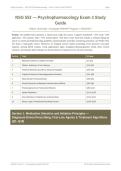
NSG 552 — Psychopharmacology Exam 3 Study
Guide
Wilkes University • Graduate PMHNP Program • 2026/2027
Format: 150 multiple-choice questions, 4 options each, single best answer. Cognitive distribution: ~25% recall, ~50%
application, ~25% analysis. Style: ~75% scenario-based, ~25% direct recall. Each item includes a rationale linking the
answer to current psychopharmacology guidelines, pharmacokinetic principles, monitoring parameters, and Wilkes NSG
552 Exam 3 study-guide content. Distractors are designed around common prescribing errors (incorrect cross-taper
sequence, missing MAOI washout, wrong augmentation agent, misapplied pharmacogenomic results, Beers Criteria
omissions, and improper deprescribing). Use this document for sequential review and self-assessment.
Section Topic Q Range
1 Medication Selection & Initiation Principles Q1–Q18
2 Titration, Switching & Cross-Tapering Q19–Q35
3 Treatment-Resistant Disorders & Advanced Strategies Q36–Q50
4 Cognitive Enhancers & Neurodegenerative Disorders Q51–Q68
5 Sleep Disorder Pharmacotherapy Q69–Q82
6 Sexual Dysfunction & Medication-Induced Adverse Effects Q83–Q95
7 Pharmacogenomics & Personalized Medicine Q96–Q110
8 Special Populations Q111–Q130
9 Drug Interactions, Polypharmacy & Deprescribing Q131–Q142
10 Ethical, Legal & Professional Prescribing Practice Q143–Q150
Section 1: Medication Selection and Initiation Principles —
Diagnosis-Driven Prescribing, First-Line Agents & Treatment Algorithms
(Q1–Q18)
NSG552 / Exam 3 — Psychopharmacology 2026-2027 150-Question Comprehensive Review
,Wilkes University • NSG 552 Psychopharmacology • Exam 3 Study Guide 2026/2027 Page 2
Q1. A 34-year-old female presents with two weeks of depressed mood, anhedonia, insomnia, fatigue, and
passive death thoughts (no plan). PHQ-9 = 16. No prior antidepressant trials, no active medical issues, not
pregnant. Per APA and Wilkes NSG 552 Exam 3 algorithms, which is the FIRST-LINE pharmacologic
choice?
A. Sertraline 50 mg daily — SSRI with favorable efficacy, safety, and tolerability profile for first-episode
MDD [CORRECT]
B. Venlafaxine XR 75 mg daily — SNRI offers dual monoamine coverage upfront for faster onset
C. Amitriptyline 75 mg nightly — strong evidence in moderate-severity MDD and cheap once-daily dosing
D. Phenelzine 15 mg TID — MAOI avoids SSRI sexual side effects and is underutilized first-line
Correct Answer: A
Rationale: Sertraline 50 mg is a guideline-supported first-line SSRI for first-episode moderate MDD, balancing efficacy,
tolerability, low drug-interaction profile (weak CYP2D6 inhibition), and FDA-approved dosing. TCAs (amitriptyline) are NOT
first-line due to lethality in overdose and anticholinergic/cardiac burden. SNRIs are reasonable but typically reserved when
SSRIs fail or comorbid pain is prominent. MAOIs require diet restrictions and are NEVER first-line. Study-guide verification:
APA 2019 MDD Guideline lists SSRIs as first-line; Wilkes NSG 552 Exam 3 emphasizes diagnosis-driven SSRI initiation.
Q2. A 41-year-old male with previously controlled bipolar I disorder presents with 5 days of euphoric mood,
decreased need for sleep, pressured speech, and reckless spending. Currently on sertraline 100 mg daily (no
mood stabilizer). Which intervention reflects diagnosis-driven prescribing for acute bipolar mania?
A. Begin clonazepam 1 mg BID PRN and continue sertraline
B. Discontinue sertraline and initiate lithium 900 mg/day in divided doses with serial level monitoring
[CORRECT]
C. Add aripiprazole 10 mg daily as monotherapy augmentation to the SSRI
D. Increase sertraline to 200 mg daily to address breakthrough depressive anxiety
Correct Answer: B
Rationale: Antidepressant monotherapy (or continuation) in bipolar I is contraindicated — it can worsen cycling, induce rapid
cycling, and destabilize mood. Diagnosis-driven management of acute mania requires DISCONTINUING the antidepressant and
initiating a mood stabilizer or atypical antipsychotic; lithium 900 mg/day with target serum level 0.8–1.2 mEq/L is first-line for
classic euphoric mania. Aripiprazole alone could be used but is inferior to combining it with a mood stabilizer for severe mania.
Clonazepam treats agitation but not the underlying episode. Verification: Wilkes NSG 552 Exam 3 emphasizes 'no antidepressant
monotherapy in bipolar I.'
Q3. A 19-year-old male with new-onset schizophrenia presents with command auditory hallucinations and
paranoid delusions. BMI 28, fasting glucose 98 mg/dL, normal ECG, no prior antipsychotic exposure. Which
agent is preferred FIRST-LINE per current algorithms?
A. Olanzapine 15 mg daily — strong efficacy but high metabolic burden for a metabolically vulnerable patient
B. Clozapine 300 mg daily — most effective antipsychotic available
C. Aripiprazole 10–15 mg daily — atypical with lower metabolic risk and once-daily dosing [CORRECT]
D. Haloperidol 5 mg BID — high-potency first-generation with proven efficacy
Correct Answer: C
Rationale: For first-episode schizophrenia in a metabolically vulnerable young adult, APA/Schizophrenia PORT recommend a
second-generation antipsychotic with low metabolic liability. Aripiprazole 10–15 mg/day is first-line given its favorable
metabolic profile. Haloperidol carries high EPS/tardive dyskinesia risk. Olanzapine is more effective but has the highest
metabolic burden (HbA1c/lipid increase), making it a poor first choice with BMI 28. Clozapine is reserved for
treatment-resistant cases only after two adequate antipsychotic trials. Verification: Wilkes NSG 552 Exam 3 first-episode
algorithm prefers aripiprazole, ziprasidone, or lurasidone.
NSG552 / Exam 3 — Psychopharmacology 2026-2027 150-Question Comprehensive Review
,Wilkes University • NSG 552 Psychopharmacology • Exam 3 Study Guide 2026/2027 Page 3
Q4. A 29-year-old female has 6 months of excessive worry across multiple domains, muscle tension, fatigue,
irritability, and disturbed sleep. GAD-7 = 12. No substance use. Which medication selection reflects
diagnosis-driven first-line treatment?
A. Hydroxyzine 50 mg QHS — non-habit-forming sedating option
B. Buspirone 7.5 mg BID — partial agonist without sedation
C. Alprazolam 0.5 mg TID PRN — rapid relief of somatic anxiety
D. Duloxetine 30 mg daily — SNRI with FDA indication for GAD and concurrent pain coverage [CORRECT]
Correct Answer: D
Rationale: Venlafaxine XR and duloxetine are FDA-approved first-line agents for GAD and provide sustained anxiolysis.
Benzodiazepines (alprazolam) are NOT first-line for chronic GAD due to dependence, sedation, and absence of antidepressant
benefit; APA guidelines reserve them for short-term bridge therapy. Hydroxyzine is reasonable short-term but lacks long-term
efficacy data. Buspirone is effective but slower-onset and less robust than SNRIs. Verification: Wilkes NSG 552 Exam 3 lists
SSRIs/SNRIs as first-line for GAD; benzodiazepines are for acute, time-limited use.
Q5. A 7-year-old boy with ADHD has disrupted classroom behavior, no comorbidity, normal ECG. AAP
guidelines and Wilkes NSG 552 Exam 3 content support which first-line approach?
A. Methylphenidate 5 mg BID — FDA-approved stimulant with the strongest pediatric evidence base
[CORRECT]
B. Clonidine 0.1 mg QHS — alpha-2 agonist as first-line for impulsivity
C. Atomoxetine 40 mg daily — non-stimulant preferred as first trial
D. Bupropion XL 150 mg daily — off-label antidepressant with ADHD benefit
Correct Answer: A
Rationale: For school-age children (6+) with uncomplicated ADHD, AAP and AACAP guidelines identify stimulant medications
(methylphenidate or amphetamine class) as first-line due to robust efficacy (>70% response). Atomoxetine is a non-stimulant
alternative, reserved for when stimulants fail, contraindicated, or parental preference, but has lower effect size. Alpha-2 agonists
are typically adjunctive or used for comorbid tics/sleep. Bupropion is off-label. Verification: Wilkes NSG 552 Exam 3 pediatric
ADHD algorithm: methylphenidate first.
Q6. A 22-year-old college student reports 3 hours daily of obsessive contamination fears with hand-washing
rituals despite marked distress. Y-BOCS = 24. No prior treatment. Per Wilkes NSG 552 Exam 3, first-line
pharmacotherapy is:
A. Clomipramine 75 mg daily — TCA with the most evidence for OCD
B. Fluvoxamine 100 mg daily — SSRI with FDA indication for OCD [CORRECT]
C. Lithium 600 mg daily to augment serotonin function
D. Haloperidol 1 mg daily to suppress compulsive drive
Correct Answer: B
Rationale: SSRIs at higher doses (often 2–3× the MDD dose) are first-line for OCD; fluvoxamine, fluoxetine, sertraline, and
paroxetine all carry FDA indications. Clomipramine is effective but is second-line due to anticholinergic/cardiac/seizure risk.
Lithium augmentation is reserved AFTER failed SSRI trials. Antipsychotics alone are not OCD treatment. Verification: Wilkes
NSG 552 Exam 3 emphasizes SSRI first-line, higher-dose, longer-trial (8–12 weeks) for OCD.
NSG552 / Exam 3 — Psychopharmacology 2026-2027 150-Question Comprehensive Review
, Wilkes University • NSG 552 Psychopharmacology • Exam 3 Study Guide 2026/2027 Page 4
Q7. A 28-year-old female veteran has 9 months of PTSD symptoms: flashbacks, nightmares, hypervigilance,
avoidance. PCL-5 = 48. Which medication is FDA-approved and recommended first-line?
A. Venlafaxine XR 150 mg daily — SNRI with strong evidence
B. Topiramate 100 mg daily — off-label for trauma symptoms
C. Sertraline 100 mg daily — SSRI with FDA approval for PTSD [CORRECT]
D. Prazosin 5 mg QHS — alpha-1 antagonist for trauma-related nightmares
Correct Answer: C
Rationale: Sertraline and paroxetine are the only SSRIs FDA-approved for PTSD; sertraline is preferred first-line due to
favorable drug-interaction profile and tolerability. Venlafaxine has strong evidence but is not FDA-approved. Prazosin is
adjunctive for nightmares but does not treat core PTSD. Topiramate is off-label. Verification: Wilkes NSG 552 Exam 3 PTSD
algorithm lists sertraline as first-line, with prazosin as adjunct.
Q8. A 35-year-old woman has recurrent panic attacks with palpitations, dyspnea, fear of dying; PDSS = 18.
The MOST appropriate first-line pharmacologic regimen is:
A. Propranolol 20 mg BID to block adrenergic surge
B. Buspirone 10 mg BID for sustained anxiolysis
C. Alprazolam 0.5 mg TID scheduled + cognitive behavioral therapy
D. Paroxetine 20 mg daily with short-term benzodiazepine bridge (lorazepam 0.5 mg PRN) for first 2 weeks
[CORRECT]
Correct Answer: D
Rationale: SSRIs are first-line for panic disorder, but their onset is delayed 2–4 weeks and early activation can worsen panic. A
short-acting benzodiazepine bridge during SSRI titration prevents early worsening. Paroxetine, sertraline, and fluoxetine are
FDA-approved. Scheduled alprazolam risks dependence and rebound. Propranolol treats performance anxiety, not panic
disorder. Buspirone is ineffective in panic. Verification: Wilkes NSG 552 Exam 3 panic disorder algorithm: SSRI + brief
benzodiazepine bridge.
Q9. A 26-year-old salesman has disabling performance-only social anxiety (speaking to clients). LSAS = 42.
Preferred first-line intervention is:
A. Propranolol 20–40 mg PRN before presentations — beta-blocker for performance-only social anxiety
[CORRECT]
B. Clonazepam 0.5 mg BID scheduled — benzodiazepine for chronic social anxiety
C. Fluoxetine 20 mg daily — SSRI for generalized social anxiety
D. Phenelzine 30 mg TID — older MAOI with robust efficacy in social anxiety
Correct Answer: A
Rationale: For PERFORMANCE-ONLY social anxiety, beta-blockers like propranolol PRN block peripheral adrenergic
symptoms without CNS impairment or dependence — first-line. Phenelzine is effective but reserved for refractory generalized
social anxiety due to diet restrictions. Clonazepam is reserved for generalized social anxiety when SSRIs fail. SSRIs are first-line
for GENERALIZED social anxiety but unnecessary for performance-only. Verification: Wilkes NSG 552 Exam 3 differentiates
generalized vs. performance-only social anxiety.
NSG552 / Exam 3 — Psychopharmacology 2026-2027 150-Question Comprehensive Review
NSG 552 — Psychopharmacology Exam 3 Study
Guide
Wilkes University • Graduate PMHNP Program • 2026/2027
Format: 150 multiple-choice questions, 4 options each, single best answer. Cognitive distribution: ~25% recall, ~50%
application, ~25% analysis. Style: ~75% scenario-based, ~25% direct recall. Each item includes a rationale linking the
answer to current psychopharmacology guidelines, pharmacokinetic principles, monitoring parameters, and Wilkes NSG
552 Exam 3 study-guide content. Distractors are designed around common prescribing errors (incorrect cross-taper
sequence, missing MAOI washout, wrong augmentation agent, misapplied pharmacogenomic results, Beers Criteria
omissions, and improper deprescribing). Use this document for sequential review and self-assessment.
Section Topic Q Range
1 Medication Selection & Initiation Principles Q1–Q18
2 Titration, Switching & Cross-Tapering Q19–Q35
3 Treatment-Resistant Disorders & Advanced Strategies Q36–Q50
4 Cognitive Enhancers & Neurodegenerative Disorders Q51–Q68
5 Sleep Disorder Pharmacotherapy Q69–Q82
6 Sexual Dysfunction & Medication-Induced Adverse Effects Q83–Q95
7 Pharmacogenomics & Personalized Medicine Q96–Q110
8 Special Populations Q111–Q130
9 Drug Interactions, Polypharmacy & Deprescribing Q131–Q142
10 Ethical, Legal & Professional Prescribing Practice Q143–Q150
Section 1: Medication Selection and Initiation Principles —
Diagnosis-Driven Prescribing, First-Line Agents & Treatment Algorithms
(Q1–Q18)
NSG552 / Exam 3 — Psychopharmacology 2026-2027 150-Question Comprehensive Review
,Wilkes University • NSG 552 Psychopharmacology • Exam 3 Study Guide 2026/2027 Page 2
Q1. A 34-year-old female presents with two weeks of depressed mood, anhedonia, insomnia, fatigue, and
passive death thoughts (no plan). PHQ-9 = 16. No prior antidepressant trials, no active medical issues, not
pregnant. Per APA and Wilkes NSG 552 Exam 3 algorithms, which is the FIRST-LINE pharmacologic
choice?
A. Sertraline 50 mg daily — SSRI with favorable efficacy, safety, and tolerability profile for first-episode
MDD [CORRECT]
B. Venlafaxine XR 75 mg daily — SNRI offers dual monoamine coverage upfront for faster onset
C. Amitriptyline 75 mg nightly — strong evidence in moderate-severity MDD and cheap once-daily dosing
D. Phenelzine 15 mg TID — MAOI avoids SSRI sexual side effects and is underutilized first-line
Correct Answer: A
Rationale: Sertraline 50 mg is a guideline-supported first-line SSRI for first-episode moderate MDD, balancing efficacy,
tolerability, low drug-interaction profile (weak CYP2D6 inhibition), and FDA-approved dosing. TCAs (amitriptyline) are NOT
first-line due to lethality in overdose and anticholinergic/cardiac burden. SNRIs are reasonable but typically reserved when
SSRIs fail or comorbid pain is prominent. MAOIs require diet restrictions and are NEVER first-line. Study-guide verification:
APA 2019 MDD Guideline lists SSRIs as first-line; Wilkes NSG 552 Exam 3 emphasizes diagnosis-driven SSRI initiation.
Q2. A 41-year-old male with previously controlled bipolar I disorder presents with 5 days of euphoric mood,
decreased need for sleep, pressured speech, and reckless spending. Currently on sertraline 100 mg daily (no
mood stabilizer). Which intervention reflects diagnosis-driven prescribing for acute bipolar mania?
A. Begin clonazepam 1 mg BID PRN and continue sertraline
B. Discontinue sertraline and initiate lithium 900 mg/day in divided doses with serial level monitoring
[CORRECT]
C. Add aripiprazole 10 mg daily as monotherapy augmentation to the SSRI
D. Increase sertraline to 200 mg daily to address breakthrough depressive anxiety
Correct Answer: B
Rationale: Antidepressant monotherapy (or continuation) in bipolar I is contraindicated — it can worsen cycling, induce rapid
cycling, and destabilize mood. Diagnosis-driven management of acute mania requires DISCONTINUING the antidepressant and
initiating a mood stabilizer or atypical antipsychotic; lithium 900 mg/day with target serum level 0.8–1.2 mEq/L is first-line for
classic euphoric mania. Aripiprazole alone could be used but is inferior to combining it with a mood stabilizer for severe mania.
Clonazepam treats agitation but not the underlying episode. Verification: Wilkes NSG 552 Exam 3 emphasizes 'no antidepressant
monotherapy in bipolar I.'
Q3. A 19-year-old male with new-onset schizophrenia presents with command auditory hallucinations and
paranoid delusions. BMI 28, fasting glucose 98 mg/dL, normal ECG, no prior antipsychotic exposure. Which
agent is preferred FIRST-LINE per current algorithms?
A. Olanzapine 15 mg daily — strong efficacy but high metabolic burden for a metabolically vulnerable patient
B. Clozapine 300 mg daily — most effective antipsychotic available
C. Aripiprazole 10–15 mg daily — atypical with lower metabolic risk and once-daily dosing [CORRECT]
D. Haloperidol 5 mg BID — high-potency first-generation with proven efficacy
Correct Answer: C
Rationale: For first-episode schizophrenia in a metabolically vulnerable young adult, APA/Schizophrenia PORT recommend a
second-generation antipsychotic with low metabolic liability. Aripiprazole 10–15 mg/day is first-line given its favorable
metabolic profile. Haloperidol carries high EPS/tardive dyskinesia risk. Olanzapine is more effective but has the highest
metabolic burden (HbA1c/lipid increase), making it a poor first choice with BMI 28. Clozapine is reserved for
treatment-resistant cases only after two adequate antipsychotic trials. Verification: Wilkes NSG 552 Exam 3 first-episode
algorithm prefers aripiprazole, ziprasidone, or lurasidone.
NSG552 / Exam 3 — Psychopharmacology 2026-2027 150-Question Comprehensive Review
,Wilkes University • NSG 552 Psychopharmacology • Exam 3 Study Guide 2026/2027 Page 3
Q4. A 29-year-old female has 6 months of excessive worry across multiple domains, muscle tension, fatigue,
irritability, and disturbed sleep. GAD-7 = 12. No substance use. Which medication selection reflects
diagnosis-driven first-line treatment?
A. Hydroxyzine 50 mg QHS — non-habit-forming sedating option
B. Buspirone 7.5 mg BID — partial agonist without sedation
C. Alprazolam 0.5 mg TID PRN — rapid relief of somatic anxiety
D. Duloxetine 30 mg daily — SNRI with FDA indication for GAD and concurrent pain coverage [CORRECT]
Correct Answer: D
Rationale: Venlafaxine XR and duloxetine are FDA-approved first-line agents for GAD and provide sustained anxiolysis.
Benzodiazepines (alprazolam) are NOT first-line for chronic GAD due to dependence, sedation, and absence of antidepressant
benefit; APA guidelines reserve them for short-term bridge therapy. Hydroxyzine is reasonable short-term but lacks long-term
efficacy data. Buspirone is effective but slower-onset and less robust than SNRIs. Verification: Wilkes NSG 552 Exam 3 lists
SSRIs/SNRIs as first-line for GAD; benzodiazepines are for acute, time-limited use.
Q5. A 7-year-old boy with ADHD has disrupted classroom behavior, no comorbidity, normal ECG. AAP
guidelines and Wilkes NSG 552 Exam 3 content support which first-line approach?
A. Methylphenidate 5 mg BID — FDA-approved stimulant with the strongest pediatric evidence base
[CORRECT]
B. Clonidine 0.1 mg QHS — alpha-2 agonist as first-line for impulsivity
C. Atomoxetine 40 mg daily — non-stimulant preferred as first trial
D. Bupropion XL 150 mg daily — off-label antidepressant with ADHD benefit
Correct Answer: A
Rationale: For school-age children (6+) with uncomplicated ADHD, AAP and AACAP guidelines identify stimulant medications
(methylphenidate or amphetamine class) as first-line due to robust efficacy (>70% response). Atomoxetine is a non-stimulant
alternative, reserved for when stimulants fail, contraindicated, or parental preference, but has lower effect size. Alpha-2 agonists
are typically adjunctive or used for comorbid tics/sleep. Bupropion is off-label. Verification: Wilkes NSG 552 Exam 3 pediatric
ADHD algorithm: methylphenidate first.
Q6. A 22-year-old college student reports 3 hours daily of obsessive contamination fears with hand-washing
rituals despite marked distress. Y-BOCS = 24. No prior treatment. Per Wilkes NSG 552 Exam 3, first-line
pharmacotherapy is:
A. Clomipramine 75 mg daily — TCA with the most evidence for OCD
B. Fluvoxamine 100 mg daily — SSRI with FDA indication for OCD [CORRECT]
C. Lithium 600 mg daily to augment serotonin function
D. Haloperidol 1 mg daily to suppress compulsive drive
Correct Answer: B
Rationale: SSRIs at higher doses (often 2–3× the MDD dose) are first-line for OCD; fluvoxamine, fluoxetine, sertraline, and
paroxetine all carry FDA indications. Clomipramine is effective but is second-line due to anticholinergic/cardiac/seizure risk.
Lithium augmentation is reserved AFTER failed SSRI trials. Antipsychotics alone are not OCD treatment. Verification: Wilkes
NSG 552 Exam 3 emphasizes SSRI first-line, higher-dose, longer-trial (8–12 weeks) for OCD.
NSG552 / Exam 3 — Psychopharmacology 2026-2027 150-Question Comprehensive Review
, Wilkes University • NSG 552 Psychopharmacology • Exam 3 Study Guide 2026/2027 Page 4
Q7. A 28-year-old female veteran has 9 months of PTSD symptoms: flashbacks, nightmares, hypervigilance,
avoidance. PCL-5 = 48. Which medication is FDA-approved and recommended first-line?
A. Venlafaxine XR 150 mg daily — SNRI with strong evidence
B. Topiramate 100 mg daily — off-label for trauma symptoms
C. Sertraline 100 mg daily — SSRI with FDA approval for PTSD [CORRECT]
D. Prazosin 5 mg QHS — alpha-1 antagonist for trauma-related nightmares
Correct Answer: C
Rationale: Sertraline and paroxetine are the only SSRIs FDA-approved for PTSD; sertraline is preferred first-line due to
favorable drug-interaction profile and tolerability. Venlafaxine has strong evidence but is not FDA-approved. Prazosin is
adjunctive for nightmares but does not treat core PTSD. Topiramate is off-label. Verification: Wilkes NSG 552 Exam 3 PTSD
algorithm lists sertraline as first-line, with prazosin as adjunct.
Q8. A 35-year-old woman has recurrent panic attacks with palpitations, dyspnea, fear of dying; PDSS = 18.
The MOST appropriate first-line pharmacologic regimen is:
A. Propranolol 20 mg BID to block adrenergic surge
B. Buspirone 10 mg BID for sustained anxiolysis
C. Alprazolam 0.5 mg TID scheduled + cognitive behavioral therapy
D. Paroxetine 20 mg daily with short-term benzodiazepine bridge (lorazepam 0.5 mg PRN) for first 2 weeks
[CORRECT]
Correct Answer: D
Rationale: SSRIs are first-line for panic disorder, but their onset is delayed 2–4 weeks and early activation can worsen panic. A
short-acting benzodiazepine bridge during SSRI titration prevents early worsening. Paroxetine, sertraline, and fluoxetine are
FDA-approved. Scheduled alprazolam risks dependence and rebound. Propranolol treats performance anxiety, not panic
disorder. Buspirone is ineffective in panic. Verification: Wilkes NSG 552 Exam 3 panic disorder algorithm: SSRI + brief
benzodiazepine bridge.
Q9. A 26-year-old salesman has disabling performance-only social anxiety (speaking to clients). LSAS = 42.
Preferred first-line intervention is:
A. Propranolol 20–40 mg PRN before presentations — beta-blocker for performance-only social anxiety
[CORRECT]
B. Clonazepam 0.5 mg BID scheduled — benzodiazepine for chronic social anxiety
C. Fluoxetine 20 mg daily — SSRI for generalized social anxiety
D. Phenelzine 30 mg TID — older MAOI with robust efficacy in social anxiety
Correct Answer: A
Rationale: For PERFORMANCE-ONLY social anxiety, beta-blockers like propranolol PRN block peripheral adrenergic
symptoms without CNS impairment or dependence — first-line. Phenelzine is effective but reserved for refractory generalized
social anxiety due to diet restrictions. Clonazepam is reserved for generalized social anxiety when SSRIs fail. SSRIs are first-line
for GENERALIZED social anxiety but unnecessary for performance-only. Verification: Wilkes NSG 552 Exam 3 differentiates
generalized vs. performance-only social anxiety.
NSG552 / Exam 3 — Psychopharmacology 2026-2027 150-Question Comprehensive Review


